



Vintage Pharmacy Glass Jars
These vintage pharmacy glass jars are robust vessels of utility and display, offering collectors a tangible piece of medical history.
Vintage Pharmacy Glass Jars
Vintage pharmacy glass jars comprise utilitarian vessels produced across the Georgian, Victorian, and Edwardian periods, alongside early twentieth-century examples up to the 1930s. The selection on this page centres upon apothecary jars, apothecary bottles, apothecary vessels, glassware, and table lamps.
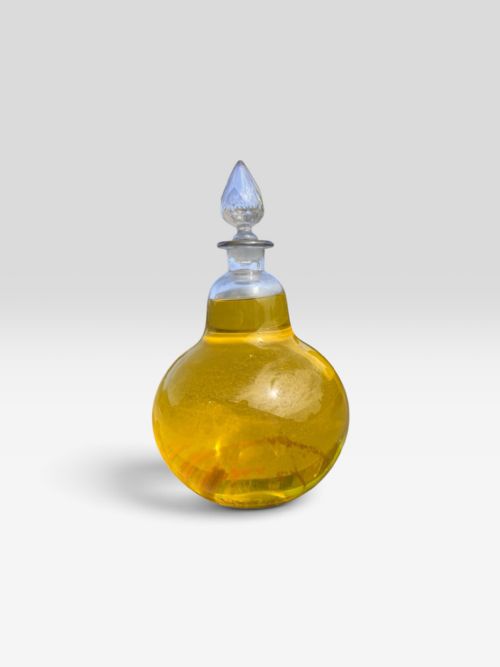
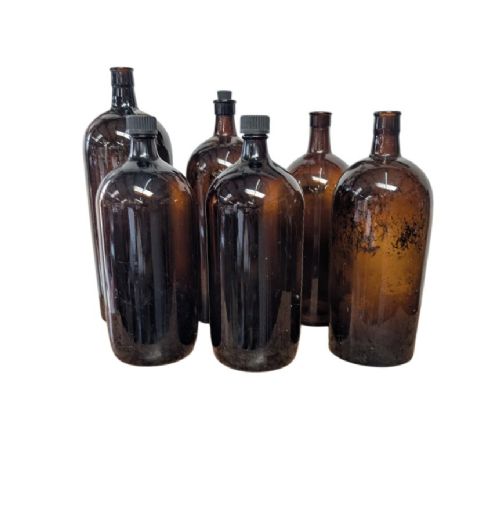
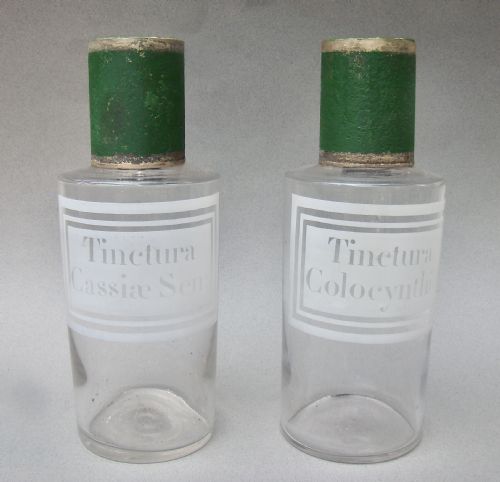
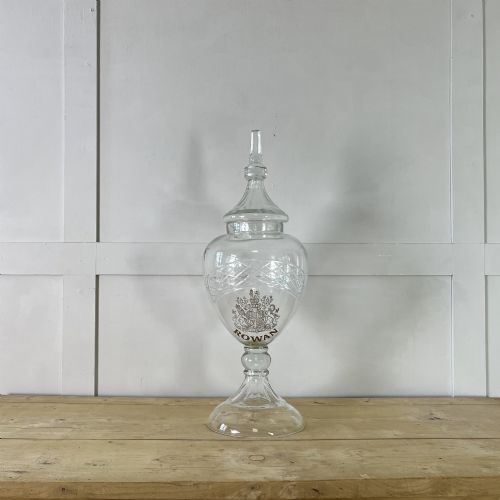
Buyers will encounter various forms, including large carboys, display jars with covers, tincture bottles, and chemists' drug bottles. These pieces originate from English and French workshops, encompassing styles such as Victorian apothecary, industrial, and French nineteenth-century design.
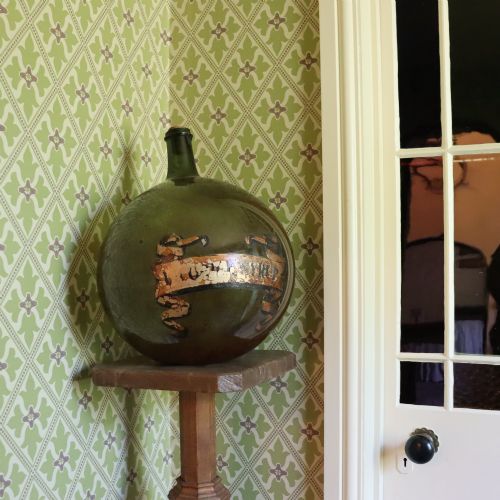
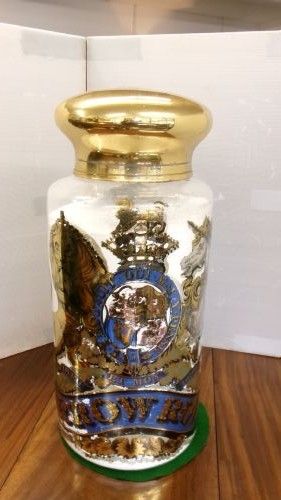
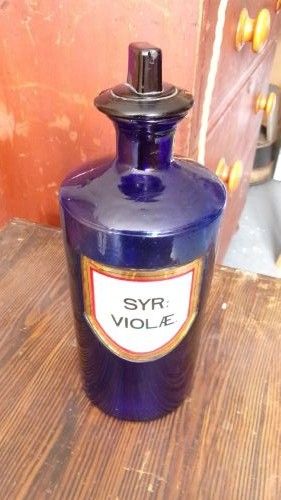
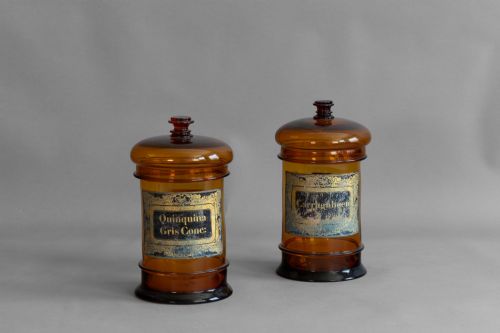
The most common formats on this page are nineteenth-century apothecary bottles and jars, frequently accompanied by clear, amber, Bristol blue, and green glass variants. Certain pieces retain original paper labels or gold leaf detailing, denoting their primary function in storing dry drugs or liquid tinctures.
How they were made
The primary material is glass, formed in clear, amber, Bristol blue, and green hues through hand-blowing techniques in the nineteenth and early twentieth centuries. Artisans also utilised secondary materials including gold leaf, paper labels, paint, and brass fittings for specific display jars and table lamp conversions.
Decoration and labelling involved surface etching, painted details, and applied paper labels to identify contents such as arrowroot or gelatine. Stoppers were individually ground to fit specific jar necks, ensuring airtight storage for medicinal substances.
Listings span from the Georgian era through the Victorian and Edwardian periods up to 1930, utilising clear, amber, blue, and green glass.
What varies in quality
Quality in these vessels is dictated by the depth of colour in the glass, the presence of original stoppers, and the survival of hand-applied paper labels or gold leaf lettering. Early hand-blown examples display distinct pontil marks and bubbles that evidence period manufacturing methods.
Proportion and scale distinguish standard chemist bottles from large display carboys and substantial apothecary jars intended for prominent shop window placement. The integration of brass elements or conversion into table lamps also influences the visual weight of the piece.
The Vintage Pharmacy Glass Jars Glossary
- Carboy
- A large globular glass bottle or jar, typically enclosed in a protective basket or standing independently, used in pharmacies for holding bulk liquids.
- Tincture
- A medicine made by dissolving a drug in alcohol, typically housed in smaller dedicated glass bottles with tight stoppers.
- Pontil mark
- The scarred indentation left on the base of hand-blown glassware where the pontil rod was snapped off after shaping.
- Bristol blue
- A deep cobalt blue glass historically produced in Bristol and utilised for chemist bottles requiring protection from light.
- Lollipop stopper
- A flat, circular glass stopper resembling a lollipop, commonly found on Victorian chemist and apothecary bottles.
Vintage Pharmacy Glass Jars: Frequently Asked Questions
What were apothecary jars used for?
These glass vessels served in nineteenth and early twentieth-century pharmacies to store dry drugs, herbs, and liquid tinctures safely.
Larger carboys and display jars sat prominently on shop shelves or in windows to signal the chemist's trade to the public.
How do I date a glass pharmacy jar?
Dating relies upon manufacturing traits like pontil marks, glass colour variations, and the style of applied paper labels or gold leaf lettering.
Georgian and Victorian pieces often show heavier hand-blowing irregularities compared to later 1930s Winchester bottles.
Are original glass stoppers important?
Original stoppers that match the grinding and colour of the jar enhance the integrity and aesthetic balance of the piece.
Many antique bottles survive without them, though matching stoppers remain desirable for collectors seeking complete examples.
How should I clean antique pharmacy glass?
Gentle washing with warm water and mild soap preserves fragile internal residue, gold leaf, and historical paper labels.
Harsh abrasives and immersion should be avoided to prevent damage to nineteenth-century surfaces and etched designs.