

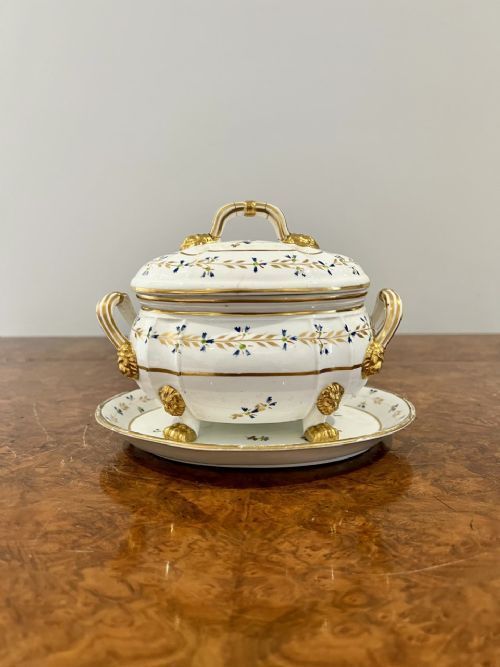


Antique Ceramic Soup Tureen
An antique ceramic soup tureen is a formal table vessel designed for serving broth, standing as a sculptural centrepiece from Georgian, Victorian and earlier dining services.
Antique Ceramic Soup Tureen
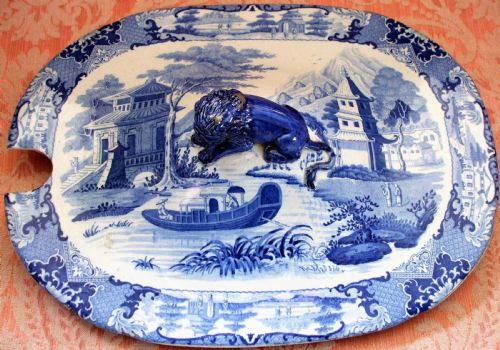
An antique ceramic soup tureen is encountered most frequently in English earthenware and ironstone from the nineteenth century, often accompanied by its original cover and matching ladle. These vessels range from large soup tureens intended for central table service down to smaller sauce tureens and broth cups.
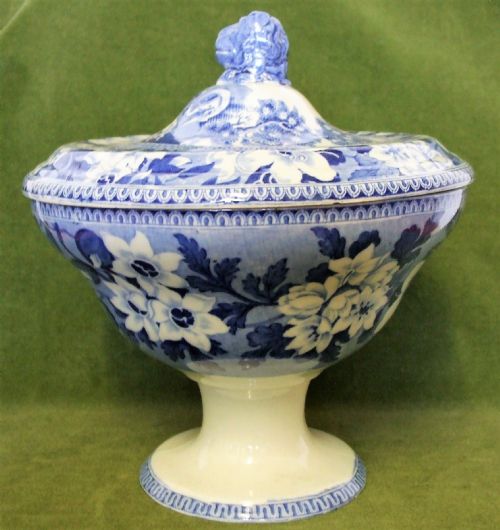
The material record spans eighteenth-century Chinese export porcelain through to later European earthenware, with blue and white transfer printed patterns forming a substantial group. Makers produced these pieces for functional dining use, incorporating stands and lids designed to keep broth warm at table.
Materials and construction
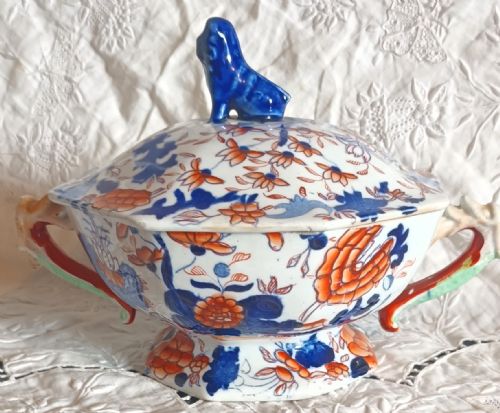
Makers utilised ironstone, earthenware, creamware and porcelain, applying ceramic glaze and enamel colours to finish the surfaces. Many nineteenth-century examples feature blue and white transfer printing, while others display hand-painted Chinoiserie motifs, botanical studies or gilt handles.
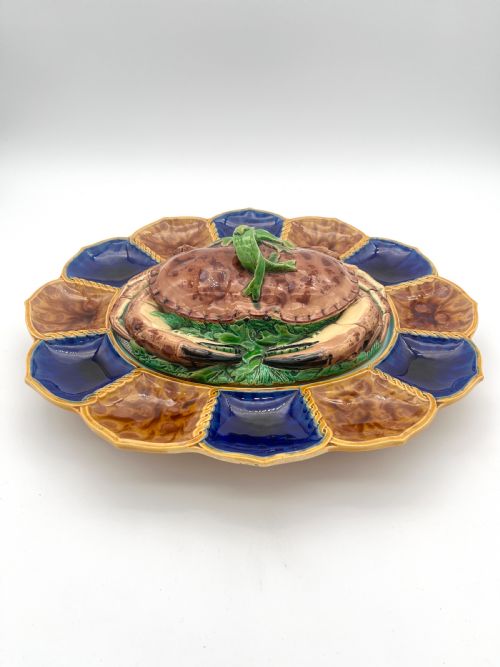
Moulded details such as animal forms, foliage and bamboo patterns required skilled shaping before firing. Ironstone offered robust utility for heavy dinner services, whereas porcelain and bone china accommodated finer decorative painting and gilding.
Common decorative themes include blue and white transfer prints, Chinoiserie patterns and botanical motifs.
Judging quality
Quality rests upon the crispness of the moulded form and the depth of the transfer print or hand-painted enamels. Finer vessels display sharper relief in details like handles and finials, alongside balanced proportions and well-preserved glaze without heavy discolouration.
The presence of matching elements, such as original covers, ladles and stands, elevates a piece significantly. Makers who employed richer palettes, gold leaf or complex pictorial scenes achieved a higher standard of production than standard utility wares.
Robert Hamilton·John Rogers and Son·Coalport·Coalbrookdale·Minton·Crown Derby·Wedgwood·Booths·Doulton Burslem·Derby·Flight Barr and Barr·Worcester·Mason·Richard Ginori·J and R Clews·Ridgways·Davenport·Copeland and Garrett·Turner
The Antique Ceramic Soup Tureen Glossary
- Ironstone
- A patented heavy earthenware developed in the nineteenth century for durability and dense body. It resists chipping better than standard earthenware while accepting glaze and transfer printing readily.
- Transfer printing
- A method of applying detailed designs to ceramics using an engraved copper plate and tissue paper. This technique allowed intricate scenes like Canton River views to be reproduced consistently.
- Creamware
- A refined light-coloured earthenware perfected in England during the eighteenth century. Its warm pale tone served as a canvas for botanical paintings and transfer prints.
- Chinoiserie
- European decorative design inspired by Chinese artistic motifs and landscapes. It appears frequently on nineteenth-century ironstone and porcelain tureens in blue and white or polychrome enamels.
- Imari
- A decorative style employing deep underglaze blue combined with iron red and gold highlights. English factories adapted this Japanese aesthetic on porcelain and ironstone bodies.
Antique Ceramic Soup Tureen: Frequently Asked Questions
How were antique soup tureens used?
These vessels were filled with hot soup or broth in the kitchen and brought to the dining table for formal service. A servant or host would ladle the contents into individual bowls using a matching ceramic or silver ladle.
Lids were kept in place between servings to retain heat. Once the meal concluded, the tureen was cleared away, often remaining on display on a sideboard or serving table when not in active use.
What is the difference between ironstone and porcelain?
Ironstone is a dense, opaque earthenware body patented in the nineteenth century to provide a durable and affordable alternative to porcelain. It is heavier, thicker and possesses a sturdy structure suited to everyday dining services.
Porcelain is a vitrified, finer ceramic material that can be translucent and holds delicate painted details and gilding with greater refinement. While porcelain tureens were typically reserved for high-status dining, ironstone bridged the gap between daily utility and formal presentation.
How do I care for an antique ceramic tureen?
Wash the piece gently by hand using lukewarm water and mild soap, avoiding dishwashers entirely. Harsh detergents and automated cycles can damage old glazes, fade enamel colours and strip away gold leaf.
Lift the tureen and its cover separately rather than by the handles or finials, which bear structural stress. Display the vessel away from direct sunlight and sudden temperature shifts to protect the ceramic body.
Are all antique tureens part of dinner services?
Many tureens were produced as components of large multi-piece dinner or dessert services. However, others were sold individually or as matched pairs of sauce tureens depending on the requirements of the buyer.
Individual tureens often survive independently today even if the plates and platters from the original service have been dispersed or lost over time.