



Antique Ceramic Serveware
Antique ceramic serveware brings nineteenth century dining tables to life with richly glazed tureens, platters, and cheese dishes.
Antique Ceramic Serveware
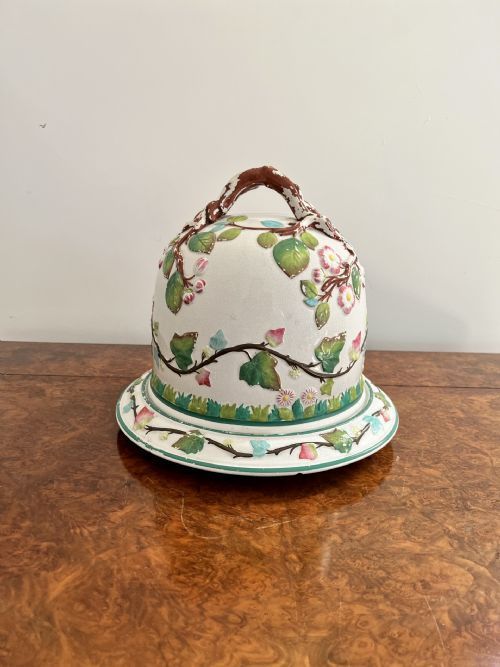
Antique ceramic serveware comprises utilitarian and decorative tableware designed for presenting food during the eighteenth and nineteenth centuries. Buyers searching for antique ceramic serveware encounter robust ironstone dishes, porcelain comports, and earthenware cheese domes originating from Victorian and Regency periods.
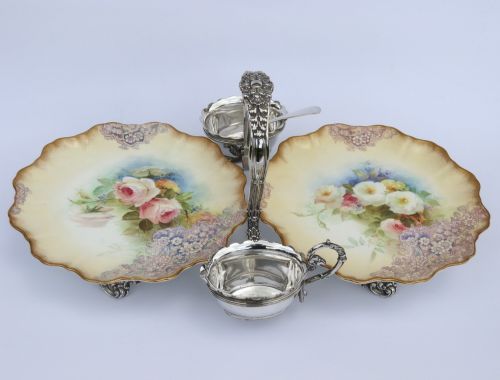
The selection ranges from large meat platters and soup tureens to specialised items like chestnut baskets and dessert sets. English factories produced much of this ware, alongside continental European pieces decorated with transfer printing, hand painting, and majolica glazes.
How they were made
Potters shaped these vessels using earthenware, ironstone, and porcelain bodies, often applying tin or lead-based glazes to achieve a glossy finish. Decoration involved hand-painted enamel colours, transfer-printed blue and white patterns, and occasionally applied gold leaf details.
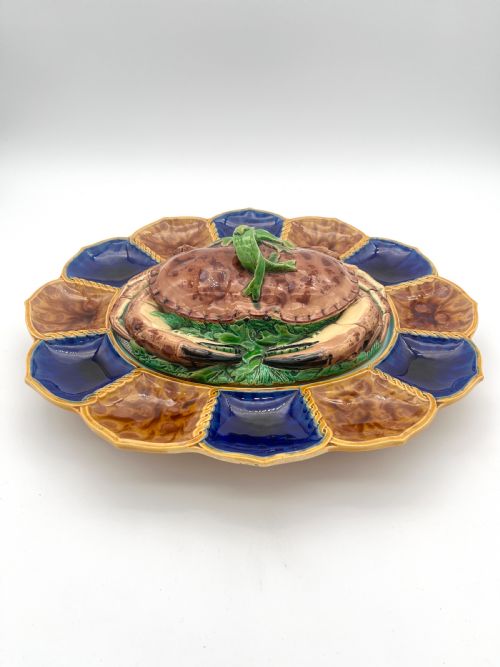
Moulding and casting techniques allowed makers to produce complex forms such as crab tureens and pierced chestnut baskets. Firing took place in traditional kilns, which sometimes left characteristic kiln scars and minor pooling within the glaze.
Listings feature ceramics spanning the Regency period through to the late Victorian era, utilising ironstone, porcelain, and majolica glazes.
What varies in quality
Quality rests upon the crispness of the moulded relief and the precision of the hand-painted or transfer-printed decoration. Superior examples display vibrant, evenly fired glazes and well-preserved gilt accents without rubbing or fading.
The complexity of the form also distinguishes standard kitchen pottery from ambitious exhibition pieces. Intricately modelled handles, figural lids, and matched components elevate the status of a service within its period.
Walker and Hall·Doulton Burslem·Coalport·Minton·Mason·Meissen
The Antique Ceramic Serveware Glossary
- Ironstone
- A dense, durable type of earthenware patented in the nineteenth century to rival true porcelain. It resists chipping and staining better than standard pottery, making it ideal for heavy kitchen and dining use.
- Comport
- A decorative dish raised on a high foot or pedestal, used for serving fruit or sweets at the table. These pieces often feature hand-painted chinoiserie or floral motifs.
- Majolica
- A type of earthenware coated with an opaque tin-lead glaze and painted with metallic oxide colours. It produces rich, glossy surfaces favoured during the Victorian era for naturalistic animal and plant forms.
- Tureen
- A deep, large bowl with a lid designed for serving soups, sauces, or gravies. They frequently include fixed or applied handles and matching stands.
- Transfer printing
- A decoration technique where an engraved copper plate transfers a design onto paper, which is then stamped onto the ceramic body before glazing. This method allowed intricate blue and white patterns to be produced consistently.
Antique Ceramic Serveware: Frequently Asked Questions
Can I use antique serveware for food?
Many nineteenth-century ceramics remain structurally sound for serving dry foods or room-temperature items at the dining table. However, older lead-based glazes or cracked bodies require caution with acidic or wet foods.
Inspect the interior surfaces for heavy crazing or wear before deciding whether to use the piece practically or display it.
What is Victorian majolica?
Victorian majolica is a brightly coloured earthenware style characterised by moulded plant or animal motifs beneath thick lead glazes. Introduced in the mid-nineteenth century, it brought natural forms like leaves and marine life to household tables.
The intense green, brown, and yellow hues create a distinct glossy finish that separates majolica from standard transfer-printed whitewares.
How do I identify Regency ceramics?
Regency ceramics generally exhibit neoclassical restraint, featuring refined shapes, classical borders, and delicate hand-painted motifs like chinoiserie patterns. The bodies tend to be lighter earthenware or early porcelain rather than heavy Victorian ironstone.
Look for distinctive potting traits, unglazed foot rims, and stylistic markers consistent with early nineteenth-century production methods.