
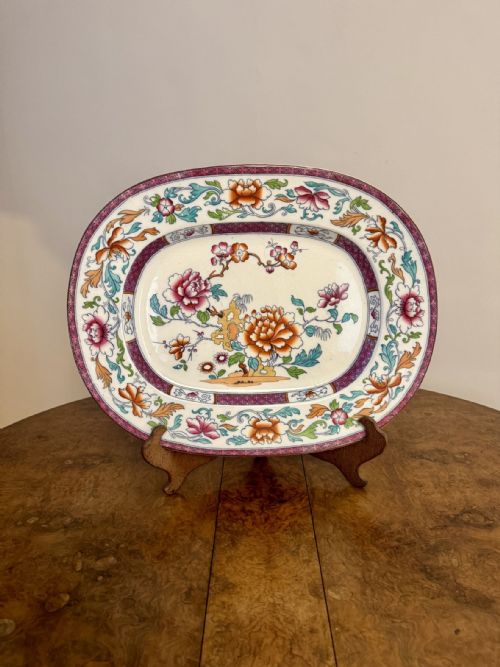
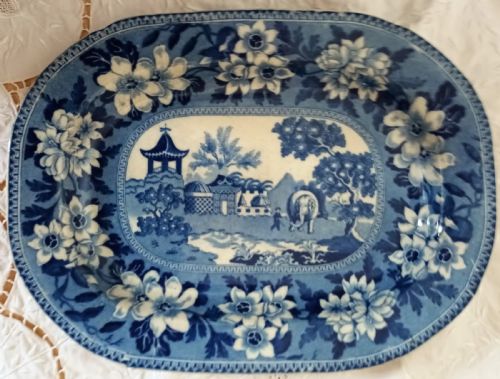


Floral Transferware Serving Platter
These floral transferware serving platter examples combine practical nineteenth-century dining forms with enduring blue and white printed patterns.
Floral Transferware Serving Platter
A floral transferware serving platter brings generous proportions and botanical decoration to the nineteenth-century dining table, appearing frequently in large meat platter formats and blue and white colour schemes. These earthenware and ironstone dishes were designed to carry joints of meat or large quantities of food before the assembled company.
The pieces on this page span the Georgian and Victorian eras, encompassing regional Staffordshire potteries alongside pieces marked by notable makers such as John Rogers and Son. Alongside standalone serving dishes, buyers will encounter dinner service components and larger meat plates from the eighteen-eighties and eighteen-nineties.
Makers utilised established patterns like the London Bridge or Lovick design, often rendered in deep blue transfer print beneath a translucent ceramic glaze. Collectors find these serving platters both in traditional oval meat platter shapes and broader serving tray formats.
How They Were Made
Potters shaped earthenware, ironstone, and porcelain into large serving dishes before applying copper-plate transfer printing to the ceramic surface. This technique allowed intricate botanical and pictorial patterns to be stamped onto the clay body prior to glazing.
A protective ceramic glaze sealed the printed design, sometimes complemented by hand-applied enamel or delicate touches of gold leaf for decorative enrichment. Firing in traditional kilns fused the glaze to the body, producing the durable surfaces seen on nineteenth-century meat platters.
Current listings demonstrate a prevalence of nineteenth-century earthenware and ironstone, spanning Georgian and Victorian periods with prominent blue and white transfer printing.
What Varies in Quality
The clarity of the transfer print distinguishes finer platters, where the copper plate has transferred every delicate line of the floral motif without blurring or smudging. Crispness in the blue and white pigment indicates careful control during the printing and firing stages.
Subtleties in the ceramic body itself separate standard utility wares from superior productions, particularly where refined ironstone or porcelain provides a smoother, more uniform surface. The crispness of moulded edges and the balanced weight of the platter reflect the skill of the potter.
John Rogers and Son·Minton·Elkin Knight and Bridgwood
The Floral Transferware Serving Platter Glossary
- Transferware
- Ceramic decorated by printing a design from a copper plate onto tissue paper, then transferring the ink onto the biscuit earthenware before glazing. This mechanical process allowed complex botanical and scenic patterns to be replicated consistently.
- Ironstone
- A dense, durable type of earthenware patented in the nineteenth century to imitate Chinese porcelain. It provides a heavy, robust body ideally suited for large meat platters and heavy service dishes.
- Earthenware
- Porous pottery fired at lower temperatures than porcelain, requiring a vitreous glaze to hold liquids. It forms the structural base for the majority of nineteenth-century serving plates.
- Glaze
- A glassy coating fused to the ceramic body by heat, sealing the porous earthenware beneath. It protects the transfer-printed pigment from wear and gives the serving surface its characteristic sheen.
- Blue and White
- A traditional ceramic colour scheme utilising cobalt oxide pigment beneath a clear glaze. It remains the most prevalent palette found on nineteenth-century British serving platters.
Floral Transferware Serving Platter: Frequently Asked Questions
What were floral transferware serving platters used for?
These large dishes served roasted meats, joints, and substantial courses at nineteenth-century dining tables. Their generous surface area accommodated family meals and formal dinners alike.
Beyond functional dining, larger platters often remained on sideboard displays or functioned as central serving trays during large gatherings.
How do I date a transferware platter?
Examining the ceramic body, maker marks on the reverse, and the style of the transfer print helps determine the period. Georgian examples often feature deep cobalt tones and specific earthenware weights.
Victorian pieces frequently display registration marks or specific nineteenth-century factory stamps that narrow down the exact year of production.
How do I care for antique transferware?
Hand washing in warm water with mild soap preserves the delicate glaze and any secondary enamel or gold leaf details. Dishwashers can damage the historic ceramic body and fade transfer-printed pigments.
Storing platters safely in plate racks or with protective felt dividers prevents surface scratching and edge chipping over time.
What is the difference between earthenware and ironstone?
Earthenware is a traditional, slightly porous pottery body fired at moderate temperatures, whereas ironstone is a heavily refined, denser ceramic developed for increased durability. Ironstone platters typically feel heavier and resist chipping more effectively.
Both materials accept transfer printing well, though ironstone often provides a brighter white background for blue floral patterns.