

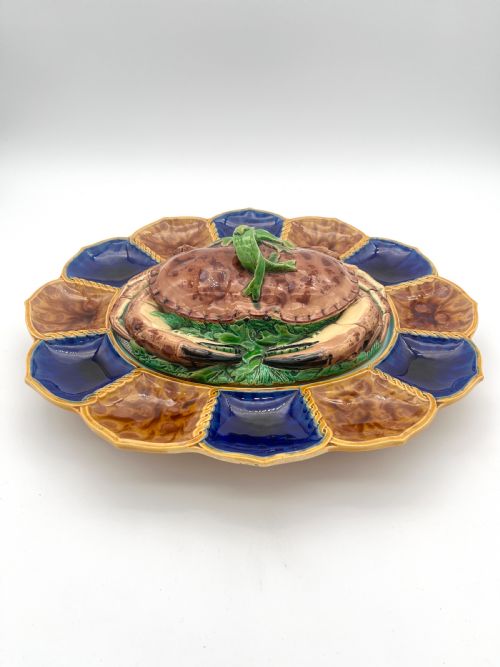


Victorian Earthenware Platter
When you search for a victorian earthenware platter, you enter a world of heavy-bodied ceramics designed for the nineteenth-century dining table.
Victorian Earthenware Platter
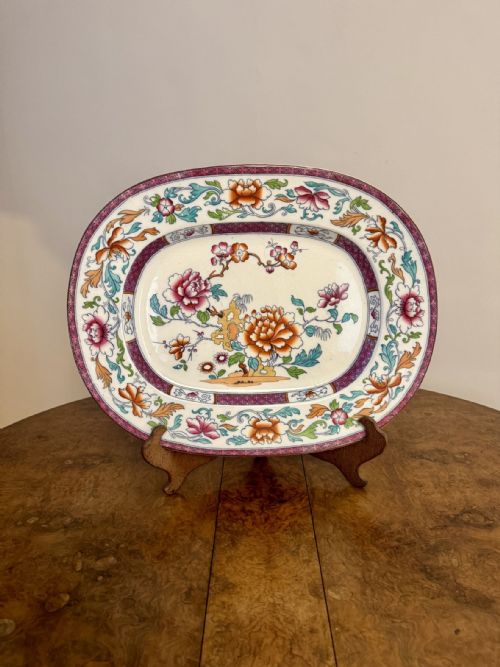
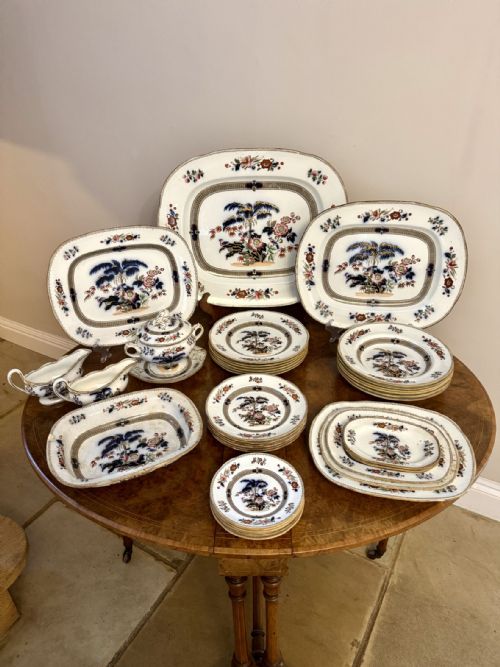
A victorian earthenware platter is a substantial serving vessel intended for large joints of meat, poultry, or ceremonial courses at the nineteenth-century table. These objects typically take large rectangular, oval, or circular forms, often incorporating wells and drainage channels to collect cooking juices. The examples found here span the broader nineteenth century, reflecting both early Victorian domestic service and later decorative trends.
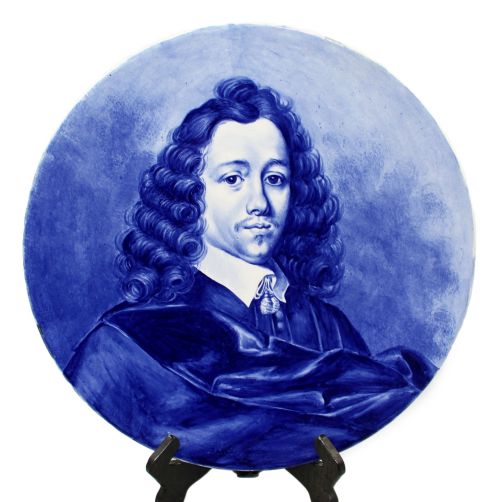
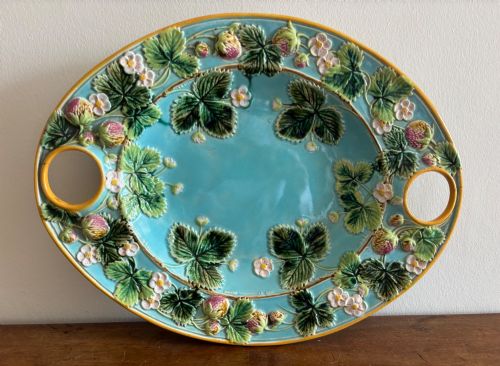
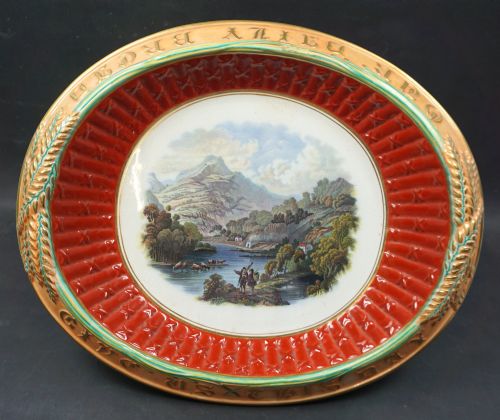
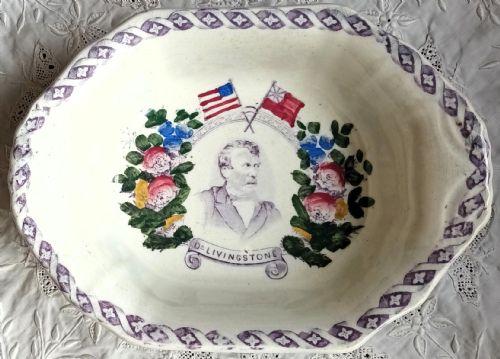
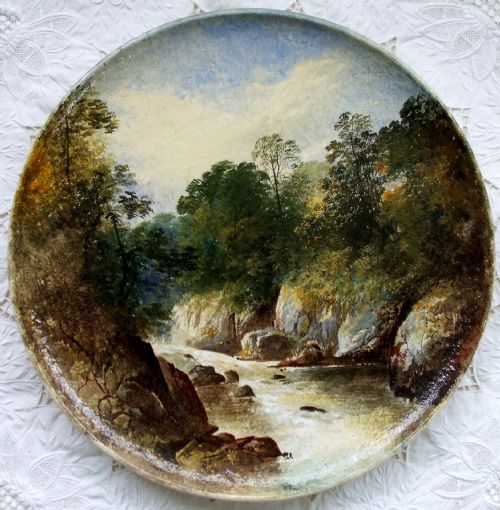
Buyers encounter transfer-printed blue and white landscapes, botanical studies, and historic scenes alongside rich polychrome majolica and creamware bodies. Standard serving platters sit alongside specialised forms such as meat plates, well and tree dishes, and commemorative pieces bearing portraits or architectural views. Most pieces date from the Victorian period proper, with occasional Georgian and mid-nineteenth-century antecedents shaping the design vocabulary.
How they were made
Potters shaped these earthenware bodies using a combination of press-moulding and throw-wheel techniques, later applying lead glazes, enamel colours, and ceramic glaze to seal the porous clay. Many surfaces carry blue and white transfer prints, a method where engraved copper plates transferred intricate inked designs onto tissue paper and then onto the fired ceramic body.
Firing took place in traditional bottle kilns, where variable temperatures and wood or coal smoke occasionally produced distinctive pooling in the glaze and subtle shifts in the cobalt blue pigments. Ironstone and creamware variants offered denser, more durable bodies, while majolica pieces utilised opaque lead glazes over moulded relief decoration to achieve vibrant colouration.
Certain platters feature built-in drainage channels specifically designed to keep Sunday roasts from sitting in their own runaway gravy.
What varies in quality
Quality rests upon the clarity and crispness of the transfer print, the evenness of the glaze application, and the structural integrity of the heavy earthenware body. Superior examples maintain sharp pictorial detail without blurring or smudging in the printed transfer lines, and their glazes remain free from heavy crazing or dull patches.
The sophistication of the modelling distinguishes standard utilitarian wares from ambitious cabinet pieces, particularly in relief-moulded majolica and well-and-tree platters with intricate drainage systems. Maker attribution and the complexity of the narrative scene or botanical subject also elevate the standing of an individual dish.
George Jones·William Yale·Minton·Copeland and Garrett·Elkin Knight and Bridgwood
The Victorian Earthenware Platter Glossary
- Earthenware
- A porous pottery body fired at relatively low temperatures, requiring a vitreous glaze to render it waterproof. It forms the structural base for the majority of nineteenth-century serving platters.
- Transfer print
- A method of decorating ceramics by pressing paper stamped from an engraved copper plate onto the biscuit or glazed surface. This technique allowed factories to mass-produce detailed pictorial scenes.
- Well and tree
- A platter design featuring a recessed well at one end and carved channels resembling a tree trunk across the surface. These grooves directed meat juices away from the joint during carving.
- Majolica
- A heavy earthenware type coated in an opaque lead glaze loaded with metallic oxides. It is characterised by vibrant colouration and prominent moulded relief decoration.
- Flow blue
- A style of blue and white transfer printing where volatile chlorides were introduced into the kiln atmosphere to deliberately blur the cobalt lines. This created a hazy, ethereal effect across the surface.
Victorian Earthenware Platter: Frequently Asked Questions
How were victorian meat platters used?
These large serving dishes held roasts, poultry, and game at the centre of the nineteenth-century dining table, catching juices in specialised wells.
Servants brought them to the table laden with food before carving commenced directly in front of the assembled guests.
Can I use these antique platters for serving food?
Most of these ceramic pieces are safe for modern dining use, provided the glaze is intact and free from heavy chemical staining or extensive cracking.
Hand washing is essential to preserve the nineteenth-century glaze and prevent moisture from entering the porous earthenware body beneath.
How do I identify early Victorian pieces?
Early Victorian examples often feature deep blue and white transfer prints depicting romanticized landscapes, classical ruins, or historical British architecture.
Maker marks stamped or impressed into the underside help narrow the production date alongside the specific stylistic traits of the period.
What is the difference between ironstone and earthenware?
Ironstone is a denser, highly vitrified type of earthenware patented to withstand rigorous daily use while remaining heavier than standard pottery bodies.
Standard earthenware possesses a more porous structure that relies more heavily on surface glaze for protection against moisture.