
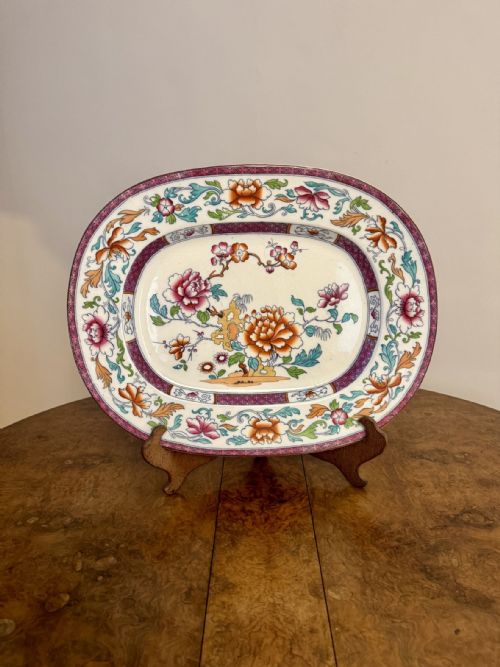


Victorian Floral Meat Dish
These Victorian floral meat dish examples are robust nineteenth century serving vessels built to handle heavy joints at the dining table.
Victorian Floral Meat Dish
A Victorian floral meat dish provides a large surface area designed to hold joints of meat and game during nineteenth century dining. You will most frequently encounter rectangular earthenware platters and ironstone serving dishes carrying blue and white transfers or polychrome patterns.
These serving pieces span the nineteenth century, including specific periods like the 1880s and 1850s, alongside broader Victorian and nineteenth century designations. Forms range from simple blue and white meat plates to massive ironstone dishes complete with drainage strainers.
Makers such as Minton, Mason's, and Elkin Knight & Bridgwood produced these heavy service items for domestic and institutional use. Styles stretch from standard Victorian floral motifs to Victorian Chinoiserie and Imari interpretations.
Materials and construction
Potteries relied heavily upon durable earthenware and ironstone china to withstand the weight of heavy joints and daily kitchen service. These dense ceramic bodies received protective glossy glazes to prevent staining from meat juices.
Decoration relied upon transfer printing in blue and white, alongside hand-applied enamel colours and touches of gold leaf or gilt. Some specialised serving platters incorporated integrated ceramic strainers within the dish body to drain liquids effectively.
Assessing quality and craftsmanship
Quality separates through the crispness of the transfer print and the precision of any hand-painted enamel or gilt highlights applied over the glaze. Superior ironstone bodies show a heavier, denser weight and a smoother, more even glaze surface.
Factory origin influences distinction, with recognised potteries like Minton or Mason's exhibiting finer detail in pattern execution than unmarked wares. The inclusion of matching original components, such as draining inserts, elevates the completeness of a serving vessel.
Minton·Elkin Knight & Bridgwood
The Victorian Floral Meat Dish Glossary
- Ironstone
- A heavy, durable type of ceramic patented in the nineteenth century to provide a tough alternative to porcelain. It resists chipping and staining exceptionally well.
- Ashet
- A Scottish regional term for a large rectangular meat platter or serving dish. It derives from the French assiette.
- Transfer printing
- A decoration technique where an engraved copper plate transfers a design onto tissue paper, which is then pressed onto the ceramic body before glazing. This allowed complex floral and scenic patterns to be produced consistently.
- Imari
- A decorative style inspired by Japanese export porcelain, featuring a palette of underglaze blue, iron red, and gilt. Victorian interpretations adapted these vibrant motifs for British earthenware.
Victorian Floral Meat Dish: Frequently Asked Questions
What is a meat dish used for?
These large ceramic vessels served as the centrepiece for presenting roasted joints of meat, poultry, or game at the nineteenth century dining table.
Their substantial size and flat surfaces accommodated large portions while catching juices during carving.
How do I clean an old ironstone dish?
Wash these pieces gently by hand using warm water and mild washing-up liquid with a soft cloth. Avoid harsh scourers and automated dishwashers to protect the historic glaze and any delicate gilt highlights.
Take care when handling heavy ironstone platters as their weight makes them vulnerable to chipping against hard sink edges.
Can I use these platters for food today?
Most nineteenth century ceramic and ironstone dishes remain completely stable for serving dry foods, cheeses, or cold meats at the table. Historic glazes on older earthenware can sometimes be susceptible to staining from modern acidic foods.
Inspect the glaze condition for any deep crazing before deciding to serve oily or wet foods upon them.
How do I date a Victorian platter?
Dating relies upon examining impressed or printed factory marks on the underside, style characteristics, and ceramic body type. Ironstone and heavy earthenware bodies became widespread during the nineteenth century, with specific patterns often registered to particular decades.
Design styles like Victorian Chinoiserie or Imari provide broader stylistic windows when makers marks are absent.