

Antique Ceramic Pair
An antique ceramic pair brings symmetry and historical weight to a room, offering matched vessels, figures or planters shaped across centuries of kiln traditions.
Antique Ceramic Pair
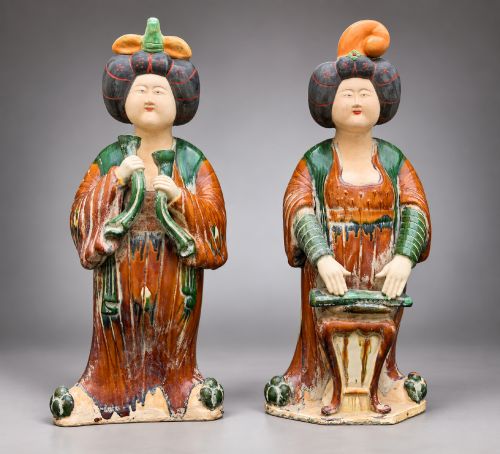
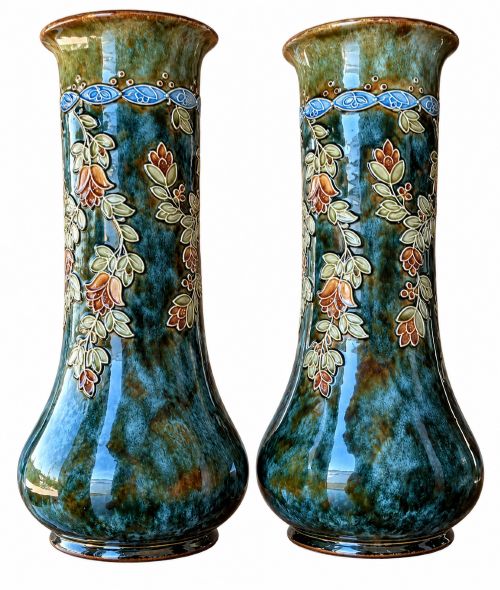
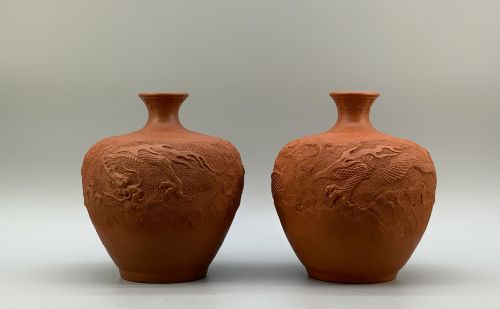
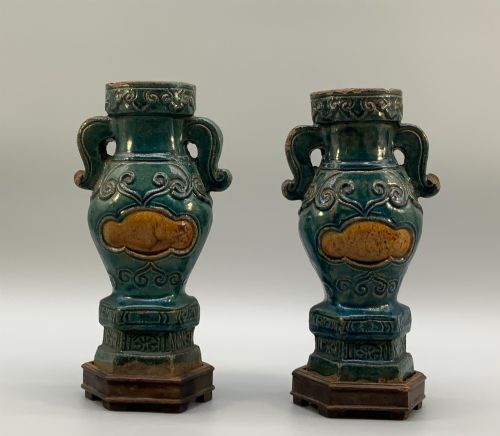
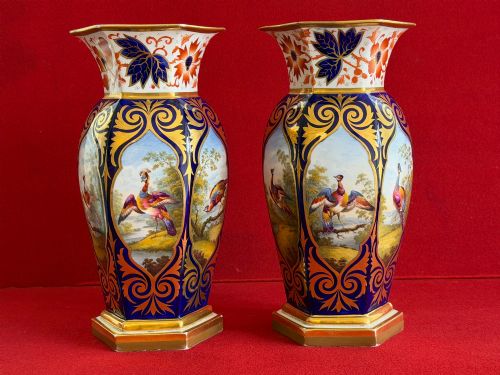
When searching for an antique ceramic pair, collectors encounter matched sets spanning European porcelain factories, English earthenware potteries and Asian stoneware traditions. Vases, figures, candlesticks and jardinières dominate these dual groupings, often created for mantelpieces or side tables where balance matters.
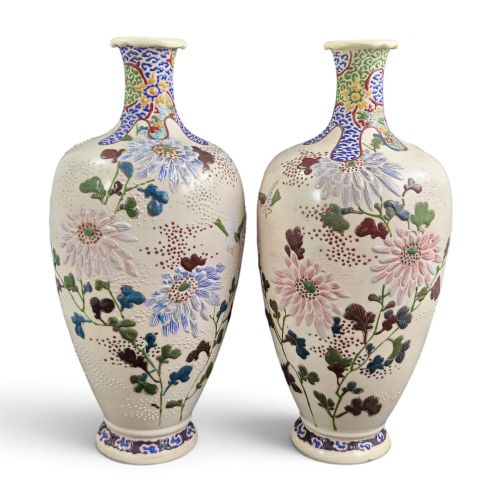
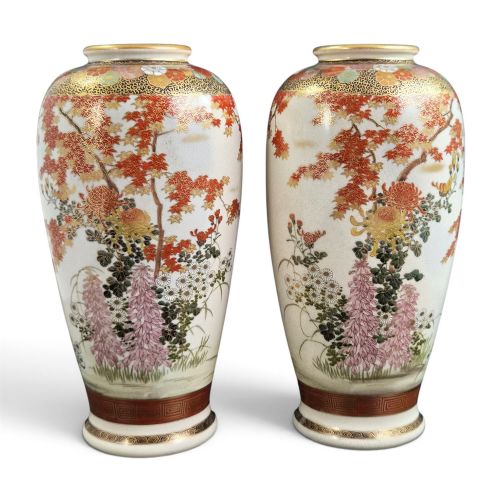
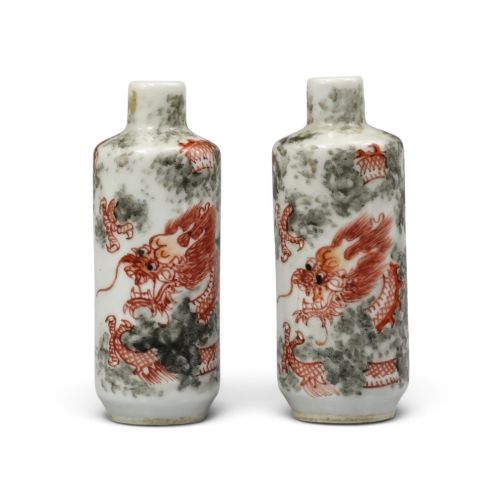
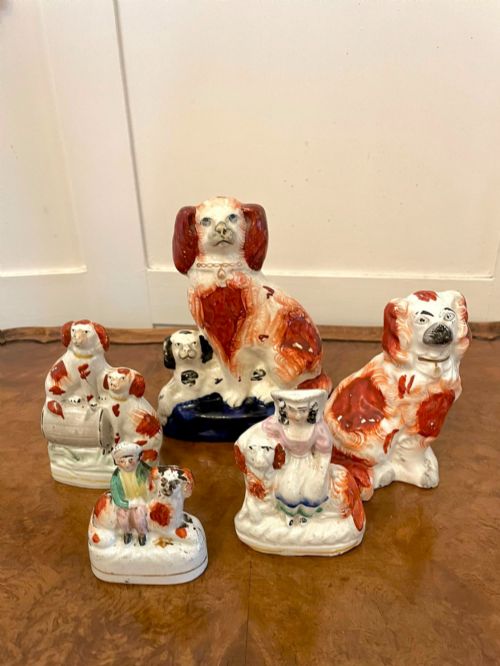
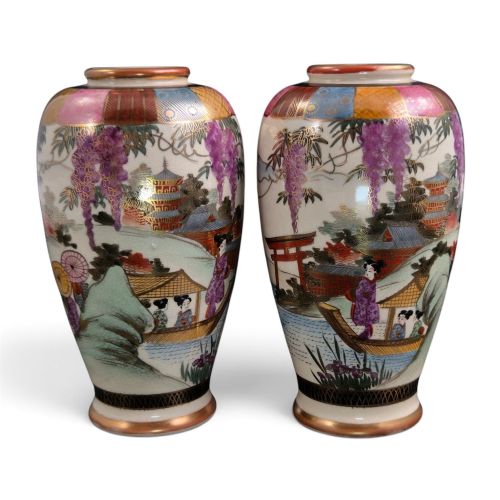
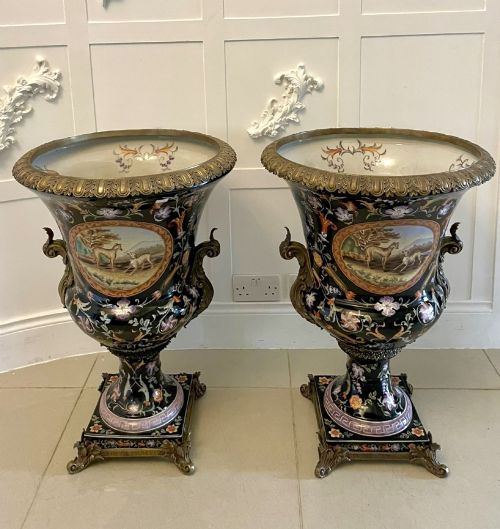
The nineteenth century provides the highest volume of examples on this page, ranging from Victorian Staffordshire dogs to French Rococo urns and Japanese Satsuma vases. Earlier ceramic pairs surface occasionally, reaching back to Ming dynasty vessels and Han dynasty pottery bowls.
Many entries demonstrate how potteries produced companion pieces to flank architectural focal points, utilising complementary moulding and painting. Buyers find both formal balanced pairs and loosely matched sets that share a single decorative vocabulary.
Materials and production techniques
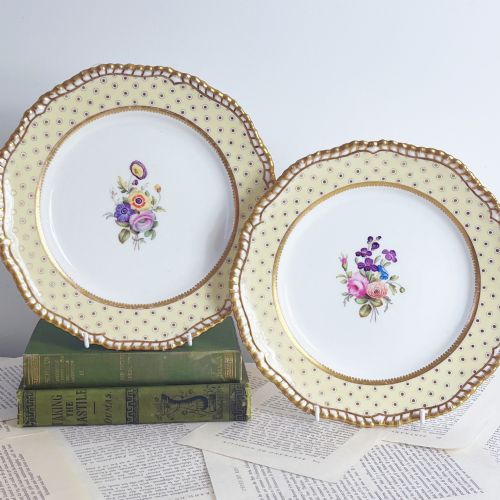
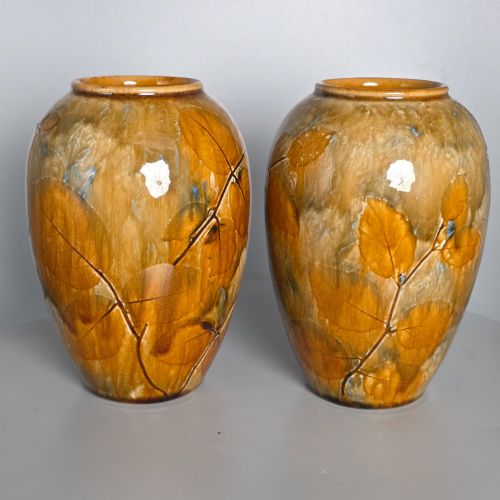
The construction of these pieces relies on diverse ceramic bodies including fine porcelain, robust earthenware, dense stoneware and tin-glazed faience. Potters shaped these materials by hand, on the wheel or within moulds before applying complex glazes and metallic elements such as gold leaf and gilt.
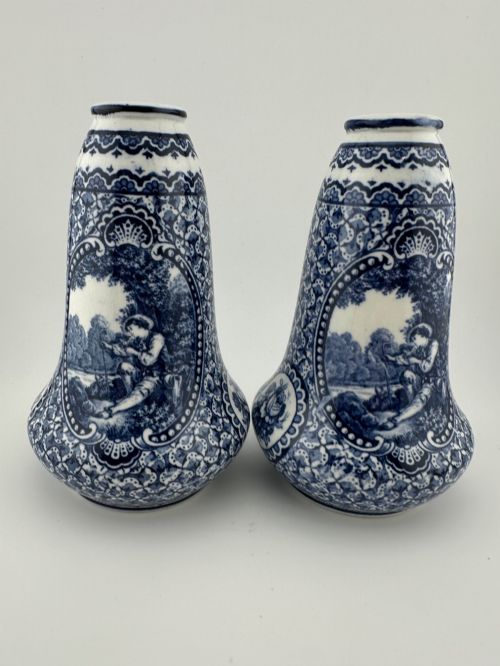
Decoration often involved hand-painted enamels, underglaze blue, and relief moulding that created textured surfaces like Moriage or intricate floral motifs. Firing took place in traditional kilns where temperature variations imparted distinct character to each glaze and colour field.
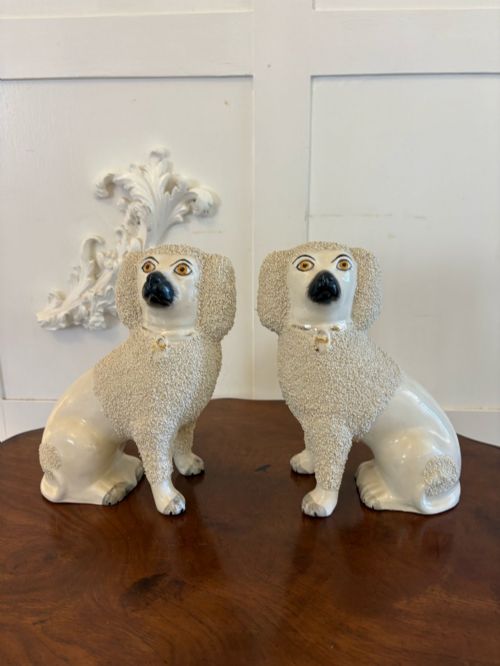
Staffordshire poodles occasionally sport ceramic biscuit crumb fur applied by potters to mimic real curls.
Distinctions in craftsmanship and preservation
Quality in an antique ceramic pair rests upon the crispness of the modelled detail and the precision of the hand-painted decoration. Superior pieces maintain exact symmetry between partners, whereas lesser examples reveal significant discrepancies in form or pigment application.
The preservation of original glazes, minimal restoration to fragile extremities like fingers or petals, and clear factory marks elevate specific items. The vitality of the painting and the depth of the ceramic body separate standard production runs from masterworks.
Royal Doulton·Flight Barr and Barr·Karl Ens·Meissen·Edme Samson·Sitzendorf·Nymphenburg·Jacob Petit
The Antique Ceramic Pair Glossary
- Earthenware
- A porous pottery body fired at lower temperatures, typically covered with an opaque glaze or left as unglazed red clay. It requires careful handling due to its softer composition.
- Stoneware
- A dense, impermeable ceramic fired at high temperatures until vitrified. This sturdy material resists liquid absorption and supports heavy glazes.
- Faience
- Tin-glazed earthenware produced in Europe, known for a bright white surface that accepts painted decoration directly onto the unfired glaze.
- Satsuma
- Japanese earthenware pottery featuring a crackle ivory glaze decorated with elaborate enamel patterns and gilding. Production spanned the Meiji period and into the twentieth century.
- Felspar
- A mineral flux added to porcelain bodies to improve vitrification and translucency during high-temperature firing.
Antique Ceramic Pair: Frequently Asked Questions
How do I display a ceramic pair?
Symmetrical placement on a mantelpiece, sideboard or flanking a mirror creates the balanced focal point these objects were designed to achieve. Maintaining adequate spacing lets each piece register its individual form and colour.
Avoid positioning delicate ceramic pairs in direct sunlight or areas subject to heavy vibration. Stable flat surfaces protect protruding handles and rims from accidental knocks.
What caused crazing on antique glazes?
Crazing appears as a fine network of small cracks across the glaze layer, resulting from tension between the ceramic body and the outer glass coating over decades of temperature fluctuation. This condition occurs naturally through age rather than structural damage.
Many collectors accept light crazing as a normal characteristic of nineteenth-century earthenware and porcelain. It distinguishes genuine historical pieces from modern reproductions.
How are mismatched pairs identified?
Close inspection of dimensions, weight, base marks and brushwork reveals whether two pieces originated from the same kiln firing. Slight variations in hand-painted motifs often indicate items that were assembled into a pair later in their history.
Matched sets share identical potting moulds and pigment palettes, while assembled pairs show subtle discrepancies upon closer examination. Both categories offer historical interest depending on collector preference.
Can antique ceramics be cleaned safely?
Gentle dusting with a soft, dry brush removes surface particles without risking fragile enamel decorations or historic gilt surfaces. Water and harsh chemical cleaners can penetrate unglazed areas or lift unstable pigments.
Items with extensive restoration require particular caution, as moisture can weaken old adhesives. Professional conservation advice remains essential for valuable or structurally compromised pieces.