


Art Nouveau Royal Dux
Art nouveau royal dux pieces bring flowing lines and naturalistic subjects into your home through finely modelled ceramics.
Art Nouveau Royal Dux
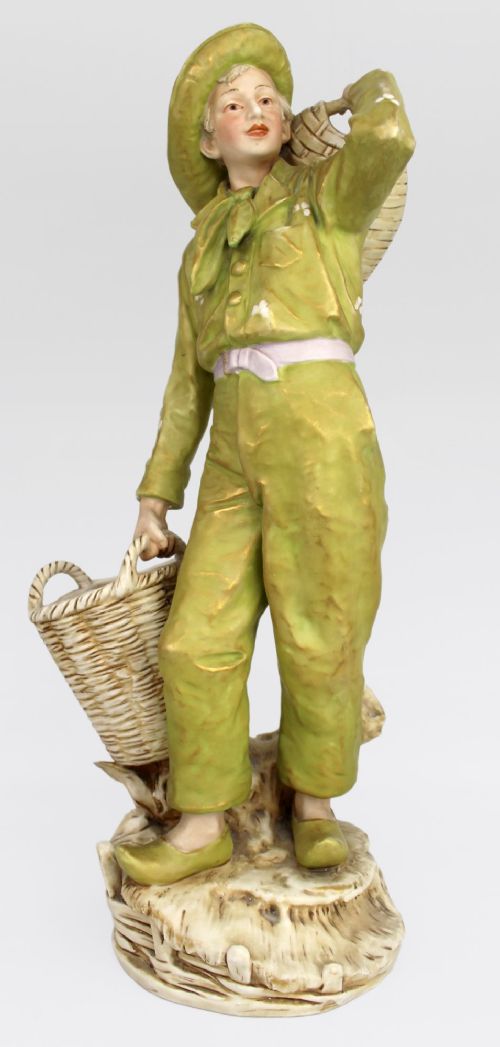
When you search for art nouveau royal dux, you encounter sculptural porcelain pieces shaped during the nineteenth century, the Edwardian era, and the early decades of the twentieth century. These works frequently depict graceful maidens, water nymphs, young women with baskets, and animal figures including setters, puppies, and kittens.
The objects span several practical and decorative forms, most notably large figurines, monumental figures, and expansive shell centrepieces or vide poche vessels. You will often meet works embodying the distinctive organic curves and sinuous silhouettes typical of the Art Nouveau style, alongside occasional Orientalist subjects.
The selection ranges from solo figures like the wool spinner and female bather to elaborate pairs and figural groups carrying water jugs, puppies, or wicker baskets. These creations served as sophisticated ornamental centrepieces for turn-of-the-century interiors.
How they were made
These pieces are fashioned from porcelain, ceramic, and biscuit porcelain, shaped into complex figural models and large vessels. The manufacturing process relies on detailed moulding to capture the flowing drapery, organic contours, and naturalistic textures of hair, clothing, and water plants.
What varies in quality
Quality in these porcelain works rests primarily on the crispness of the modelling and the scale of the piece, where monumental figures and large centrepieces demonstrate greater sculptural ambition. The nuance found in facial expressions, hand gestures, and the rendering of flowing drapery separates standard production from exceptional examples.
The application of glaze, enamel, and gilding also determines the visual depth of a piece, with finer works displaying precise brushwork and well-preserved metallic highlights. The presence of early model numbers and artist signatures indicates distinct tiers of workshop output.
H Schubert·Eichwald·Alois Hampel
The Art Nouveau Royal Dux Glossary
- Biscuit porcelain
- Unglazed porcelain fired to a matte, porous finish that resembles fine marble and highlights delicate sculptural detail. This surface finish is frequently utilised on figures to emphasise soft flesh tones and draped garments.
- Vide poche
- A small shallow vessel designed for holding pocket items, translating literally from the French as empty pocket. In these ceramics, they often take the form of figures leaning on large sea shells.
- Centrepiece
- A large decorative object placed in the middle of a dining table or furnishing surface. These examples often incorporate shell basins supported by maiden figures.
- Epergne
- An ornamental centrepiece structure fitted with multiple branches or receptacles for holding flowers, fruit, or sweets. These items integrate figural sculpture with functional display spaces.
- Gilding
- The application of gold leaf or powdered gold paint to ceramic surfaces. This technique emphasises borders, garments, and decorative motifs.
Art Nouveau Royal Dux: Frequently Asked Questions
What subjects do these figures depict?
The pieces frequently portray graceful maidens, water nymphs, and young women engaged in daily tasks like holding jugs or carrying wicker baskets. Animal figures, including setters, puppies, and kittens, also appear alongside shepherd and shepherdess statuettes.
Many designs incorporate natural elements such as shells, papyrus baskets, and ponds into figural groupings and large centrepieces.
How were shell centrepieces used?
Large shell centrepieces served as ornamental table dressings or decorative receptacles in Edwardian and late nineteenth century interiors. They combined sculptural maiden figures with a functional basin shaped like a conch shell.
Owners utilised these vessels to hold floating flowers, fruit, or small decorative items during formal gatherings.
How do I identify the period?
Dating relies on stylistic markers associated with the nineteenth century, Edwardian period, and early twentieth century production years. The sinuous lines and organic motifs point directly to the height of the Art Nouveau movement.
Individual pieces often carry specific model numbers or early numbering systems that help establish their approximate decade of manufacture.