





Georgian Ceramic Pair
These georgian ceramic pair listings bring together matched sets of figures, tableware, and vases made for symmetry on dining tables and mantelpieces.
Georgian Ceramic Pair
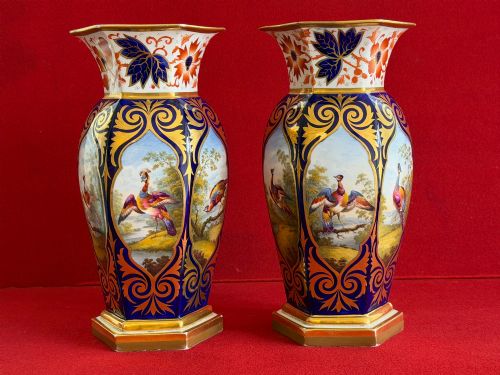
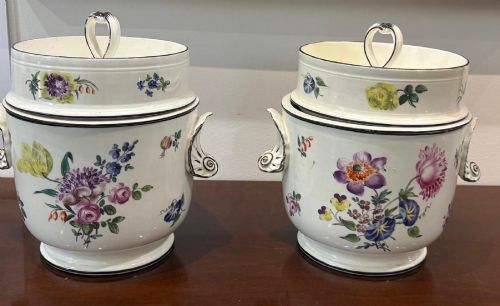
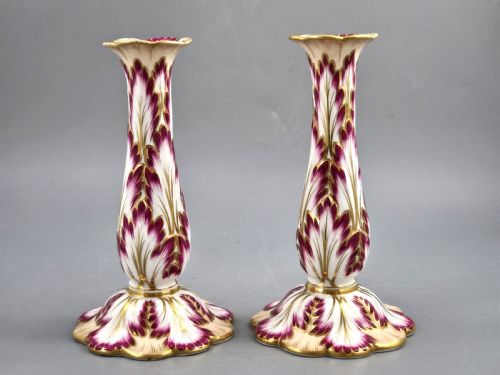
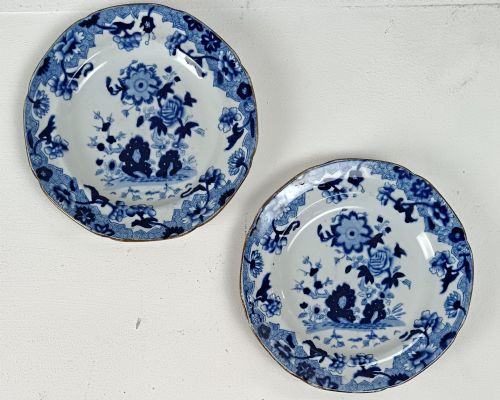
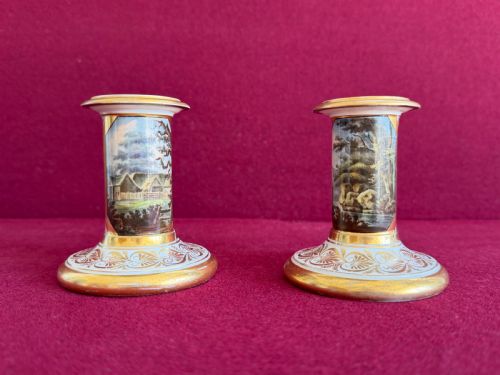
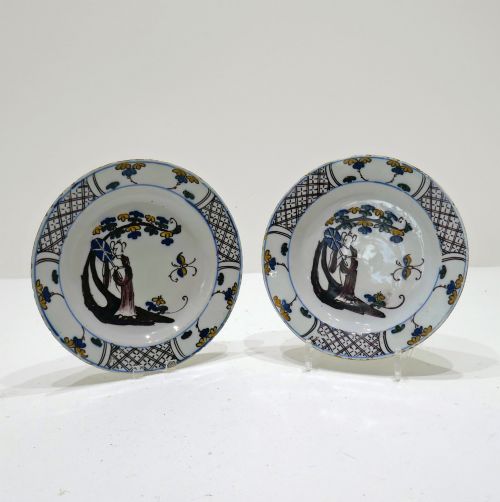
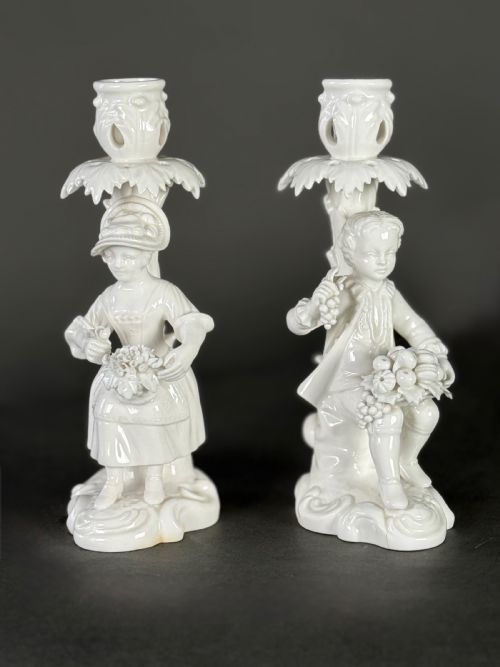
A georgian ceramic pair comprises matching vessels or figures created in the eighteenth and early nineteenth centuries to balance domestic interiors. The examples met on this page range from utilitarian creamware ice pails and blue and white delft plates to porcelain candlesticks, animal figures, and decorative vases.
Makers produced these matching groups for symmetry on sideboards, mantelpieces, and dining tables. Buyers encounter figures depicting mythological scenes, animals, and musicians alongside practical items like sauceboats and tea plates.
Materials and production methods
Potters utilised soft-paste and hard-paste porcelain, earthenware, creamware, and pearlware as base bodies. Artisans shaped these materials using moulds or threw them on wheels before applying cobalt blue underglaze decoration or polychrome enamels.
Many items incorporate hand-applied details, gold leaf, and rich gilding fired onto the glaze. Workshops like Derby, Worcester, and Spode employed skilled painters to execute intricate patterns and figural scenes.
Listings feature eighteenth-century and nineteenth-century periods, utilising materials such as enamel, porcelain, gold leaf, earthenware, and glaze.
Assessing quality in matching sets
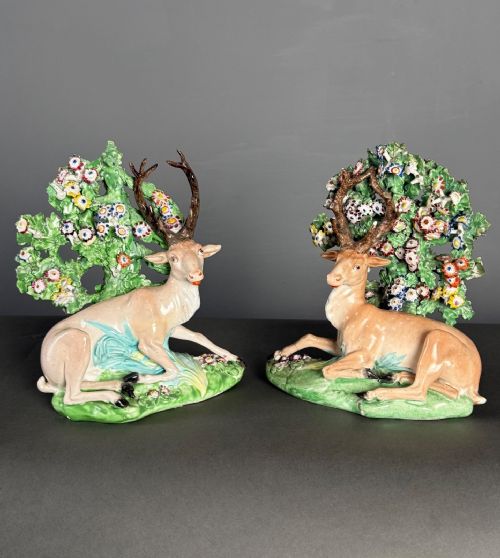
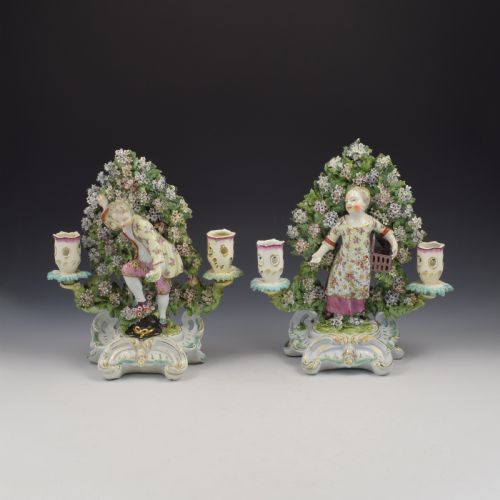
Quality rests upon the crispness of the modelling in figural pieces and the precision of the hand-painted enamels. Superior examples display careful potting, even glaze coverage, and sharp details on moulded elements such as bocage foliage.
The degree of wear on gilding and enamel surfaces indicates how much handling a pair endured over the centuries. Matching symmetry and the survival of original components also determine the desirability of a set.
Flight Barr and Barr·Derby Porcelain·Spode·Barr Flight and Barr·Bow Porcelain·Chamberlain Worcester·Mason·Minton·Royal Crown Derby·Ridgway
The Georgian Ceramic Pair Glossary
- Creamware
- A refined earthenware with a pale yellowish-buff glaze developed in Yorkshire and Staffordshire. Josiah Wedgwood perfected this pale body, which became a standard for domestic dining ware.
- Pearlware
- An earthenware body containing a small amount of cobalt in the glaze to produce a bluish-white surface. It gained widespread popularity in the late eighteenth century.
- Bocage
- An applied background of leaves and branches made of porcelain. It frequently surrounds eighteenth-century English candlestick figures.
- Soft-paste porcelain
- A ceramic composition of glass and white clay fired at lower temperatures than hard-paste. Early English factories relied on this mixture before discovering domestic deposits of china clay.
- Imari
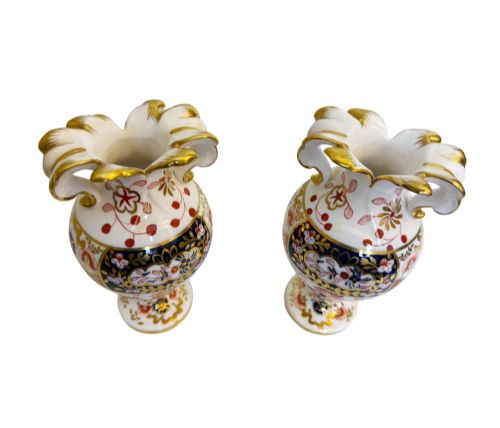
- A decorative style inspired by Japanese export wares featuring underglaze blue combined with iron red and gold. English potteries adopted these striking motifs during the Regency period.
Georgian Ceramic Pair: Frequently Asked Questions
How were ceramic pairs used in Georgian homes?
Households placed matched vessels and figures symmetrically on mantelpieces, sideboards, and dining tables to create balanced decorative schemes.
Practical items like ice pails and sauceboats served meals, while porcelain figures and vases provided purely visual ornamentation.
Why do some porcelain figures feature bocage backgrounds?
Modelters added intricate porcelain foliage and leaves behind figural subjects to provide structural support during high-temperature kiln firings.
This decorative backdrop also created a naturalistic garden setting for pastoral scenes, musicians, and mythological characters.
How can I distinguish soft-paste from hard-paste porcelain?
Soft-paste porcelain contains glass and white clay, yielding a warmer tone and a slightly softer glaze that scratches more readily under testing.
Hard-paste porcelain uses true china clay and stone, producing a vitrified, highly durable body that resists scratching.