


Antique Ceramic Mantle Ornament
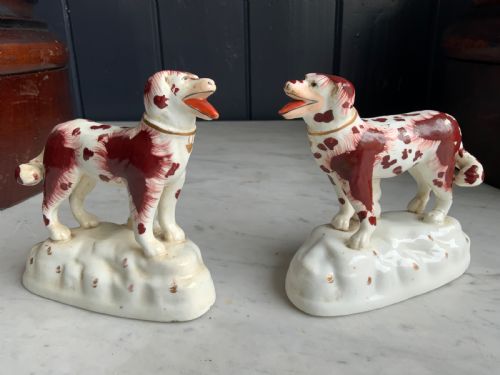
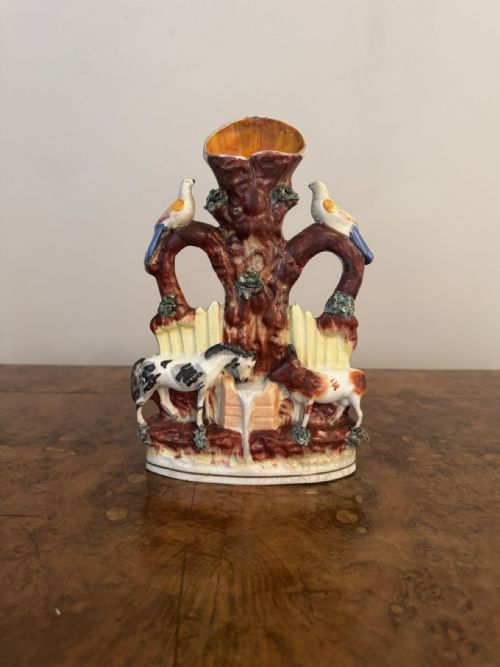
These antique ceramic mantle ornament pieces bring character to a fireplace, and Staffordshire dogs and spill vases dominate the selection.
Antique Ceramic Mantle Ornament
An antique ceramic mantle ornament bridges the gap between domestic display and functional mantelpiece decoration. Buyers frequently encounter Staffordshire spaniels, pugs, greyhounds, and flatback portrait figures among these listings.
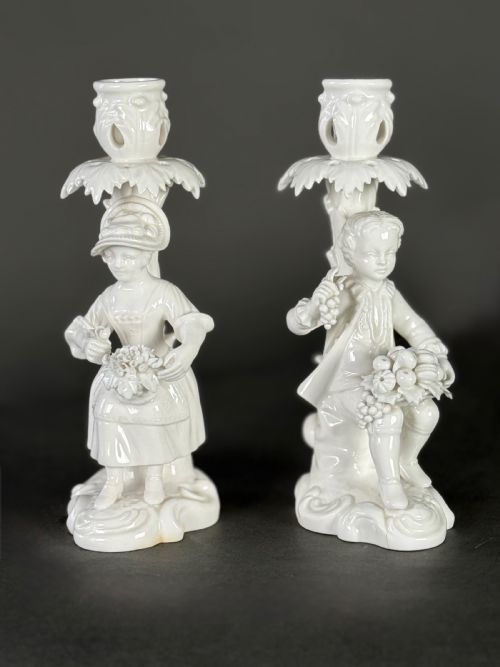
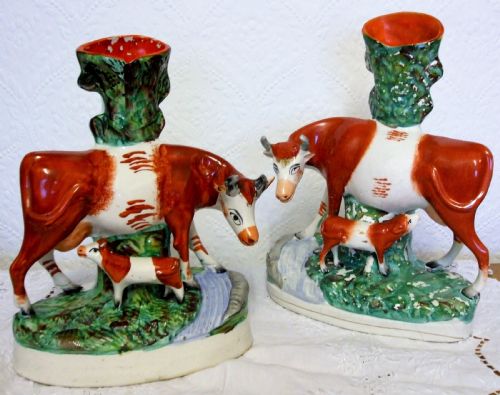
Nineteenth-century production accounts for the bulk of these items, spanning Victorian earthenware and porcelain examples. Pairs of spill vases, candlesticks, and modelled animals appear regularly across the inventory.
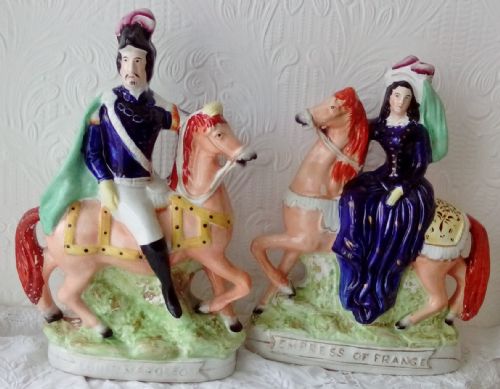
Earlier Georgian and Regency pieces surface occasionally, offering finer Derby figures alongside the robust Staffordshire pottery. Victorian iterations often depict historical personages, literary scenes, or pastoral pairs.
Materials and modelling techniques
Potters utilised earthenware, hard paste porcelain, and unglazed bisque porcelain to form these decorative objects. Slip-casting and press-moulding allowed workshops to produce repeating animal figures and human subjects efficiently.
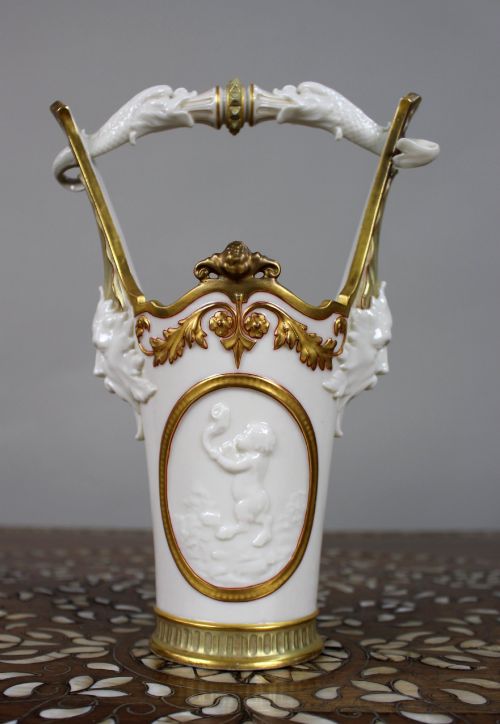
Surface decoration combined hand painting with coloured glazes, enamel details, and occasional gilt or gold leaf highlights. Biscuit fired clay received careful hand finishing before secondary glaze firings set the colours.
Specialised techniques like pate-sur-pate added raised white slip decoration over coloured body grounds, visible on finer nineteenth-century vases. Encrusted clay details provided tactile texture to cushions and floral elements.
Napoleon III and Empress Eugenie regularly share mantelpiece space with Little Red Riding Hood and Scottish highlanders.
Judging modelling and finish
The application of glaze and gilding dictates visual presence on a mantelpiece. Rich enamel colours and intact gold leaf elevate a piece above examples with thin, uneven glazing or heavy wear.
Royal Worcester·Derby·Bloor Derby·Ernst Whaliss·Minton
The Antique Ceramic Mantle Ornament Glossary
- Bisque porcelain
- Un-glazed white porcelain fired once to produce a matte, marble-like texture ideal for detailed figurative work. It captures subtle facial expressions and clothing drapery without the reflective shine of a gloss glaze.
- Flatback
- A Staffordshire pottery figure finished with a flat, unpainted rear side designed to sit flush against a wall or mantelpiece. This economical construction method saved materials and kiln space during production.
- Spill vase
- A hollow ceramic vase incorporating a vertical tube intended to hold wooden spills for lighting candles and fires. These dual-purpose objects combined domestic utility with figurative pottery.
- Pate-sur-pate
- A ceramic decoration technique where layers of liquid white porcelain slip are built up on a contrasting coloured body to create low-relief cameos. The method requires immense skill from the decorator to achieve translucent tonal gradations.
- Hard paste porcelain
- A durable ceramic composition fired at high temperatures using kaolin and petuntse, producing a dense, vitreous body. It resists scratching and takes enamels securely during secondary kiln firings.
Antique Ceramic Mantle Ornament: Frequently Asked Questions
What periods do these mantle ornaments cover?
The pieces span from the eighteenth century through the Victorian era into the early twentieth century. Georgian and Regency examples represent the earlier end, while Victorian Staffordshire dominates the mid to late nineteenth century.
Art Nouveau and Edwardian iterations appear alongside these older works, showing how mantelpiece decoration evolved over two centuries of ceramic production.
How were mantle ornaments used?
Families placed pairs of figures, dogs, or vases on fireplace mantelpieces to anchor the room's decor. Spill vases served the practical purpose of holding tapers used to light candles and fires.
Figurines also commemorated political figures, literary characters, and royal events, functioning as decorative conversation pieces in Victorian parlours.
How do I care for antique ceramics?
Keep these pieces out of direct sunlight to prevent enamel colours from fading over time. Dust them gently with a soft, dry brush rather than using water or cleaning solutions, which can damage unglazed bisque or fragile gilt details.
Ensure they sit on stable, level surfaces away from high-traffic areas where vibrations might cause them to fall.