

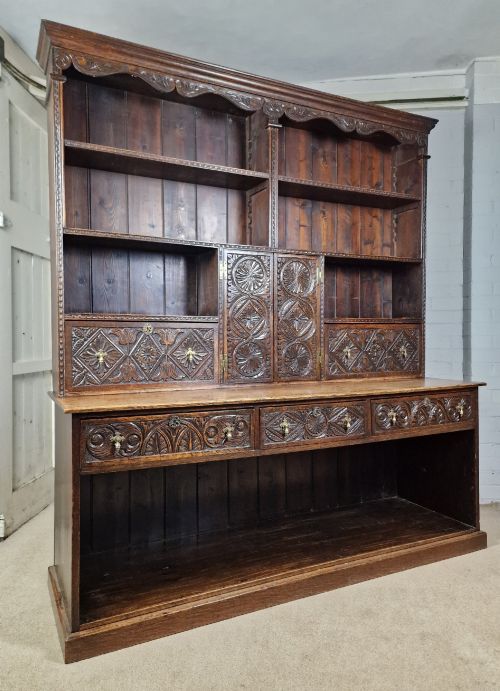
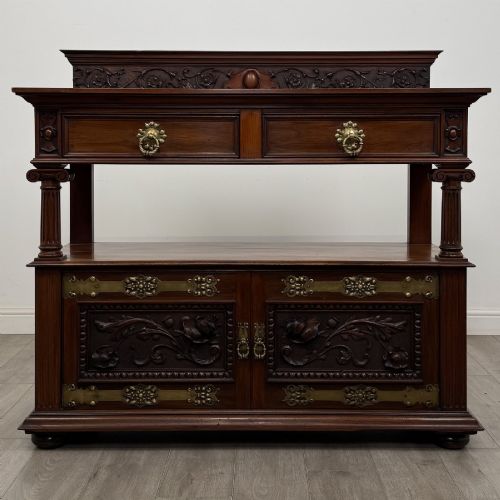
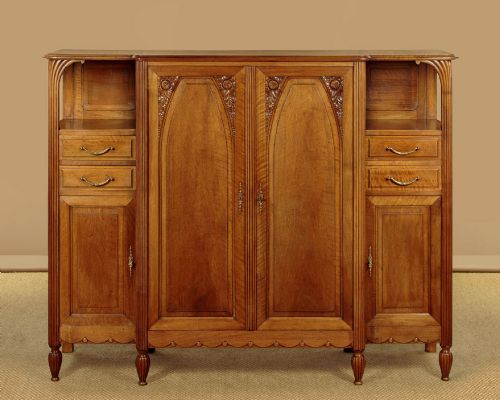
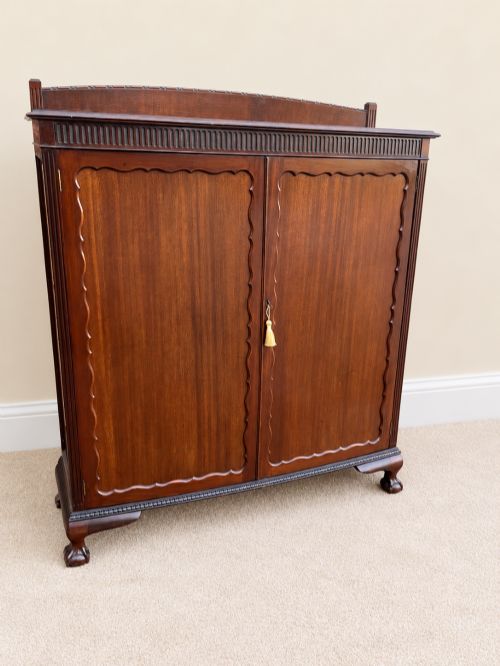
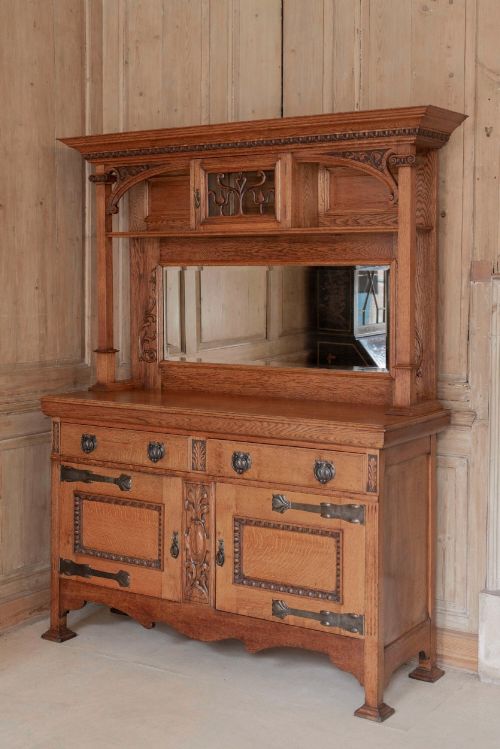
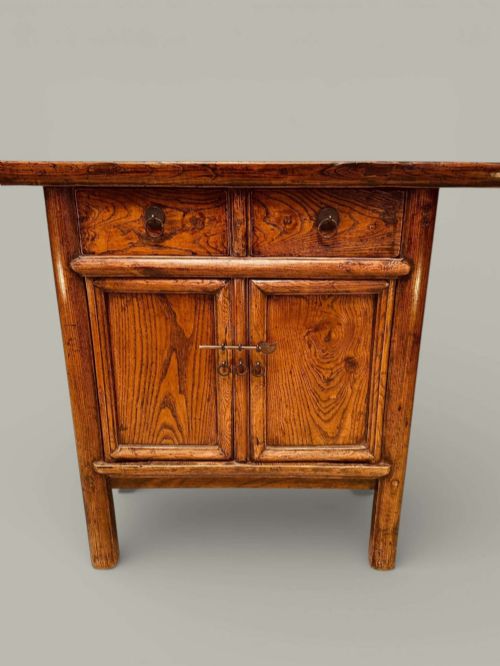

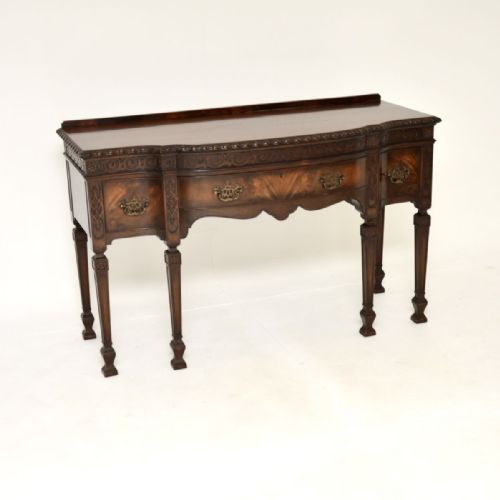
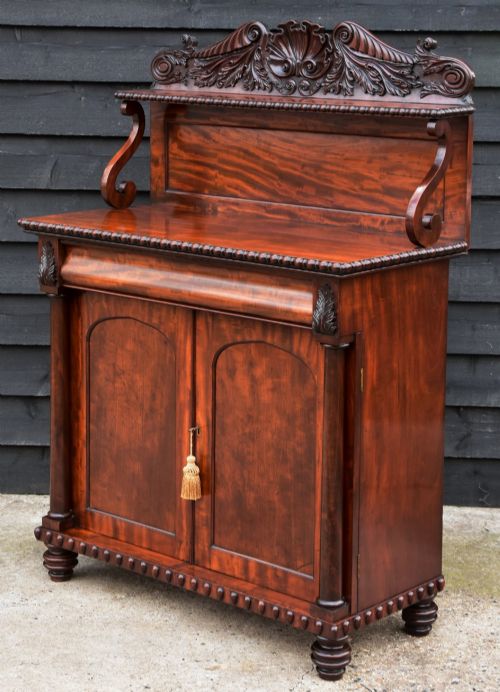
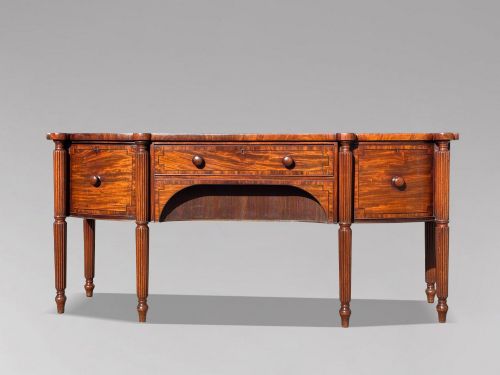
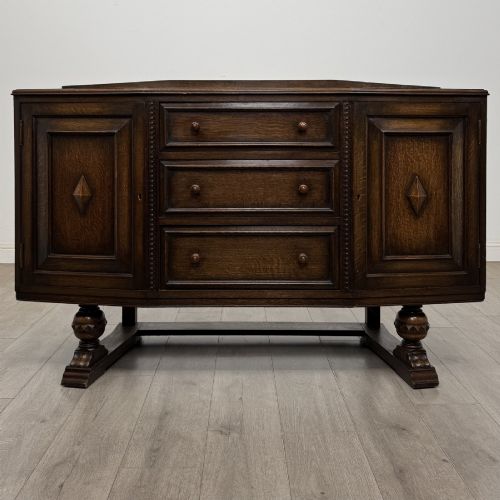
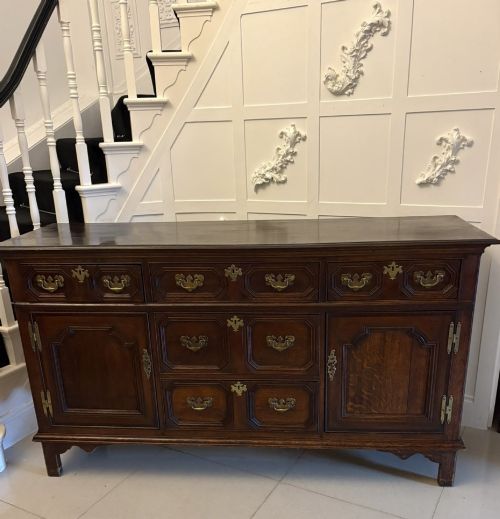
Antique Carved Wooden Sideboard
An antique carved wooden sideboard anchors a dining room with serious timber, deep drawers, and decades of quiet domestic utility.
Antique Carved Wooden Sideboard
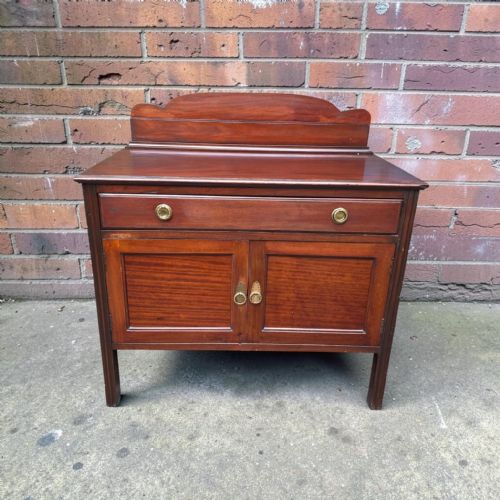
An antique carved wooden sideboard provides heavy storage and surface space for dining rooms, hallways, and formal living areas. These pieces range from compact chiffoniers to large breakfront cabinets designed for silver and linen.
The pieces on this page span several centuries, with particular emphasis on Victorian, Edwardian, and nineteenth-century examples. Oak and mahogany dominate the offerings, appearing alongside walnut, chestnut, and elm.
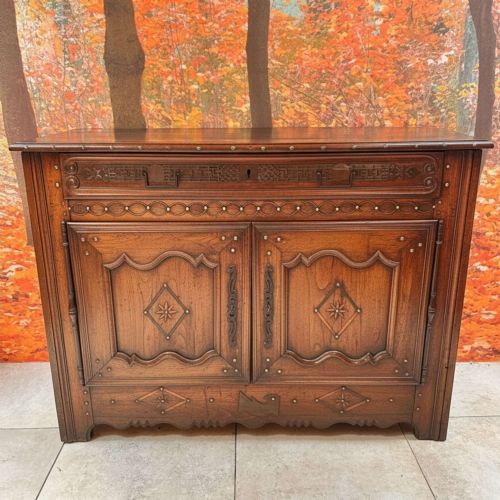
Buyers will encounter formal Regency pedestal forms next to robust Jacobean and Gothic revival styles. Regional variations include French provincial buffets and Chinese elm hall tables with drawers.
Materials and construction methods
Makers utilised solid timbers like oak and mahogany for structural integrity, often applying flame mahogany veneer or burr walnut to prominent drawer fronts and doors. Secondary woods such as pine appear on internal drawer linings and carcass backs.
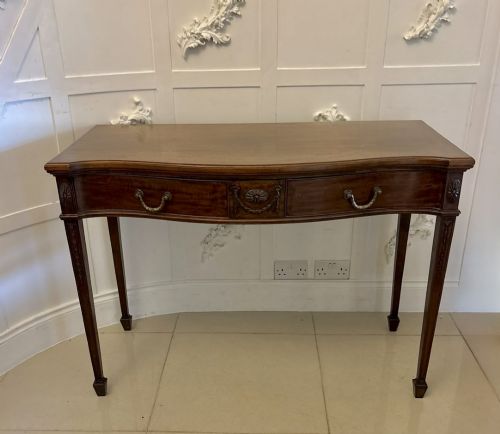
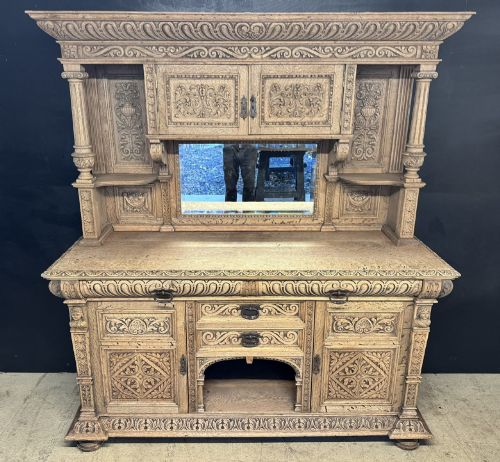
Carving techniques define the decorative vocabulary, ranging from linear fan motifs and ionic columns to deep relief lion masks and folk art panels. Brass hardware, glass doors, and iron fittings complete the functional assembly of these heavy storage units.
Antique Carved Wooden Sideboard Retail Price Guide 2026
Typical asking prices for carved wooden sideboard among the pieces listed under this phrase on Sellingantiques today, from the lower quarter to the upper quarter. They describe what is for sale here now, not the wider market.
Listings incorporate multiple timber varieties including oak, mahogany, walnut, chestnut, elm, and padouk across various centuries.
Qualities that separate the grades
The selection of timber grain dictates visual hierarchy, where book-matched flame veneers or figured pollard oak elevate a piece far above plain stock. Crispness of hand-carving distinguishes bespoke workshop production from repetitive machine stamping.
Internal joinery standards, such as dovetailed drawer construction and original brass or iron locking hardware, separate robust survivors from altered or weakened examples.
Maple & Co
The Antique Carved Wooden Sideboard Glossary
- Chiffonier
- A low sideboard or cabinet with a raised shelf or superstructure on top. These compact pieces were popular in nineteenth-century parlours.
- Dresser base
- An open or drawer-fitted lower wooden framework originally used in kitchens and dining spaces for food preparation and storage.
- Serpentine
- A curved front shape featuring a convex centre flanked by concave curves. This flowing profile requires advanced cabinet-making skill.
- Pedestal sideboard
- A heavy storage form featuring flanking pedestals or cupboards beneath a central surface. Regency and William IV makers favoured this monumental format.
- Credenza
- A sideboard or buffet cabinet often standing low to the ground with glass or panelled doors. Victorian iterations frequently incorporated marble tops.
Antique Carved Wooden Sideboard: Frequently Asked Questions
What is an antique sideboard used for?
These pieces provide substantial storage in dining rooms and living spaces for tableware, linen, and glassware. The top surface also acts as a serving area during meals.
Historically, larger iterations held silver and serving dishes, while smaller chiffoniers functioned as display cabinets for decorative objects.
How do I identify a Victorian sideboard?
Victorian examples frequently utilise dark mahogany, burr walnut, or pollard oak with heavy carved details like lion masks or ionic columns. They tend to be solid, imposing pieces built for substantial nineteenth-century interiors.
Later Victorian pieces often incorporate plate glass and shaped serpentine fronts, moving away from strict geometric austerity.
Are Edwardian sideboards different from Georgian ones?
Edwardian sideboards tend to be lighter in build and drawing room scale, frequently featuring mahogany with delicate inlay work. They reflect a turn-of-the-century revival of classical proportions.
Georgian and Regency variants rely on heavier architectural presence, rich mahogany grain, and pedestals rather than slender cabriole or tapered legs.
How do I care for an old wooden sideboard?
Keep wooden furniture away from direct heat sources and rapid humidity shifts to prevent timber splitting and veneer lifting. Regular dusting with a dry cloth maintains the finish.
Feed dry hardwoods periodically with appropriate wax to preserve the depth of the timber and protect the original polish.