



Brass Mounted Mahogany Credenza
A brass mounted mahogany credenza offers an imposing display surface and concealed storage, anchoring a formal room with rich dark timbers and bright metallic accents.
Brass Mounted Mahogany Credenza
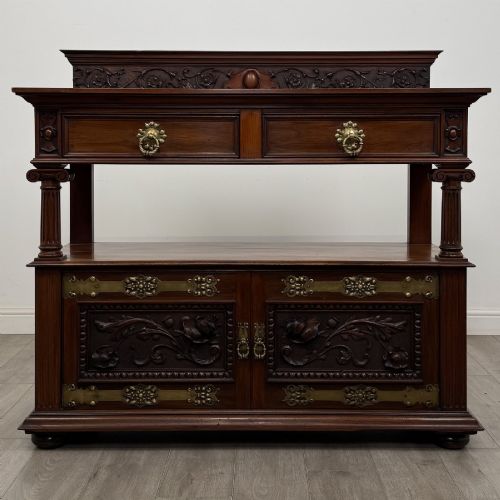
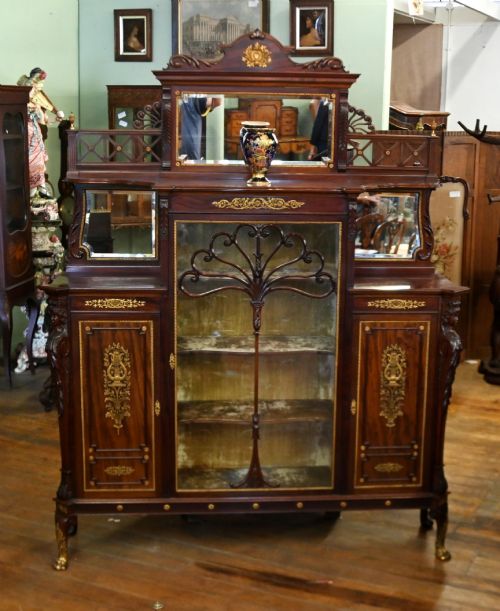
A brass mounted mahogany credenza combines deep timber cabinetry with cast metal mounts, serving as a substantial low storage piece or display cabinet for a formal interior. These architectural items emerge across the nineteenth century in various revivals, including Regency, Louis XVI, and Art Nouveau interpretations.
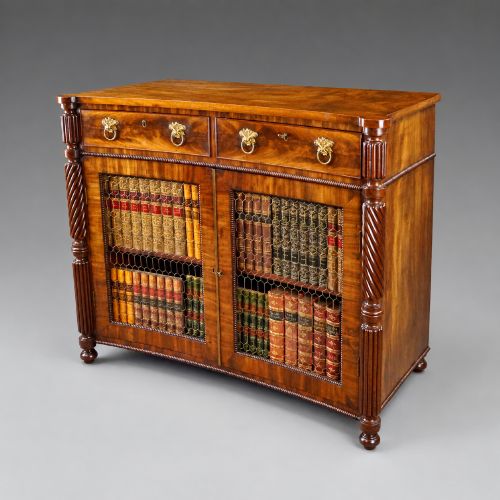
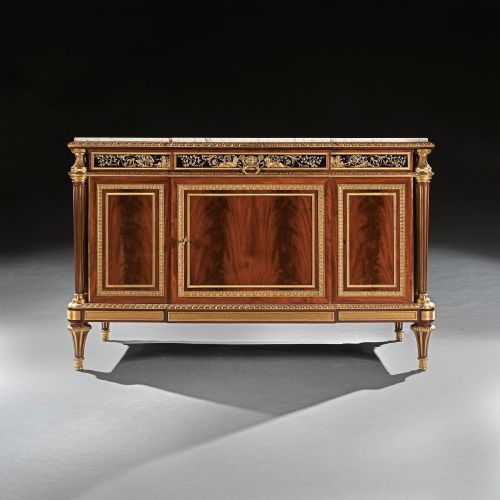
The pieces on this page appear in forms such as side cabinets, display cabinets, commodes, and chiffoniers alongside traditional credenzas. Cabinetmakers shape these furniture items with concave fronts, ionic columns, and parquetry patterns, drawing on French and English design vocabularies.
Makers construct these low cabinets primarily in mahogany and rosewood, incorporating glass doors and mirrored backs to catch the light in a dining room or drawing room. Brass and ormolu mounts punctuate the dark wood surfaces, defining the architectural outlines of each cabinet.
Materials and construction methods
Cabinetmakers select dense tropical hardwoods, predominantly mahogany and rosewood, often featuring figured grain patterns across the primary doors and panels. They pair these dark timbers with walnut and parquetry details to create tonal contrast on the exterior facades.
Cast brass and ormolu mounts are fixed to the corners, friezes, and panel borders, providing structural emphasis and decorative relief. Glazed panels and mirror glass insert into door frames, while marble tops frequently crown the upper surface of commodes and cabinets.
Brass Mounted Mahogany Credenza Retail Price Guide 2026
Typical asking prices for brass mounted mahogany credenza among the pieces listed under this phrase on Sellingantiques today, from the lower quarter to the upper quarter. They describe what is for sale here now, not the wider market.
One cabinetmaker hid storage behind ionic columns, proving that classical architecture makes a very reliable hiding spot.
Distinctions in quality and execution
The refinement of the cast metal mounts and the precision of the parquetry inlay distinguish standard production from exceptional examples. Finer cabinets display crisper chasing on the ormolu and more deliberate figure matching in the mahogany veneers.
Structural complexity, such as concave curving fronts or the inclusion of detailed architectural elements like ionic columns, marks the upper tier of these pieces. The presence of integrated mirror glass and comprehensive interior shelving further elevates the ambition of the construction.
Henry Dasson·Weisweiler·Gillows·S Jamar·Riesener
The Brass Mounted Mahogany Credenza Glossary
- Ormolu
- Gilded bronze mounts applied to furniture. This technique provides a bright metallic finish that contrasts against dark mahogany.
- Parquetry
- Geometric wood inlay patterns. Cabinetmakers arrange contrasting timbers like rosewood and mahogany to form decorative surfaces.
- Chiffonier
- A tall sideboard or low cabinet with doors. This form offers enclosed shelving for storage in nineteenth-century interiors.
- Commode
- A low decorative chest of drawers or cabinet. These French-influenced pieces frequently feature marble tops and elaborate metal mounts.
Brass Mounted Mahogany Credenza: Frequently Asked Questions
Where should a credenza be placed?
These low cabinets suit formal dining rooms, drawing rooms, or spacious hallways where their long profile can anchor a wall.
Position the piece away from direct heat sources to protect the mahogany timbers and delicate brass mounts from environmental stress.
How do I care for the wood?
Maintain the mahogany surfaces with a soft, dry cloth to remove dust without stripping the natural patina of the antique timber.
Avoid commercial liquid polishes that can build up a residue and dull the grain or discolour the adjacent metal mounts.
What is the difference between a credenza and a sideboard?
A credenza typically presents a lower, more architectural profile with enclosed cabinet doors rather than the open serving space found on traditional sideboards.
Many nineteenth-century examples incorporate glass display doors and mirrored interiors, shifting their primary function toward decorative display.
How do I identify the period of a cabinet?
Examine the stylistic vocabulary, such as the classical revival motifs of Regency pieces or the organic curves of later Art Nouveau designs.
Look closely at the construction techniques, timber selection, and casting quality of the brass mounts to align the piece with its nineteenth-century manufacturing era.