
Antique Caned Seat Chair
An antique caned seat chair combines woven flexibility with rigid timber framing, offering a light yet durable form that appears across numerous domestic rooms.
Antique Caned Seat Chair
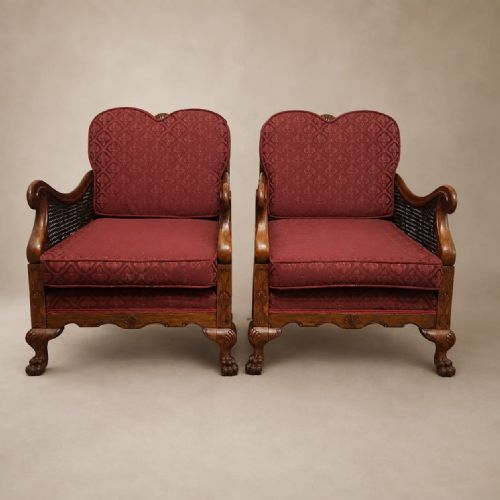
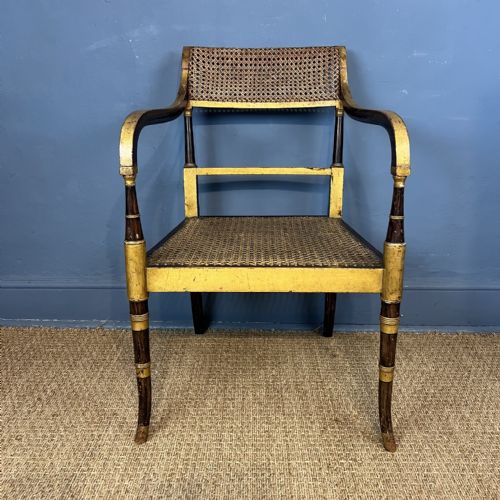
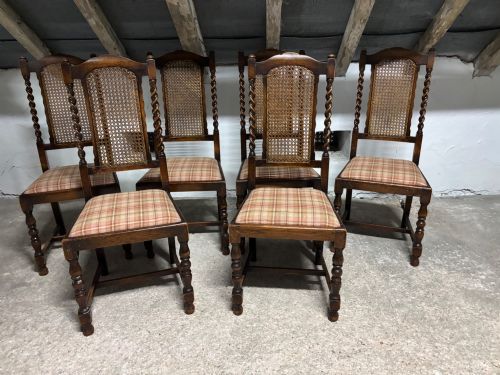
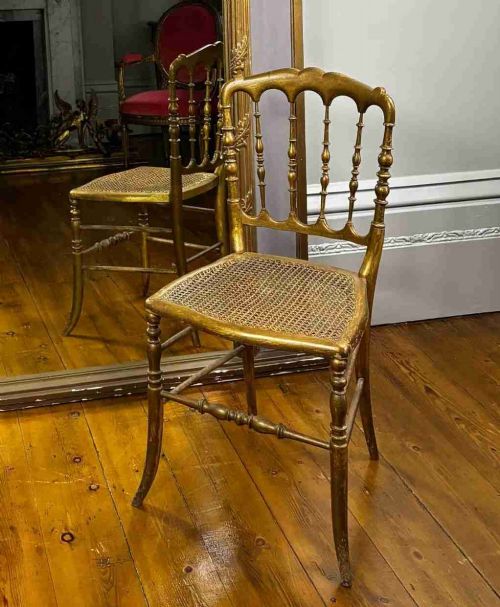
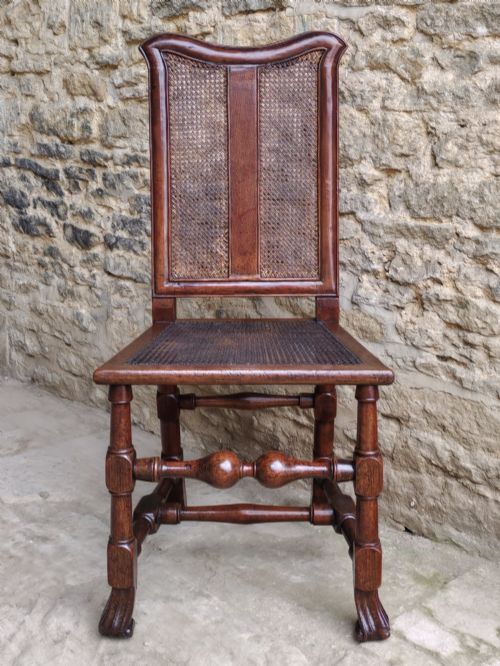
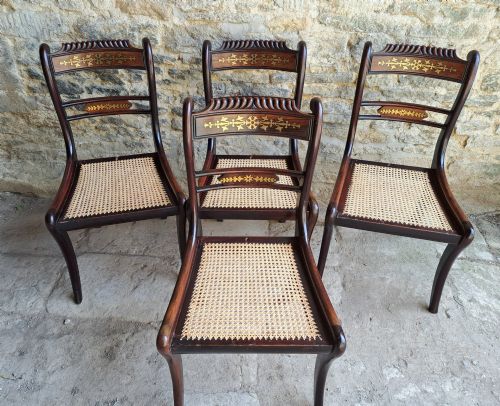
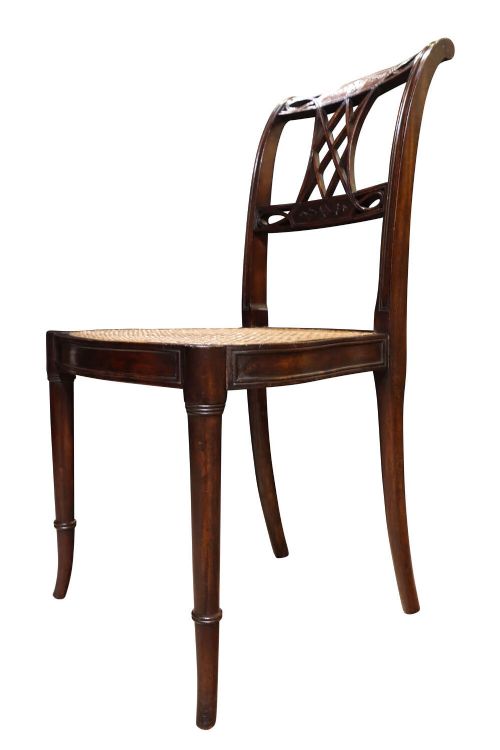
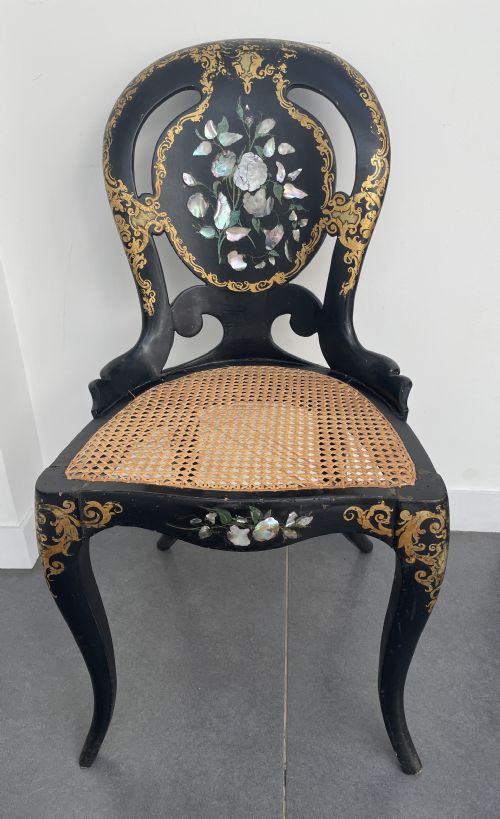
When you search for an antique caned seat chair, you encounter a wide variety of seating forms spanning the eighteenth, nineteenth, and early twentieth centuries. These pieces range from formal dining sets and library armchairs to delicate bedroom chairs and rocking chairs.
The nineteenth century provides the greatest share of surviving examples, particularly within the Regency and Victorian periods. Alongside these, revival designs mimicking earlier seventeenth and eighteenth-century aesthetics appear frequently.
Seating arrangements vary from single side chairs and pairs of armchairs to larger matched dining sets of six. Regional interpretations such as Anglo-Indian pieces also surface within the broader category.
Craftsmanship and Survival
Quality rests heavily on the crispness of the timber carving and the structural integrity of the frame joints. Denser, finer hardwoods maintain stability better over centuries than softer woods subjected to weight and movement.
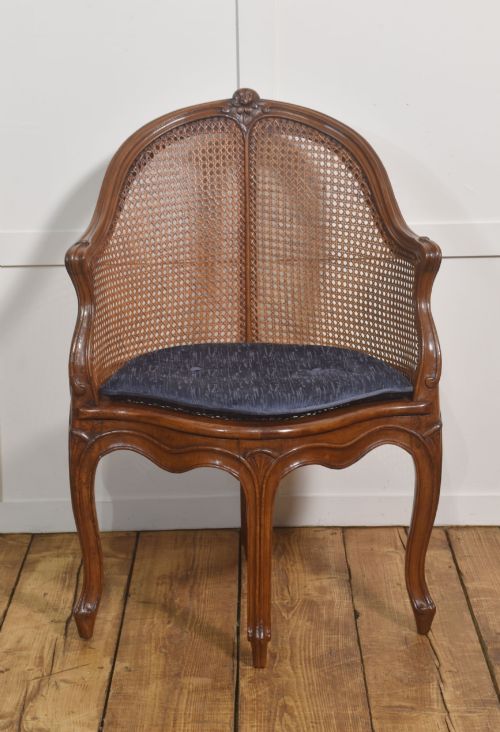
The condition and execution of the woven cane seating dictate a significant portion of the visual appeal. Original cane survival separates untouched examples from those receiving later restoration work.
The listings demonstrate a strong presence of nineteenth-century pieces, with mahogany and cane emerging as the most dominant material combination.
The Antique Caned Seat Chair Glossary
- Cane
- A material derived from the peeled and split stem of rattan palms, woven tightly to form resilient and breathable seat panels.
- Bergere
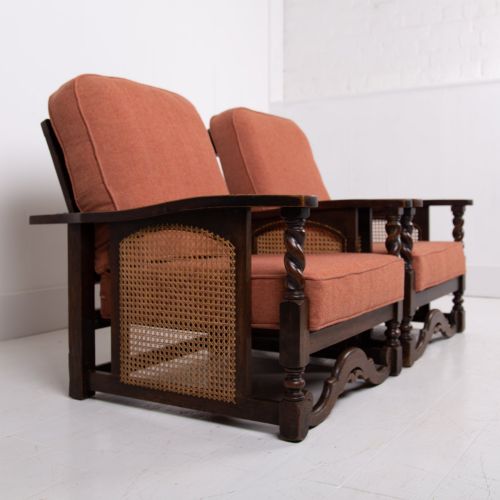
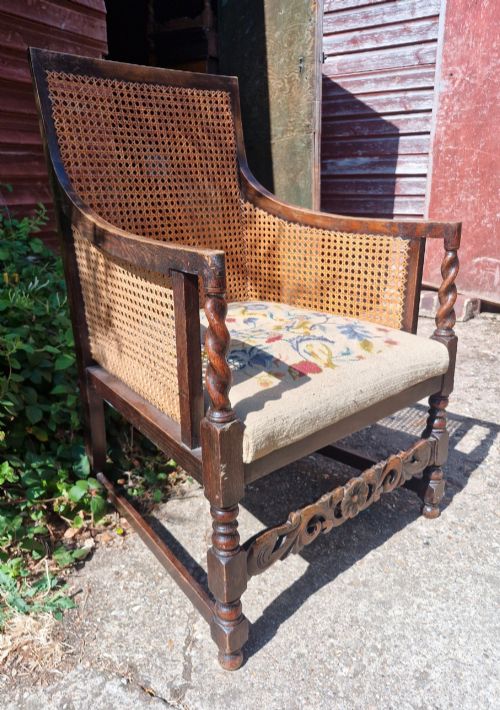
- An enclosed upholstered or caned armchair featuring solid wooden sides, popular during the Regency and later revival periods.
- Carver
- An armchair designed with arms, traditionally placed at the head of a dining table alongside matching side chairs.
- Sabre leg
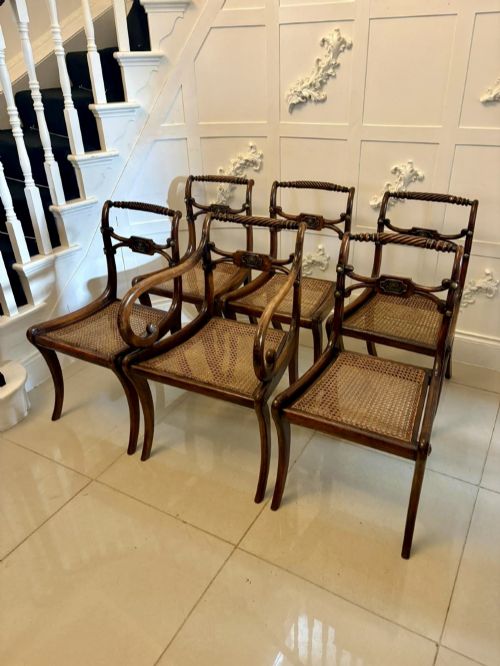
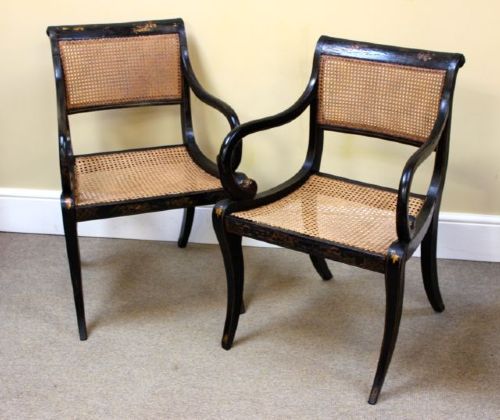
- A concave-curving furniture leg that tapers towards the foot, frequently seen on Regency dining and side chairs.
- Shield-back
- A chair back shaped in the outline of a domestic shield, commonly associated with late eighteenth-century Hepplewhite designs.
Antique Caned Seat Chair: Frequently Asked Questions
How do I care for a caned seat?
Keep caned furniture away from direct heat sources and intense sunlight to prevent the natural fibres from drying out and snapping.
Lightly dampening the underside of the cane periodically helps maintain moisture and elasticity in older woven panels.
Were these chairs used for dining?
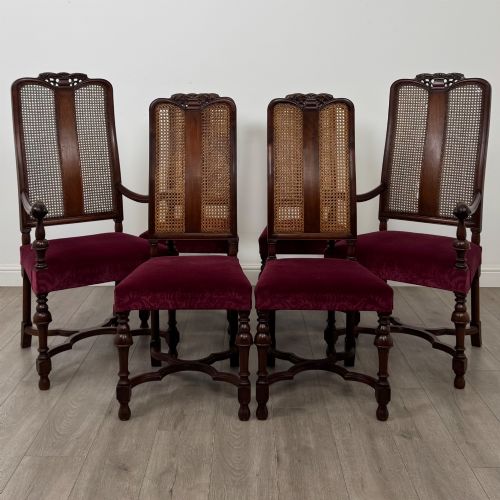
Many examples function specifically as dining chairs, often appearing in sets ranging from four to six pieces.
Armchairs known as carvers typically accompanied sets of single side chairs around the dining table.
What is a bergere armchair?
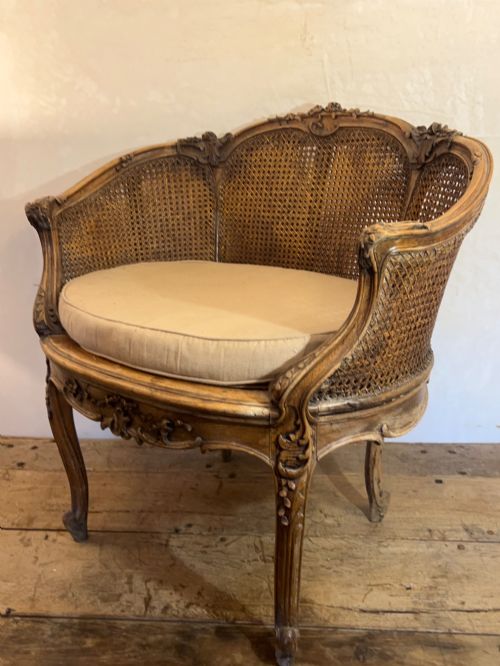
A bergere is a comfortable armchair featuring closed wooden sides filled with cane work rather than solid upholstery.
These pieces frequently incorporate loose cushions on the seat for added comfort during use.
How do I spot a Regency chair?
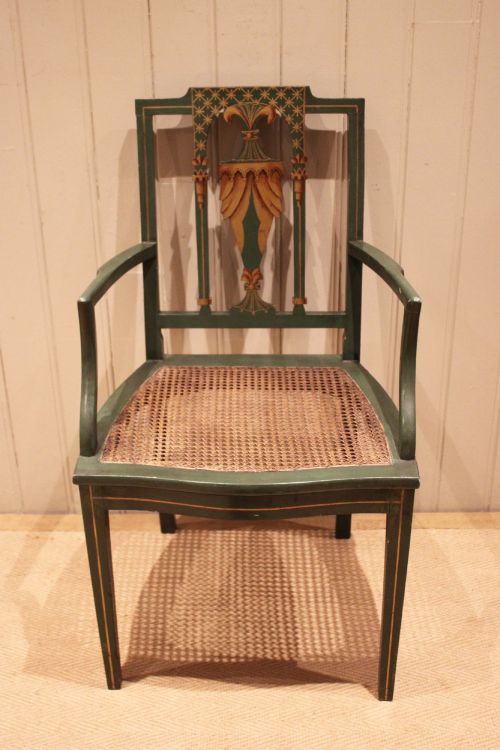
Regency chairs typically display classical influences, incorporating sabre legs, brass inlay, or painted and gilded surfaces.
Mahogany and rosewood serve as primary timbers for this distinct early nineteenth-century style.