





Gilded Occasional Chair
A gilded occasional chair brings instant brightness and historic character to a room.
Gilded Occasional Chair
When you search for a gilded occasional chair, you are looking at light, decorative seating designed to be moved easily around a room as needed. The examples seen here range from nineteenth-century salon pieces to early twentieth-century revivals.
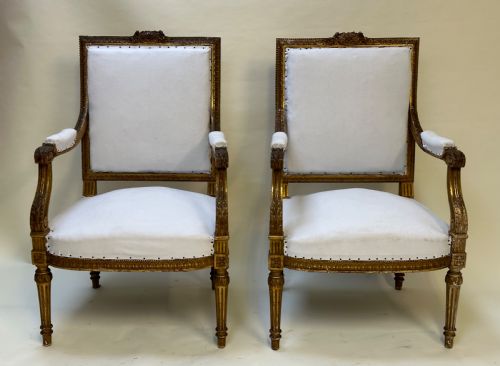
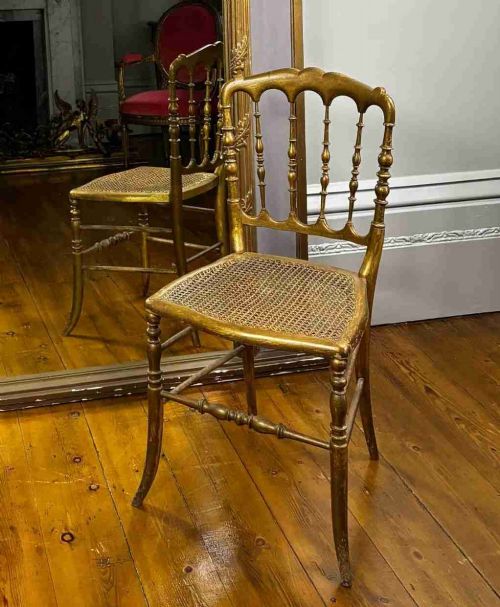
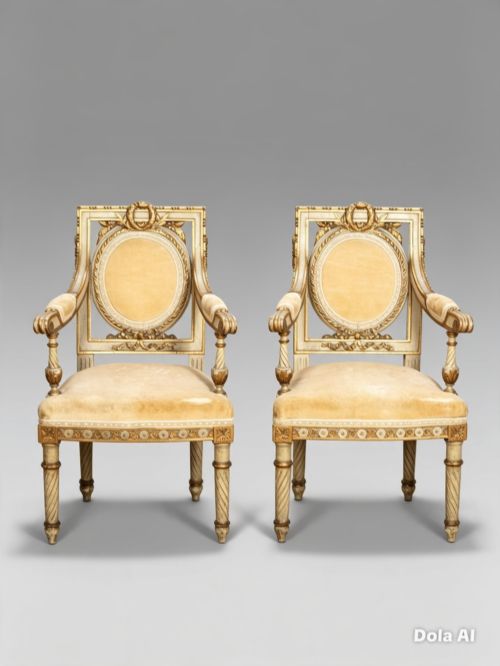
You are most likely to meet French and English designs from the nineteenth century, including Louis XVI revival styles, Victorian pieces, and Regency items. These chairs often feature giltwood or gilt finishes combined with textile, velvet, or cane seats.
Forms vary from armchairs and side chairs to salon chairs, accent chairs, bedroom chairs, and nursing chairs. Many are offered in pairs, providing a balanced look for a drawing room or bedroom.
Materials and construction
Makers utilised wood such as walnut or timber frames prepared with gesso before applying gold leaf or gilt finishes. This traditional layering technique creates the luminous surface characteristic of these decorative seats.
Seating areas were constructed using woven cane or upholstered with fabrics, textiles, and velvet. Some pieces combine carved giltwood frames with simulated bamboo or painted details.
Gilded Occasional Chair Retail Price Guide 2026
Typical asking prices for gilded occasional chair among the pieces listed under this phrase on Sellingantiques today, from the lower quarter to the upper quarter. They describe what is for sale here now, not the wider market.
Listings feature pieces spanning the nineteenth and early twentieth centuries, incorporating Louis XVI Revival, French Rococo Revival, and Regency styles.
Assessing quality and finish
The standard of the carving on the wooden frame distinguishes finer pieces from simpler workshop production. Crisp detail in the scroll arms and floral motifs indicates skilled hand-working rather than mass-produced moulding.
The integrity of the gilt surface and the tightness of cane or upholstery work also determine the desirability of a piece. Original gold leaf surfaces retain a softer warmth compared to later repainting.
The Gilded Occasional Chair Glossary
- Giltwood
- Wood that has been coated with gold leaf or a gold-coloured metallic finish. This was a popular treatment for formal seating designed to reflect candlelight.
- Gesso
- A plaster-like mixture applied to wooden frames to provide a smooth base for gilding. It allows carvers to achieve sharp, detailed ornamentation before the gold leaf is laid down.
- Cane
- Woven rattan material used for chair seats and backs. It offers a lightweight and flexible surface that contrasts with heavily carved wooden frames.
- Salon Chair
- A decorative chair intended for use in a formal reception room rather than for daily lounging. These pieces prioritise visual elegance and portability.
Gilded Occasional Chair: Frequently Asked Questions
Where should I place a gilded occasional chair?
These lighter seats work well in drawing rooms, bedrooms, or hallways where extra seating is needed without heavy visual bulk. They function effectively as accent pieces rather than primary lounging chairs.
Because they were originally designed for occasional use in formal spaces, they suit quiet corners, dressing rooms, or alongside a fireplace rather than heavy daily seating.
How do I care for giltwood frames?
Dust the surfaces gently with a soft, dry cloth to prevent the accumulation of dirt on the delicate gold leaf. Avoid using liquid cleaners, moisture, or chemical polishes, which can strip or damage the historic finish.
Keep the chair away from direct sunlight and strong heat sources to prevent the gesso and wood underneath from drying out or cracking over time.
Are these chairs comfortable for daily use?
Gilded occasional chairs were built primarily for formal entertaining and decoration rather than extended sitting. Their upright backs and rigid frames reflect the formal etiquette of the periods in which they were made.
If you plan to sit for longer periods, add a small supportive cushion or choose a padded salon or nursing chair version rather than a rigid side chair.
How do I identify a revival style?
Nineteenth-century revival pieces copy the aesthetics of earlier eras, such as the neoclassical Louis XVI style or Regency designs. Look closely at the wood joints, tool marks, and wear patterns to distinguish a nineteenth-century interpretation from an eighteenth-century original.
Materials and construction methods often reveal the true age of the piece, as nineteenth-century makers used machine assistance alongside traditional hand carving.