

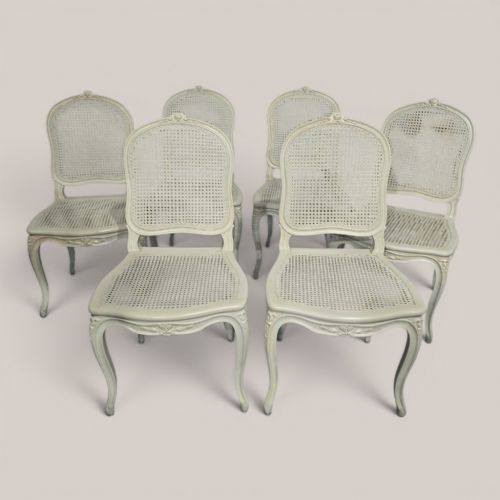
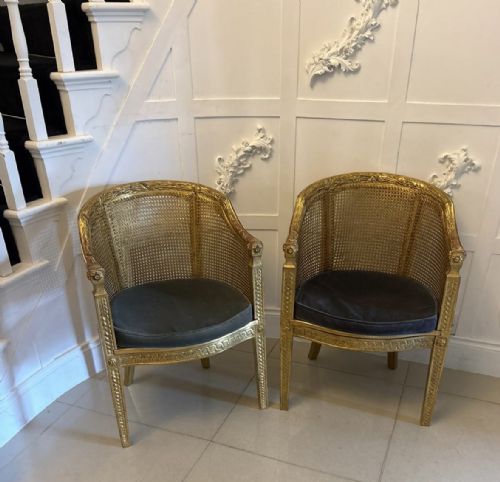
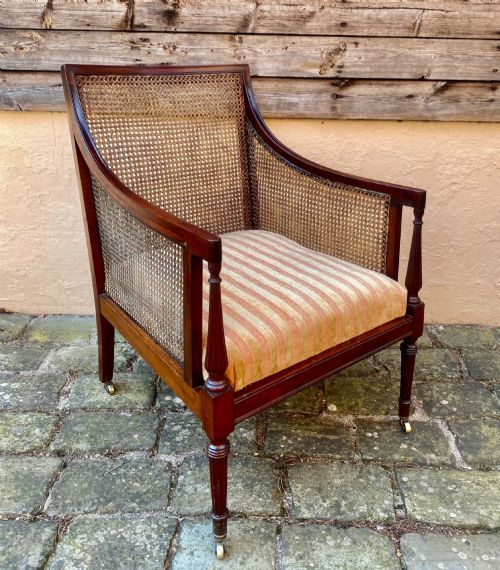
Caned Side Chairs
Caned side chairs bring woven texture and clean timber lines into a room, offering lightness without losing period form.
Caned Side Chairs
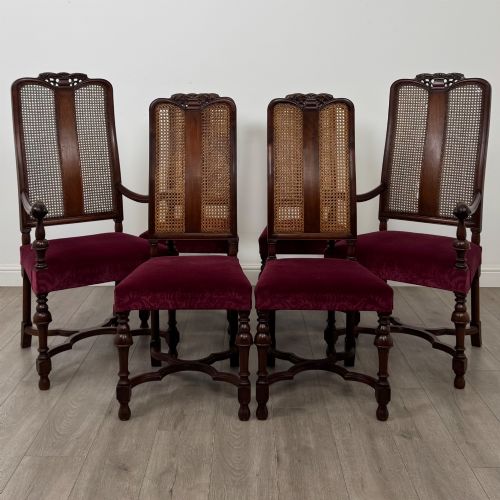
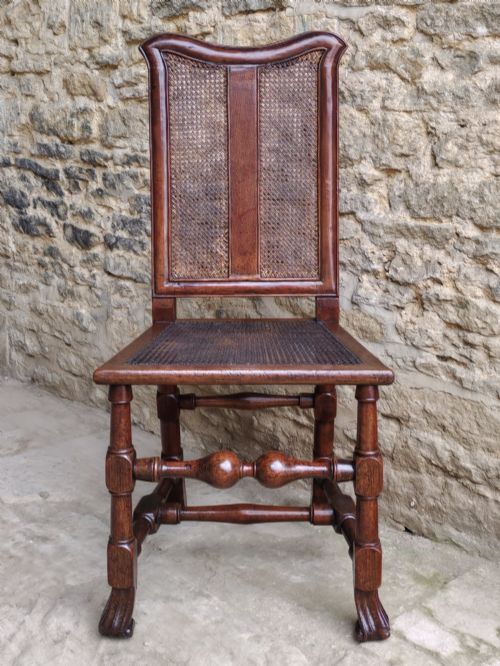
Caned side chairs appear across the nineteenth and early twentieth centuries, alongside earlier revivals reaching back to the seventeenth century. When you search for caned side chairs, you encounter dining chairs, bedroom seating, and occasional pieces originating from Regency, Victorian, and Edwardian workshops.
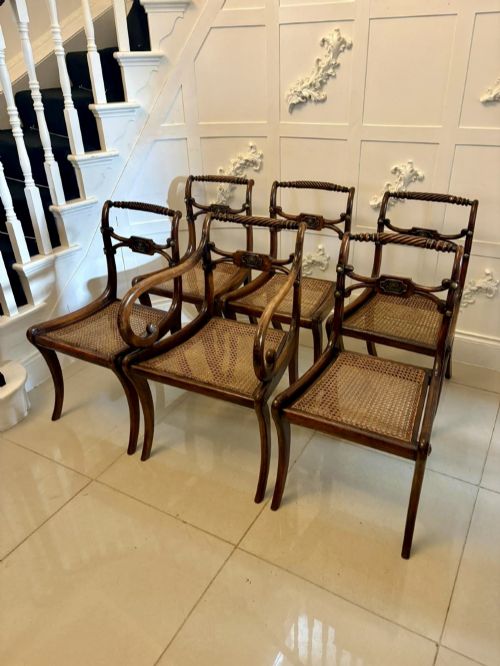
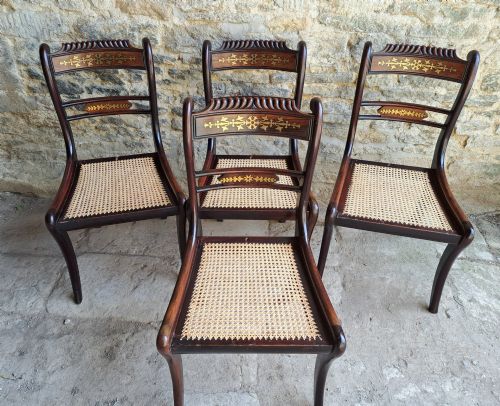
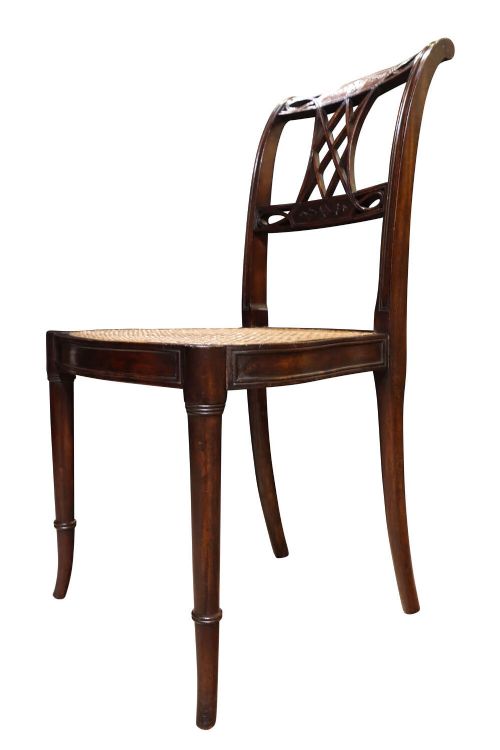
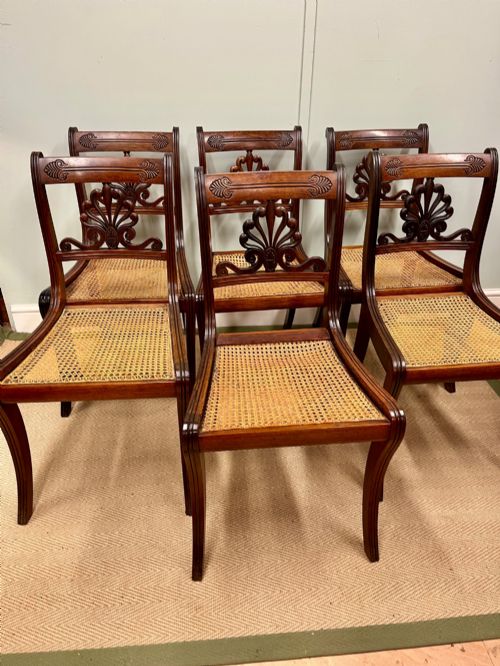
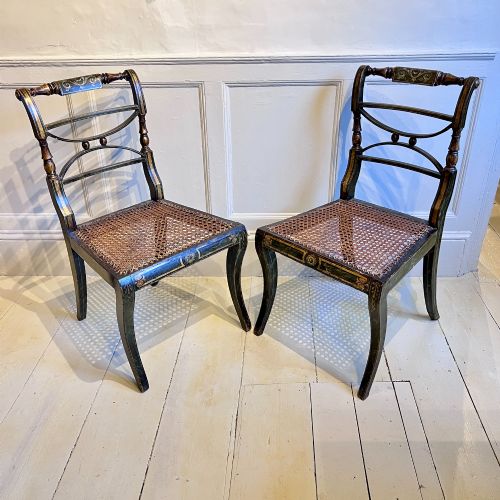
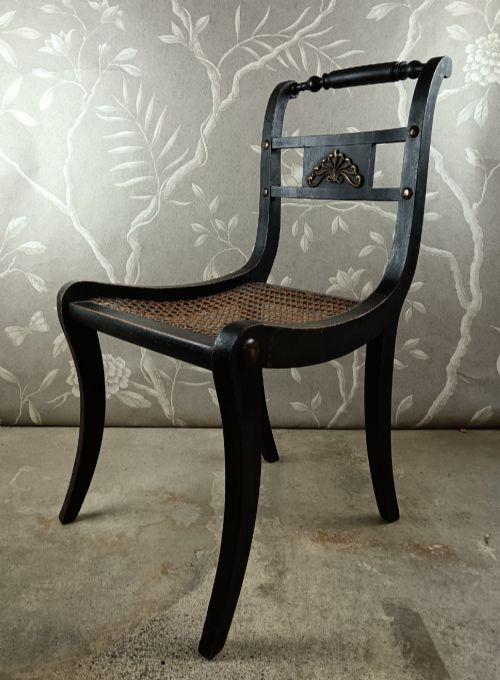
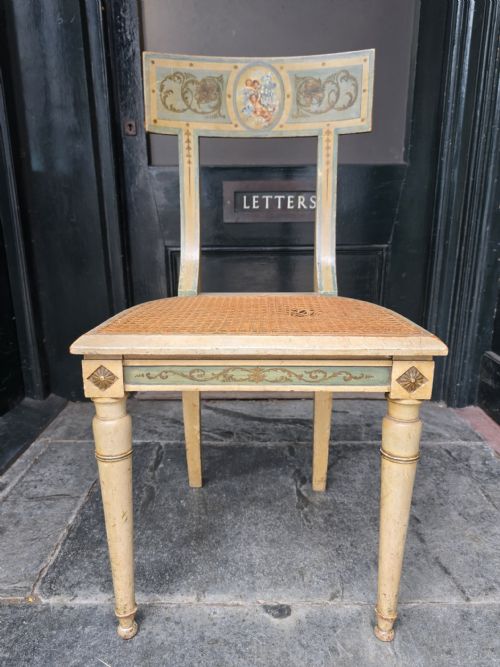
The most frequent examples on this page date to the nineteenth century, particularly the Regency period, often built in mahogany or rosewood with painted or simulated finishes. These range from single side chairs to complete sets of dining chairs with woven cane seats.
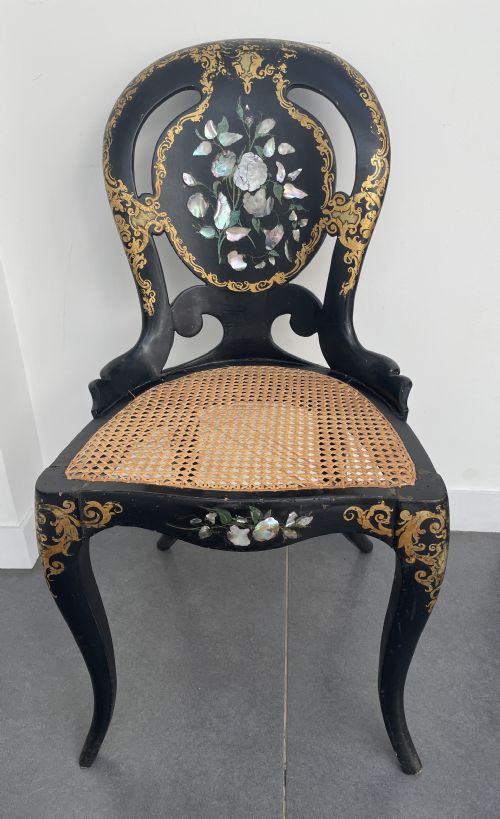
Makers also produced armchairs, bergères, and salon chairs featuring caned panels on seats and backs. Pieces span English, French, and Anglo-Indian designs, incorporating brass inlay, giltwood, or mother-of-pearl details.
Materials and construction
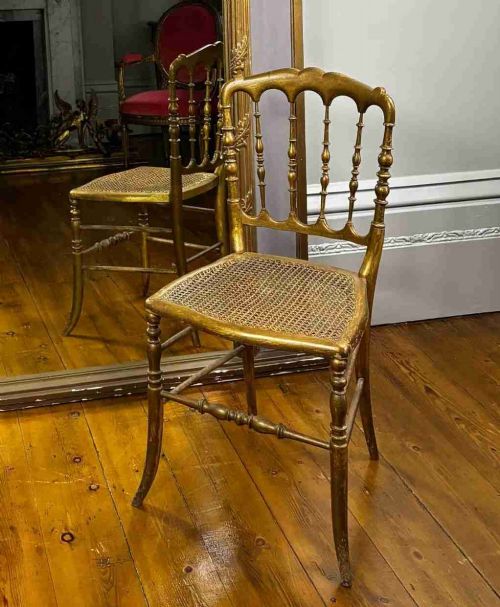
Cabinetmakers utilised hardwoods such as mahogany, walnut, rosewood, and oak for frames, frequently employing paint, ebonising, or gilding to alter the visual weight of the timber. Caning utilises split rattan woven through holes drilled in the frame to form a tight, supportive mesh.
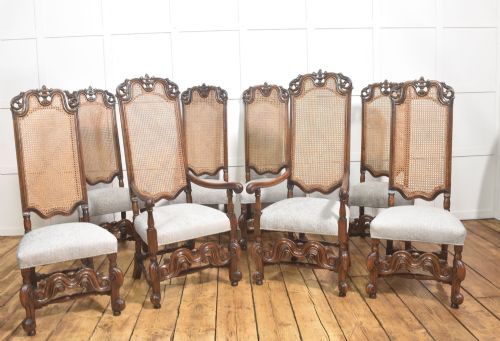
Joinery methods rely on traditional pegged or mortice-and-tenon joints to withstand the tension exerted by woven cane. Decorative elements include brass inlay, mother-of-pearl accents, and carved details reflecting Regency, Carolean, or Louis XV styles.
The inventory spans the seventeenth century through to the Edwardian era, with a strong concentration of nineteenth-century Regency pieces.
Judging quality
Quality rests on the crispness of the timber carving, the accuracy of turnings, and the selection of cabinet woods. Superior examples maintain original surface finishes, whether polished rosewood, simulated grain, or early paint.
The execution of the weaving marks the standard of the seating, with regular strands and intact framing showing careful handwork. Finer frames display balanced proportions, integrated brass or gilt enrichment, and structural stability across the joints.
The Caned Side Chairs Glossary
- Cane
- Split rattan woven in a pattern to form seats or back panels. It provides a lightweight, resilient surface.
- Bergère
- An enclosed upholstered armchair, often featuring caned sides and back panels. This French form gained popularity in nineteenth-century libraries and salons.
- Sabre leg
- A curved, outwardly tapering chair leg resembling a cavalry sabre. This form defines many Regency dining and side chairs.
- Simulated rosewood
- Painted timber graining imitating exotic rosewood. Makers utilised this technique on beech or other native woods during the Regency era.
- Carolean style
- Seventeenth-century design style revived in later periods, known for carved walnut frames and tall caned backs.
Caned Side Chairs: Frequently Asked Questions
How do I clean a caned seat?
Dust the woven cane gently with a soft brush or dry cloth to remove debris from the intersections.
Moisten the cane occasionally with a damp sponge to keep the rattan flexible, allowing it to dry fully before sitting.
Are these chairs suitable for daily dining?
Many nineteenth-century sets served primarily as dining furniture and handle regular use if the frames remain solid.
Check that the woven mesh shows no breakage before placing chairs into daily service around a table.
What is the difference between a side chair and an armchair?
Side chairs lack armrests, allowing them to tuck neatly beneath tables or line walls in reception rooms.
Armchairs include structural arm supports, offering a wider seat designed for lounging in libraries or bedrooms.