


Carved Walnut Occasional Chair
A carved walnut occasional chair brings rich timber grain and period character into a modern interior.
Carved Walnut Occasional Chair
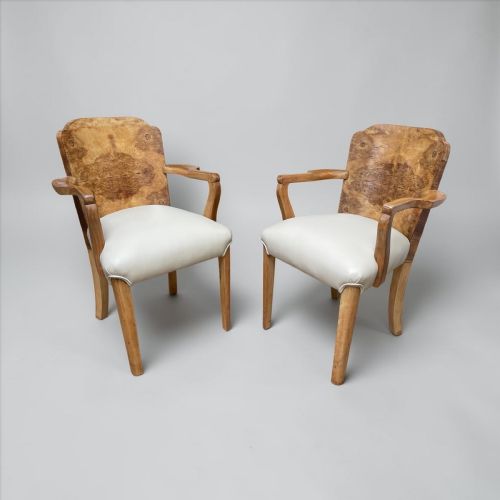
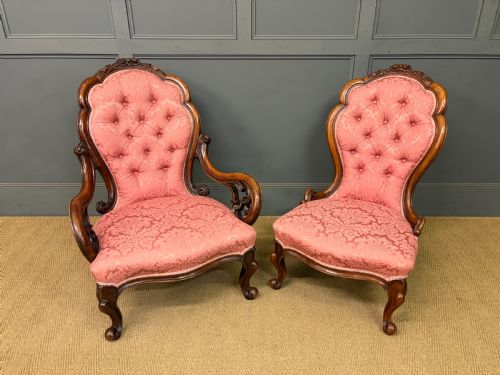
A carved walnut occasional chair spans centuries of seating design, appearing most frequently in Victorian forms alongside Edwardian and mid-nineteenth-century examples. The selection ranges from compact salon and nursing chairs to decorative side chairs and occasional parlour seating.
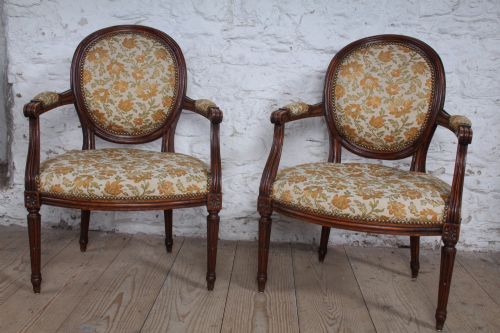
Makers shaped walnut into versatile occasional furniture for bedrooms, drawing rooms and halls. The pieces on this page reflect diverse stylistic influences, including Louis XV and Louis XVI revivals, alongside traditional British country and town house designs.
How they were made
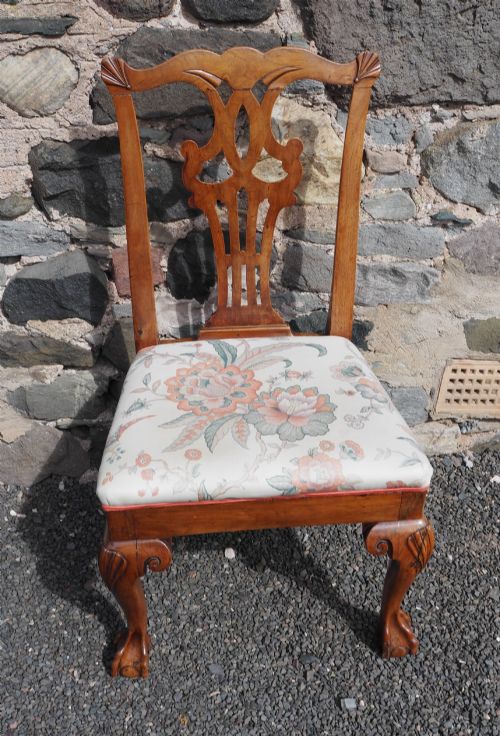
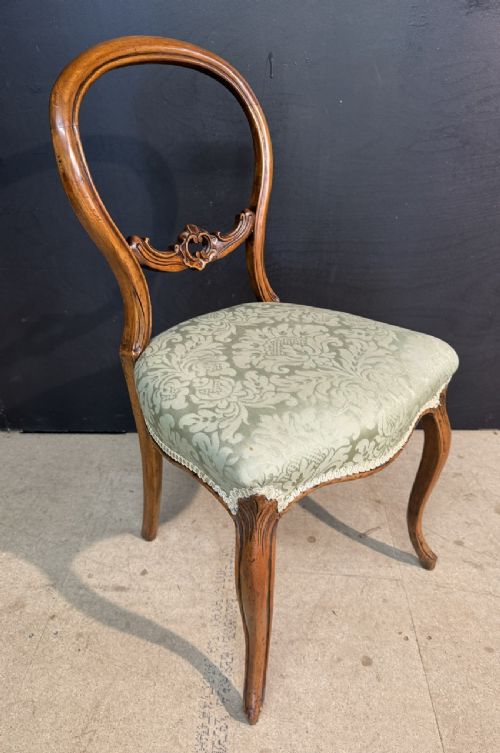
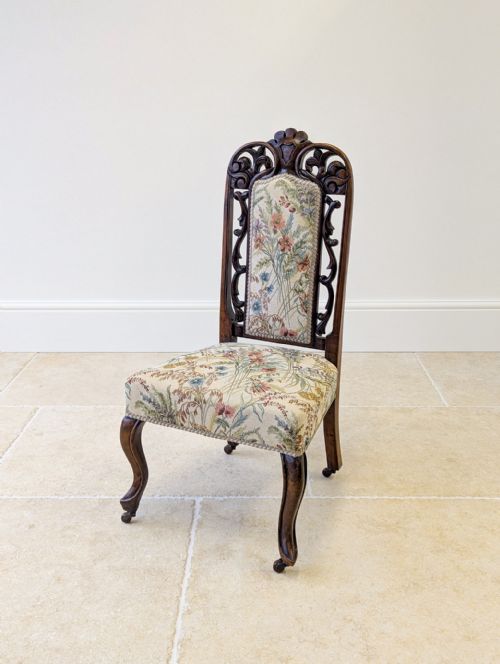
Craftsmen utilised dense walnut timber to carve intricate details into backs, frames and cabriole legs. Wood surfaces frequently received hand-carved ornamentation, visible on pierced splats, scroll supports and balloon backs.
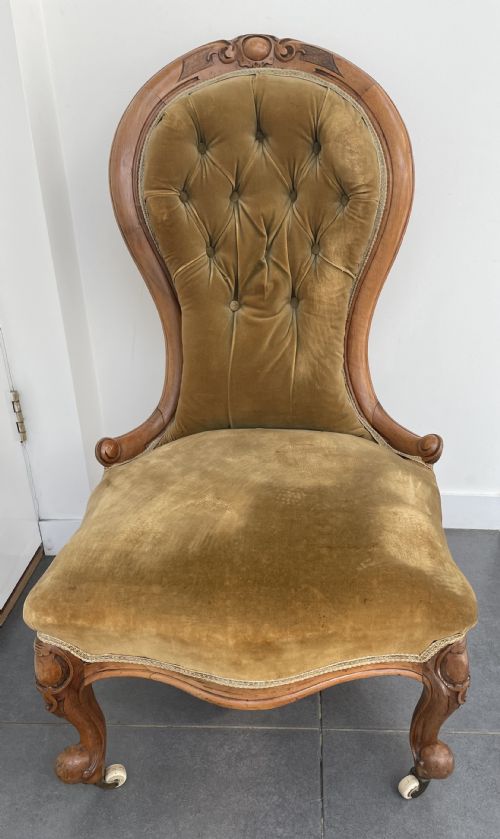
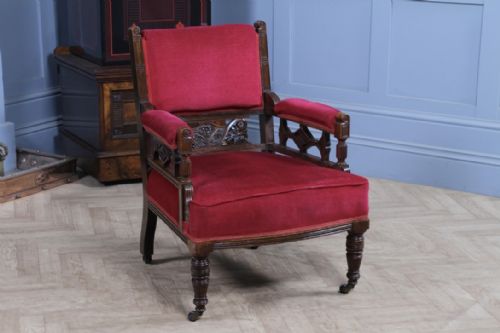
Upholstery involved textile coverings such as velvet, tapestry and fabric, often secured over internal padding with brass tacks. Structural elements combined solid wood framing with traditional joinery suited to domestic seating.
Some Victorian ladies chairs were built exceptionally low so voluminous skirts would not dislodge the sitter.
What varies in quality
The refinement of the wood carving distinguishes standard production from finer work, particularly where floral motifs or scrollwork define the walnut frame. Crisp edges on cabriole legs and well-defined splats indicate superior workshop execution.
The integrity of the timber and the preservation of original or sympathetic upholstery contribute significantly to a piece's standing. Chairs retaining their early finish and sound joinery demonstrate greater longevity and material honesty.
The Carved Walnut Occasional Chair Glossary
- Cabriole leg
- A furniture leg that curves out and then in, resembling an animal's curving leg. This form appears frequently on eighteenth-century and revival seating.
- Salon chair
- A light, decorative seat designed for formal reception rooms. These chairs often feature open backs and upholstered seats.
- Balloon back
- A rounded chair back shaped like a swollen oval or hot air balloon. The style gained popularity during the Victorian period.
- Splat
- The vertical strip of wood down the centre of a chair back. Pierced splats display openwork carving.
- Fauteuil
- An open-armed French armchair with upholstered back and arm pads. Exposed wooden framing characterises the style.
Carved Walnut Occasional Chair: Frequently Asked Questions
Where should I place a carved walnut occasional chair?
These compact seats suit bedrooms, hallways and drawing rooms where extra seating is needed without heavy furniture.
They function well as desk chairs or decorative accents against plain walls.
How do I identify a Victorian walnut chair?
Victorian examples often feature dark walnut timber, balloon backs or carved splats, and cabriole legs.
Upholstery styles and hand-carved details help distinguish mid to late nineteenth-century pieces from later revivals.
Can I use these chairs for daily dining?
Most occasional chairs are built for light parlour or bedroom use rather than heavy dining room service.
Their lighter frames and delicate carving mean they suit reception and occasional seating best.
What maintenance does walnut furniture require?
Keep wooden surfaces clean with a dry cloth and avoid placing walnut in direct sunlight or near heat sources.
Periodic application of appropriate wax helps maintain the lustre of the timber.