


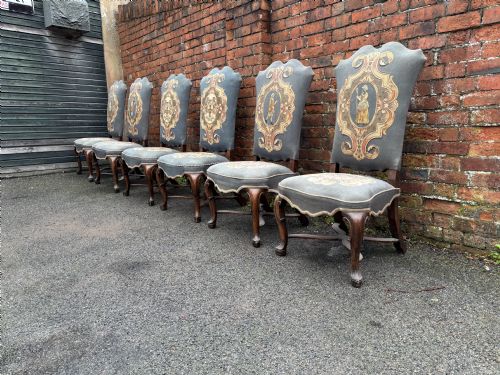


Dark Walnut Hall Chair
A dark walnut hall chair stands ready in an entranceway, offering robust timber construction and formal dignity for daily use.
Dark Walnut Hall Chair
A dark walnut hall chair provides a sturdy timber seat designed specifically for hallways, vestibules, and reception spaces. These pieces combine practical utility with formal presence, fulfilling the traditional need for an occasional seat near an entrance.
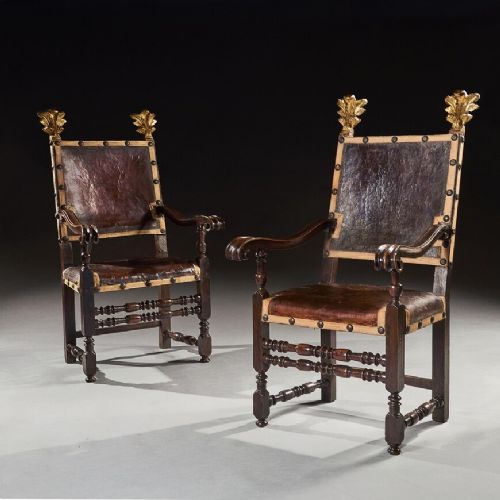
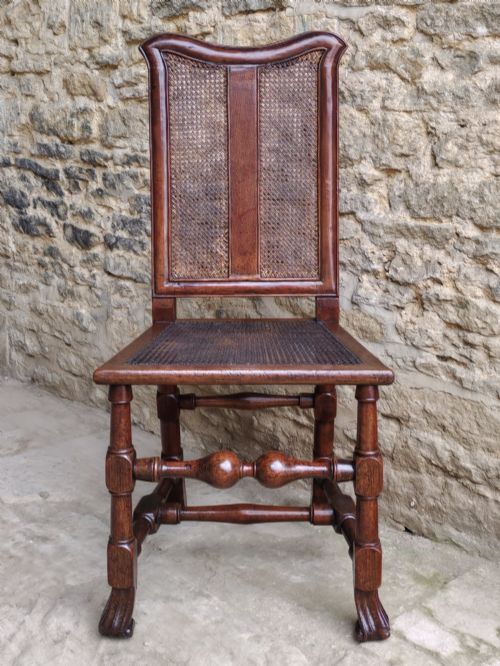
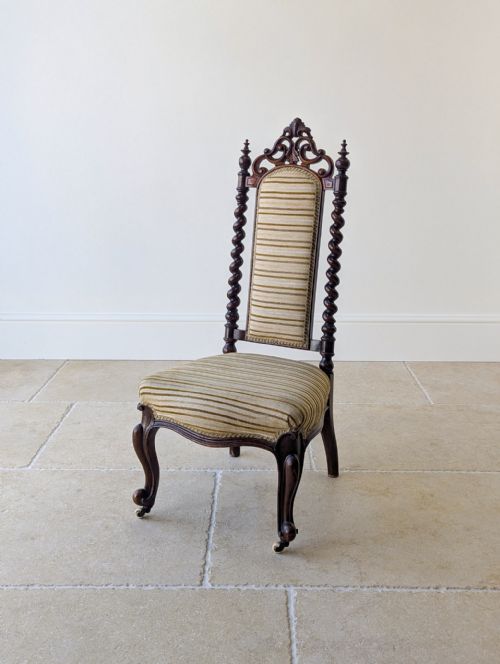
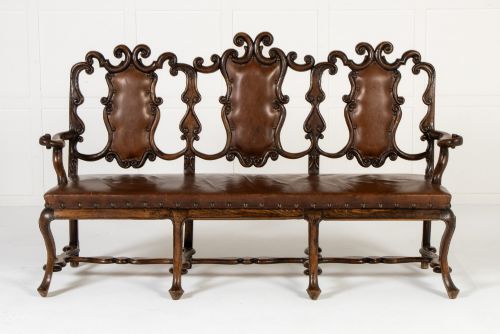
The selection here encompasses examples shaped by 17th Century, 18th Century, 19th Century, Victorian, and Regency periods. While standard hall chairs appear alongside side chairs, armchairs, and benches, the defining characteristic remains the use of rich walnut timber.
Makers across different regions interpreted the form with distinct regional styles, ranging from Italian Baroque and Renaissance Revival to Carolean designs. Buyers encounter both British examples and continental pieces featuring elaborate carving or inlaid details.
Materials and construction methods
Walnut serves as the primary structural timber, chosen for its deep natural colour and ability to hold crisp, intricate carving. Artisans shaped this dense wood into robust frames, high backs, and solid legs.
Secondary materials such as cane, leather, brass, fabric, and velvet appear across seats and back panels. Inlaid elements utilise bone or marquetry to create decorative contrast against the dark walnut ground.
Traditional joinery secures the heavy frames, while specialist techniques like parcel-gilt finishing or polychrome painting add surface enrichment to specific continental and revival pieces.
Musical chairs appear among the seating, hiding mechanical tunes within the woodwork to surprise unwary sitters.
Assessing quality in dark walnut seating
The depth and crispness of the carved ornamentation separate standard production from superior craftsmanship. Highly skilled carvers achieved sharp relief in foliage, figural elements, and scrollwork on the walnut frames.
The choice of secondary materials and the integration of decorative inlays indicate the original ambition of the piece. Fine bone inlay or well-executed marquetry requires specialist skill that elevates the status of the chair.
The Dark Walnut Hall Chair Glossary
- Carolean
- A style reflecting the reign of Charles II, characterised by rich walnut carving, scrolling motifs, and high cane or upholstered backs.
- Sgabello
- A type of Renaissance wooden chair with a high back and solid trestle supports instead of conventional legs.
- Marquetry
- The art of applying pieces of veneer to a structure to form decorative patterns, frequently seen in floral or geometric designs.
- Parcel-gilt
- Partially gilded with gold leaf or powder, highlighting specific carved details against the dark walnut timber.
- Escabelle
- A traditional style of European wooden chair, often associated with Swiss or Alpine folk craftsmanship.
Dark Walnut Hall Chair: Frequently Asked Questions
What is a dark walnut hall chair used for?
These chairs served as formal seating in entrance halls and reception areas where guests waited before entering the main rooms of a house.
Their robust construction and upright posture encouraged brief seating while maintaining an impressive decorative presence in narrow spaces.
How do I care for antique walnut furniture?
Protect the timber by keeping pieces away from direct heat sources and sudden temperature fluctuations that can dry out the wood.
Apply a traditional wax polish occasionally to nourish the walnut surface and maintain its deep natural lustre.
Are these chairs comfortable for daily sitting?
Hall chairs were traditionally built for upright posture and formal entryways rather than relaxed lounging.
Pieces featuring upholstered leather, velvet, or padded textile seats offer a softer sit than solid wood or caned panels.