
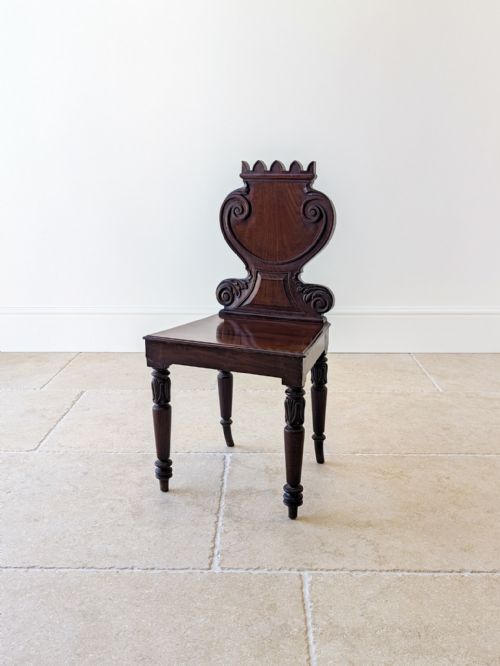
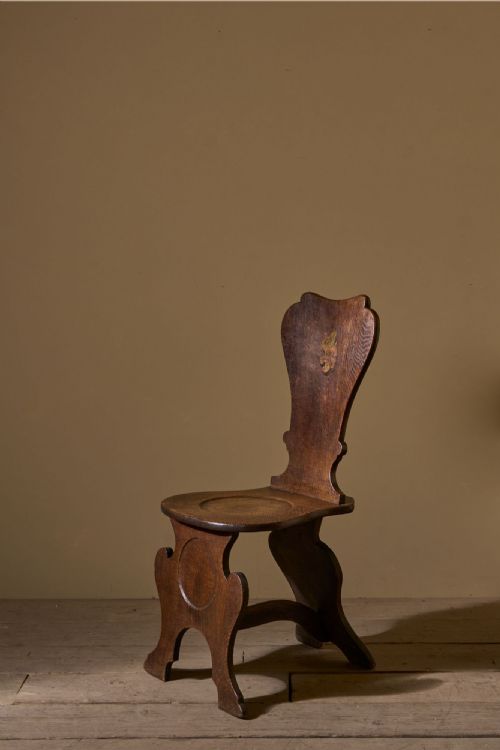
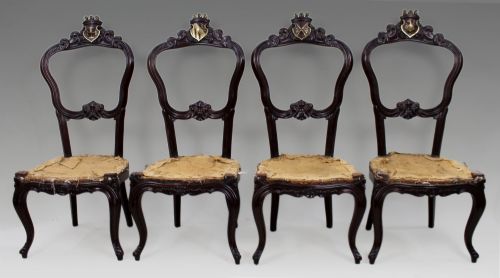
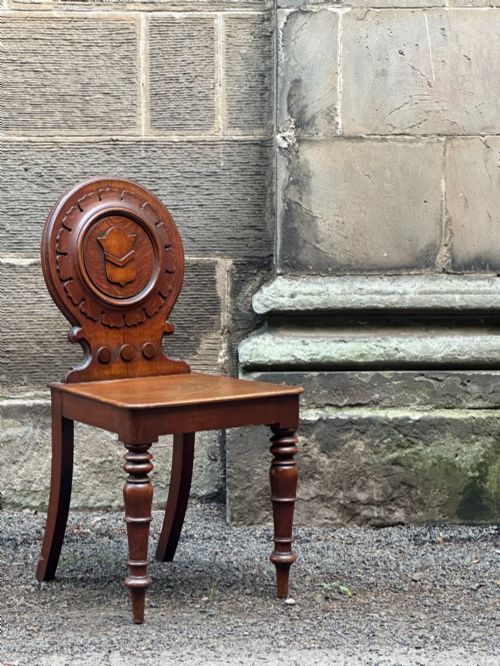
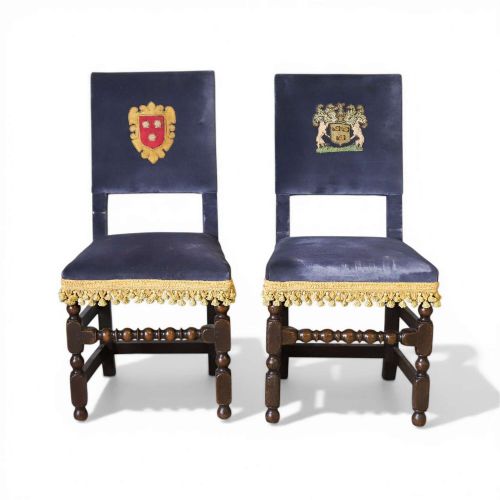
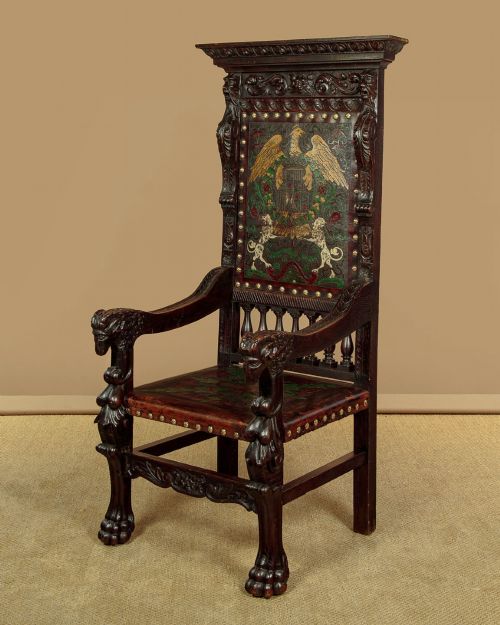

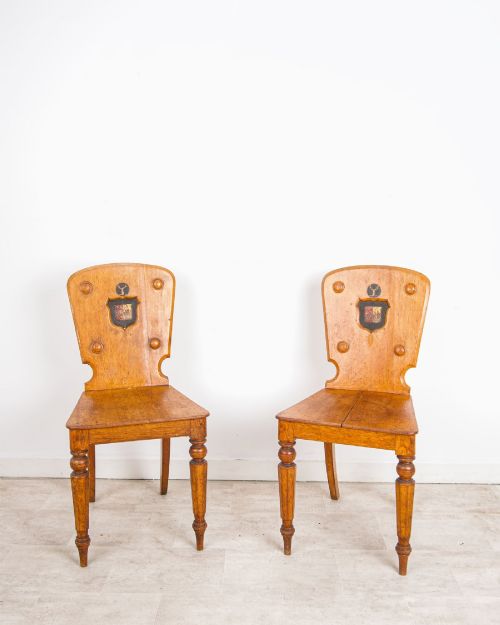


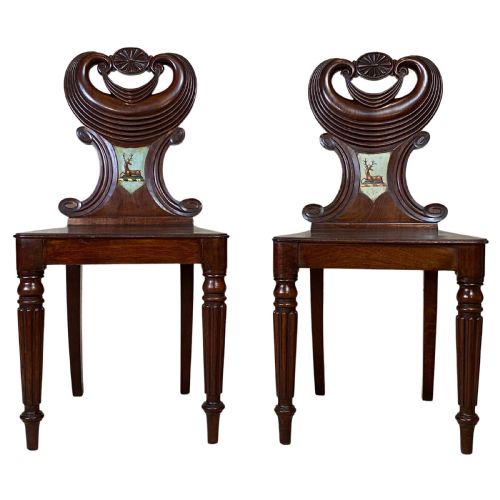


Carved Crest Hall Chair
A carved crest hall chair brings instant architectural presence to an entranceway, combining sculptural woodwork with historical utility.
Defining the carved crest hall chair
A carved crest hall chair stands as a statement piece designed primarily for entryways and reception rooms rather than prolonged lounging. These items emerge from the nineteenth century and the Regency period, encompassing distinct forms such as side chairs, armchairs, and high-backed seats.
The defining feature is the prominent wooden cresting at the top of the backrest, frequently shaped into shields, scrolls, or intricate ornamentation. Surviving examples employ robust timbers like oak, mahogany, walnut, and rosewood, sometimes softened with upholstered fabric seats.
Buyers encounter variations ranging from restrained Victorian oak designs to grand Regency mahogany pairs and ornately carved rosewood armchairs. Each piece reflects the formal hospitality traditions of British homes, where visitors waited in spaces defined by solid craftsmanship.
Construction and materials
Cabinetmakers utilised dense hardwoods including oak, walnut, mahogany, and rosewood to ensure structural integrity under upright use. Timber selection dictated the depth and crispness of the carving possible along the crest and backrest.
Joinery methods relied on traditional mortise and tenon joints to secure the uprights to the seat rails, while cabriole legs or turned supports bore the weight. Certain chairs incorporated applied brass details or integrated upholstery fabric pads over webbing for added texture.
Retail Price Guide 2026
Typical UK retail prices for carved crest hall chair, calculated from the Sellingantiques database of over a million retail prices indexed since 2003. This retail price guide relies exclusively on Sellingantiques data; no external sources or auction records are used, so the figures do not describe the wider market.
Visitors caught waiting in the hallway found zero comfort, which kept visits commendably brief.
Assessing quality
Quality rests in the depth and sharpness of the hand-carved crest, where crisp, undercut foliage or heraldic shields distinguish superior workshop output from mechanical or shallow replication. The choice of timber grain also dictates visual weight, with well-figured mahogany and golden oak commanding higher regard.
Structural harmony separates the finest items, visible in how seamlessly the back legs flow into the stiles and how securely the crest is pegged into the frame. Proportion and symmetry in shield backs or cabriole legs reveal the artisan's control over design.
Gillows
The Carved Crest Hall Chair Glossary
- Cresting
- The decorative carved wooden element situated at the very top of a chair back. It often incorporates family crests, shields, or foliate scrolls.
- Shield back
- A chair back shaped in the outline of a heraldic shield. This contour was especially popular during the Regency and Victorian periods.
- Cabriole leg
- A furniture leg that curves outward at the knee and tapers inward toward an ankle or foot, inspired by animal limbs.
- Stile
- The vertical upright timber on the outer edge of a chair back. It bears the structural load between the crest and the seat rail.
Frequently Asked Questions
Where were hall chairs placed?
These chairs stood primarily in grand entrance halls, vestibules, and corridors rather than private living rooms. They served visiting guests who waited briefly before being received.
Their upright posture and solid timber construction discouraged lounging, maintaining the formal atmosphere of a nineteenth-century foyer.
How do I care for antique wood?
Maintain timber surfaces by applying quality beeswax periodically to nourish the grain and protect against dryness. Avoid placing antique chairs near direct heat sources or strong sunlight.
Use a soft, dry cloth for dusting and lift the piece entirely rather than dragging it across floors to preserve fragile leg joints.
Are these chairs comfortable?
Hall chairs were built for formality and posture rather than long hours of relaxation. Most feature solid wooden seats, though certain variations include padded upholstery fabric.
Their upright backs and firm frames suit occasional seating in hallways or as decorative accent pieces in larger rooms.
How do I date a hall chair?
Examine the timber species, tool marks, and stylistic motifs to determine the period of origin. Regency examples often display sleek mahogany and neoclassical lines, while Victorian pieces lean towards heavier golden oak or walnut with ornate crests.
Construction clues such as hand-cut tenons and the ageing of the wood grain provide further confirmation of nineteenth-century manufacture.