

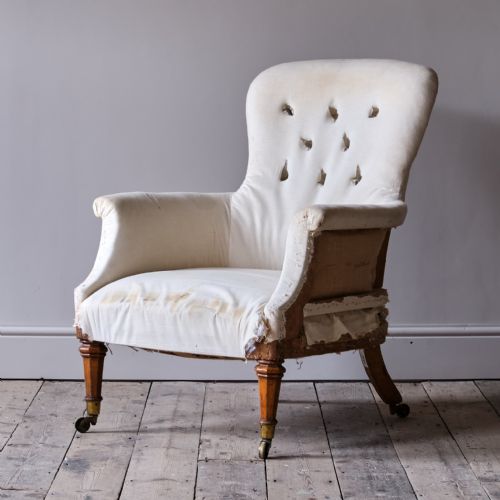


Antique Chair for Reupholstery
An antique chair for reupholstery gives you the bones of a proper period seat ready for your own choice of cloth.
Antique Chair for Reupholstery
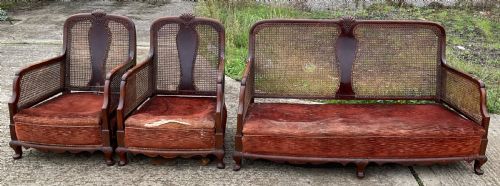
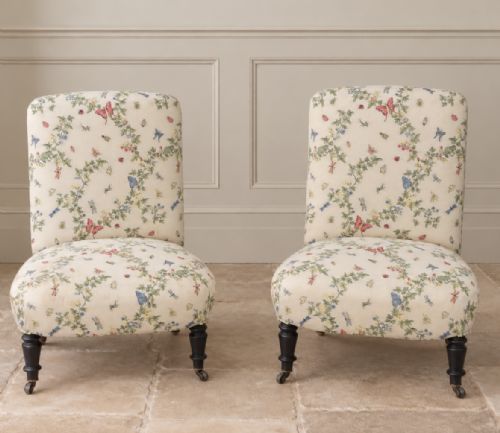
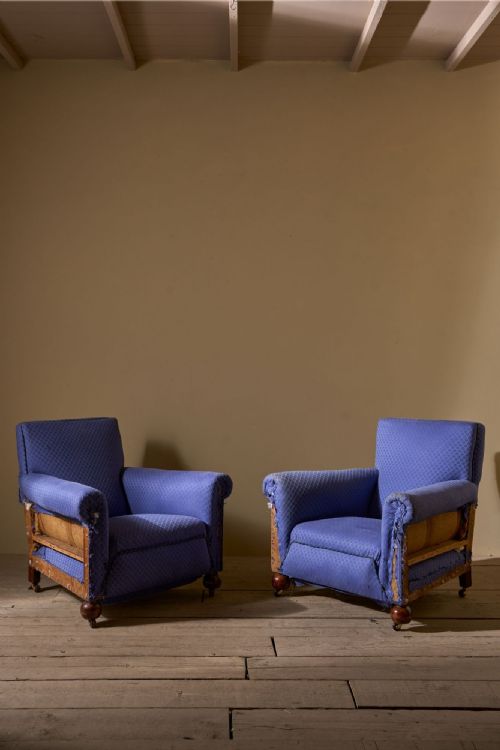
When you search for an antique chair for reupholstery, you encounter armchairs, daybeds, and salon pieces from the nineteenth and early twentieth centuries that require new textile. The selections here span the Victorian era, the Regency period, and the 1930s, featuring forms like country house armchairs, Howard style seats, and French slipper chairs.
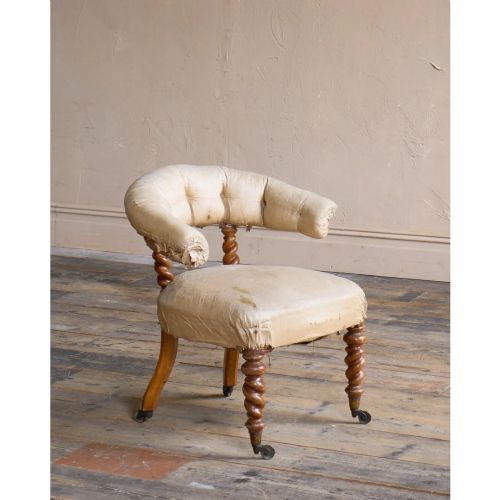
You meet frames built from mahogany and walnut, stripped back or carrying worn calico and hessian. These are practical projects for living rooms and drawing rooms, bought specifically so you can determine the final fabric yourself.
How they were made
Makers shaped these frames from dense timbers such as mahogany and walnut, sometimes incorporating brass castors and metal supports. Wood forms the robust skeletal structure designed to endure decades of sitting.
Traditional upholstery techniques layer hessian, calico, and fabric directly onto the timber framework. The underlying padding and webbing provide the deep support characteristic of nineteenth-century and Edwardian seating.
Antique Chair for Reupholstery Retail Price Guide 2026
Typical asking prices for chair for reupholstery among the pieces listed under this phrase on Sellingantiques today, from the lower quarter to the upper quarter. They describe what is for sale here now, not the wider market.
A prayer chair in the evidence reminds us that Victorian contemplation required very specific, highly carved knee support.
What varies in quality
The distinction between ordinary frames and exceptional ones lies in the integrity of the timber and the sophistication of the proportions. A piece signed by a notable maker or constructed with generous, deep-seated dimensions elevates the standard of the work.
Subtlety of carving on mahogany and walnut frames separates standard workshop production from finer cabinetmaking. The architectural scale of a wing chair or country house armchair dictates how well the finished piece holds its presence in a room.
SF CULLEN·Morison and Co·C. Hindley & Sons·Holland & Sons·Robert Strahan·Trollope & Sons
The Antique Chair for Reupholstery Glossary
- Calico
- A plain-woven cotton fabric used as the inner lining layer beneath the decorative top textile on upholstered furniture. It provides a stable base for stuffing and springs.
- Hessian
- A coarse woven fabric made from jute fibres, utilised inside chairs for webbing and to contain traditional stuffing materials. It forms the sturdy foundation of historical upholstery.
- Howard style
- A design of comfortable, deep-seated upholstered armchair originating in the nineteenth century, known for rolled arms and generous proportions. These chairs are prized for relaxed domestic seating.
- Slipper chair
- A low-seated bedroom chair without arms, historically designed for ladies to sit whilst putting on shoes. Their compact frames suit smaller spaces or dressing rooms.
- Prie Dieu
- A devotional prayer chair featuring a narrow back with a top rest for kneeling or leaning. These Victorian pieces typically display carved mahogany frames.
Antique Chair for Reupholstery: Frequently Asked Questions
Can I sit in an antique chair for reupholstery straight away?
Most pieces listed for reupholstery arrive with bare springs, exposed hessian, or worn historic fabric that requires replacement before regular use. Sitting on them beforehand risks damaging internal webbing or old stuffing.
Once you have fitted new padding and your chosen textile, the chair becomes fully functional for daily sitting in your home.
How do I choose fabric for an antique chair?
Consider the period and style of the frame when selecting textiles, matching heavy country house armchairs with robust weaves and lighter salon chairs with delicate silks or cottons. Plain calico acts as the crucial first layer beneath your top fabric.
Take into account how the chair will be used in the room, selecting durable materials for heavy traffic and softer decorative options for occasional seating.
What is a Howard style armchair?
Howard style armchairs are nineteenth-century seats defined by deep seats, low scrolled arms, and exceptional comfort. They became staples of country house drawing rooms.
Their generous proportions and tailored lines make them among the most sought-after frames for modern reupholstery projects.
How do I tell a Victorian chair from a Regency one?
Regency chairs, dating from the early nineteenth century, typically exhibit classical restraint influenced by Greek and Roman revival styles using mahogany and brass details. Victorian pieces from later in the century often feature heavier proportions, button backs, and more elaborate carved walnut or mahogany.
Examining the turning of the timber and the overall architectural silhouette helps distinguish the earlier Regency forms from mid to late Victorian designs.