





Turned Wood Library Chair
These turned wood library chair selections offer solid seating for a study, built in rosewood, mahogany, walnut and oak across the nineteenth century.
Turned Wood Library Chair
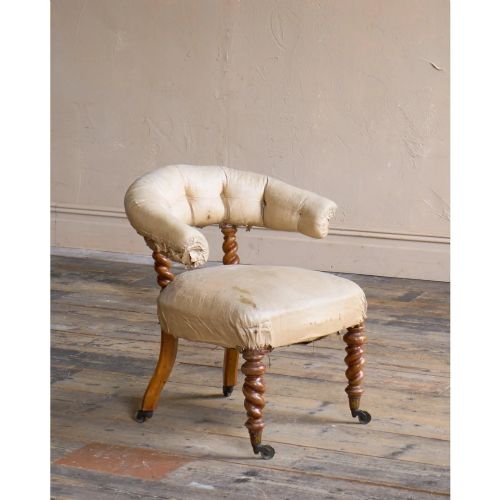
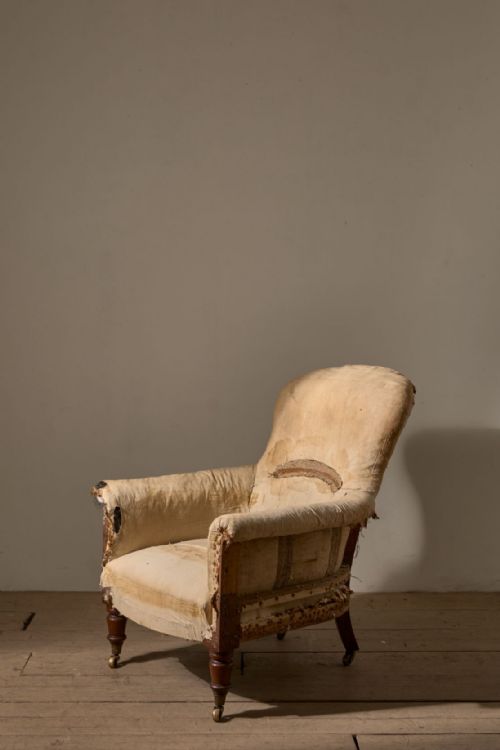
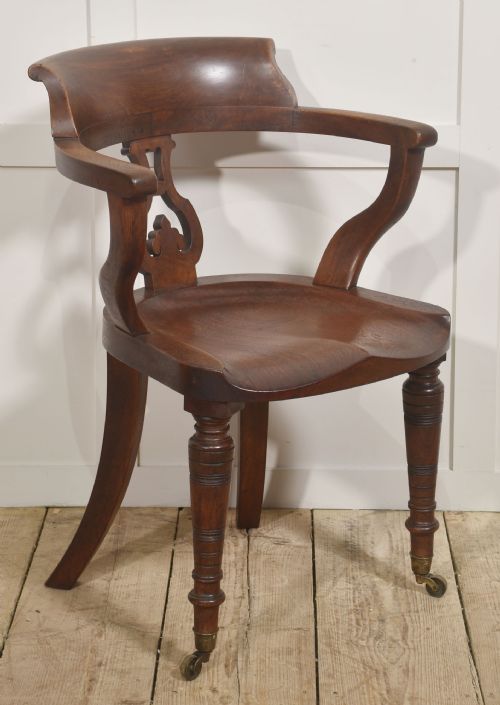
When searching for a turned wood library chair, buyers encounter nineteenth-century forms including desk chairs, captain's chairs, smokers bows and open armchairs. These pieces span Victorian, Regency and Edwardian periods, often utilising turning techniques on walnut, mahogany, oak and rosewood frames.
The selection ranges from deep-seated reading armchairs and bobbin-turned examples to substantial library desk chairs. Many pieces incorporate upholstery or fabric cushions, whilst others present solid wood seating surfaces designed for study spaces and reading rooms.
How they were made
Cabinet makers utilised dense hardwoods such as mahogany, walnut, rosewood and oak for the structural frames, often incorporating beech and elm for specific components. Turning lathes shaped the spindles, legs and arm supports into bobbin and spool profiles.
Joinery techniques relied on traditional mortise and tenon joints to secure the wooden elements. Brass castors frequently fitted to the legs aided movement across library floors, whilst upholstery and fabric provided padded seating surfaces.
Selected nineteenth-century designs include specialised cock-fighting stools alongside traditional library armchairs.
What varies in quality
The choice of primary timber dictates the baseline quality, with figured mahogany and solid rosewood standing apart from simpler beech or elm frames. Crispness in the lathe-turned spindles and deep carving on the walnut show the hand of a skilled maker.
Structural integrity depends on the tightness of the original joints and the condition of the turned components. Integration of brass fittings and the quality of the secondary upholstery materials further distinguish standard examples from finer library seating.
C. Hindley & Sons·Robert Strahan·James Shoolbred
The Turned Wood Library Chair Glossary
- Bobbin turning
- A form of woodturning characterised by a series of rounded, spool-like shapes carved along the length of a leg or spindle. This decorative technique appears frequently on nineteenth-century frames.
- Smokers bow
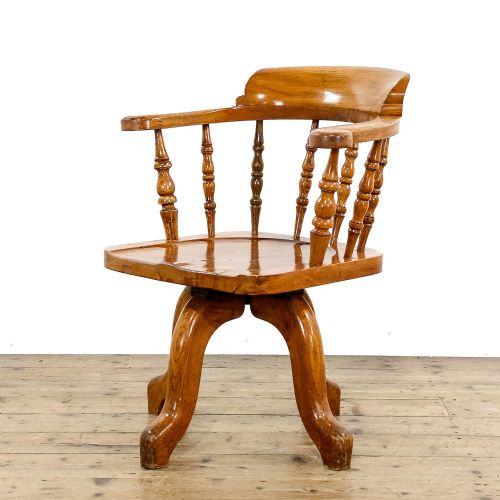
- A sturdy wooden armchair with a low curved back rail supported by turned spindles, originating in the nineteenth century. These chairs often feature a solid elm or oak seat.
- Fauteuil
- An open-framed armchair with upholstered armrests and back, typically originating from French traditions. Nineteenth-century examples often utilise walnut or mahogany.
- Captain's chair
- A low-backed wooden armchair designed for desk or library use, featuring a continuous curved arm rail. They are commonly constructed in mahogany or oak with turned supports.
- Spindleback
- A chair design featuring a series of slender turned vertical wooden rods forming the backrest. This construction method provides light yet sturdy support in library seating.
Turned Wood Library Chair: Frequently Asked Questions
How do I identify a Victorian library chair?
Victorian library chairs typically date between eighteen thirty-seven and nineteen hundred, showing periods like the Victorian Gothic Revival or William & Mary Revival. They often utilise dense timbers such as walnut, rosewood and mahogany.
Characteristics include turned wooden legs, bobbin details, brass castors and deep-seated upholstery. Makers' marks or stamps on the frame can also help confirm the era.
Were these chairs used at desks?
Many nineteenth-century library chairs were specifically designed for use at partner desks and writing tables. Desk chairs and captain's chairs provided sturdy, mobile seating for working environments.
They frequently feature low backs, solid wooden arms and brass castors for easy movement across study floors. Some examples include pivoting or adjustable height mechanisms.
What woods were used for library chairs?
Cabinet makers utilised a range of hardwoods depending on the style and period of the chair. Mahogany, walnut, oak and rosewood provided durable and visually striking frames.
Secondary timbers like beech and elm appeared in simpler seating such as smokers bows and Windsor variants. Brass components and fabric upholstery completed the construction.
How do I care for a antique wooden chair?
Antique wooden chairs require placement away from direct heat sources and strong sunlight to prevent the timber from drying out. Maintaining stable indoor humidity protects both the wood and any traditional upholstery.
Regular dusting with a soft cloth preserves the polish on mahogany, walnut or rosewood surfaces. Professional conservation should be sought for any structural repairs to turned elements.