
Low Button Back Chair
A low button back chair brings deep seating and tailored upholstery together, offering comfortable support in a compact nineteenth-century frame.
Low Button Back Chair
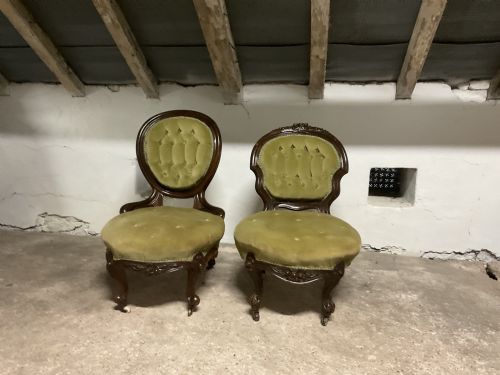
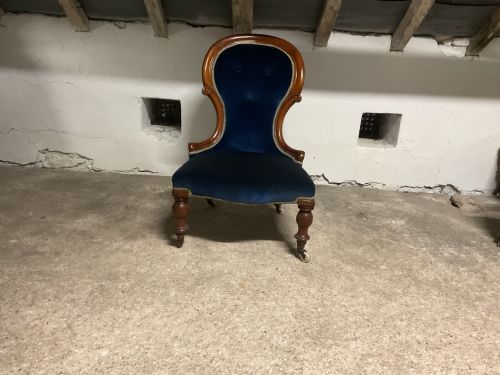
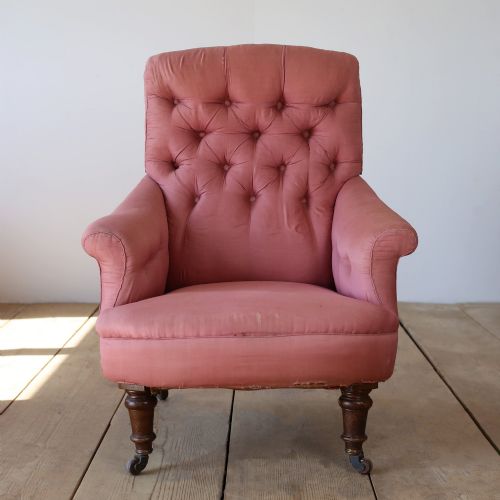
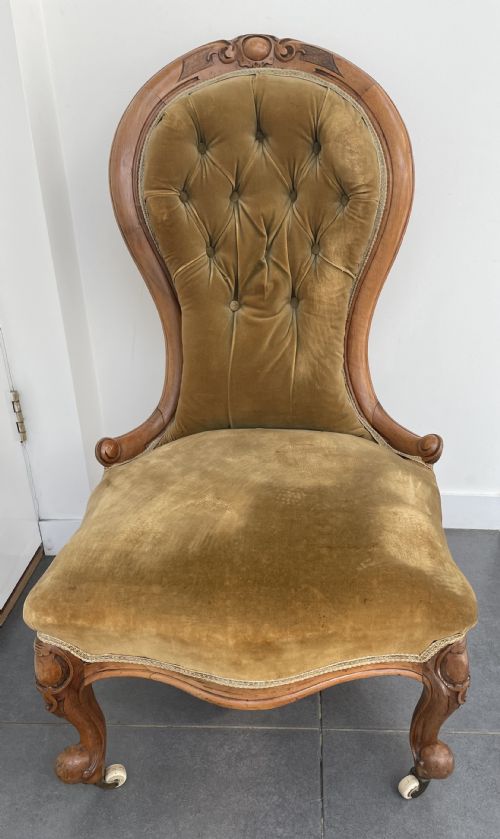
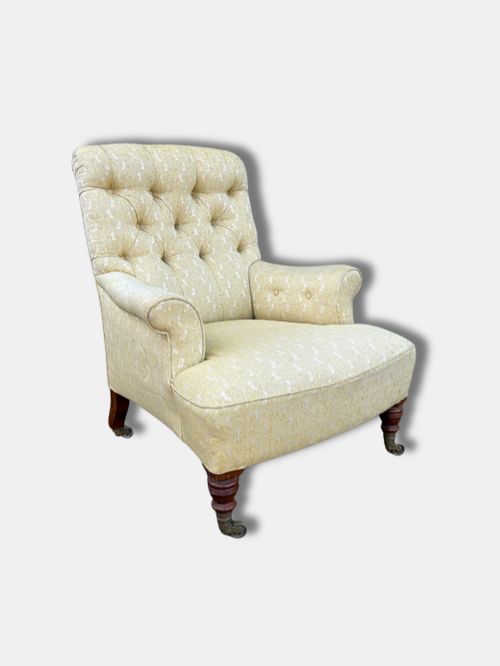
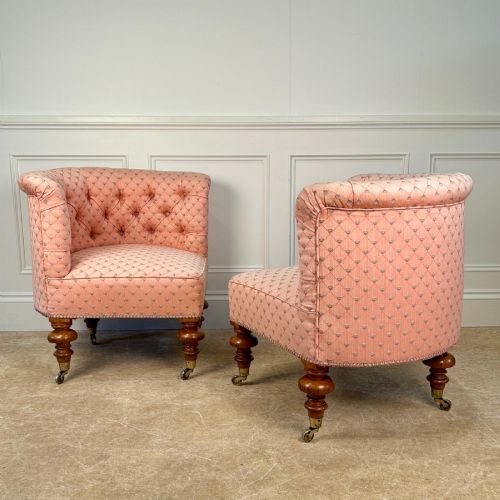
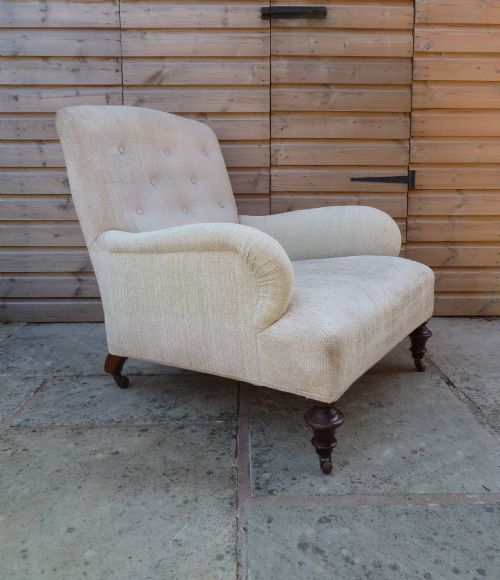
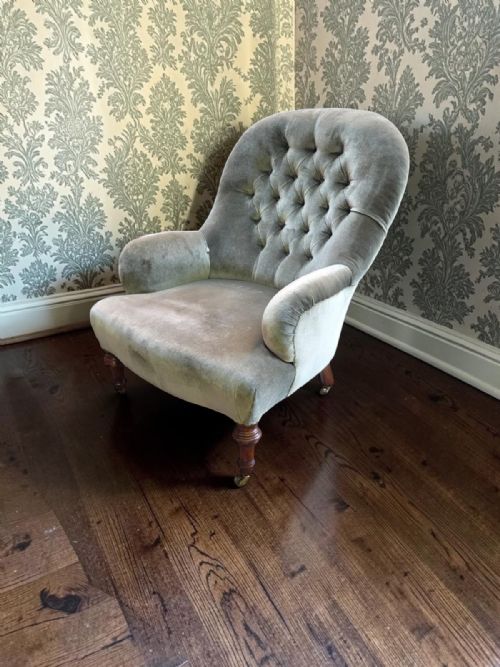
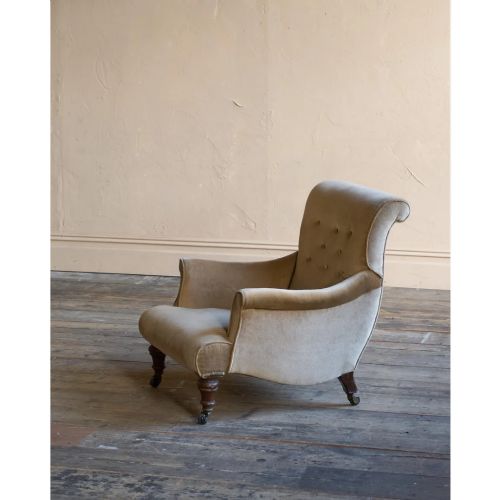
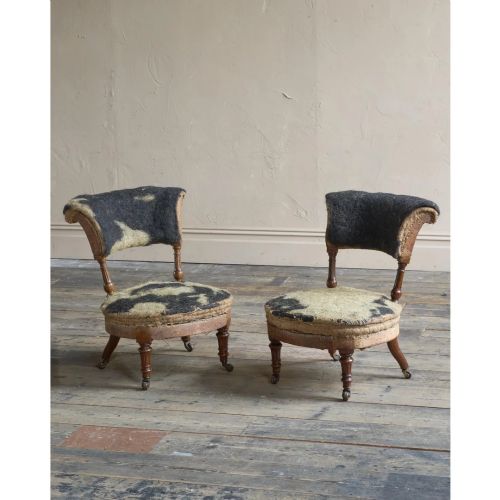
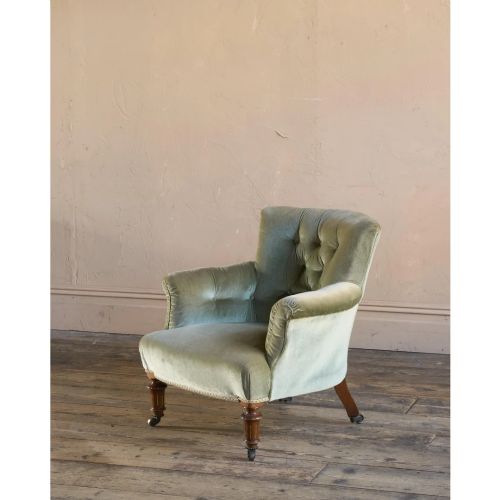
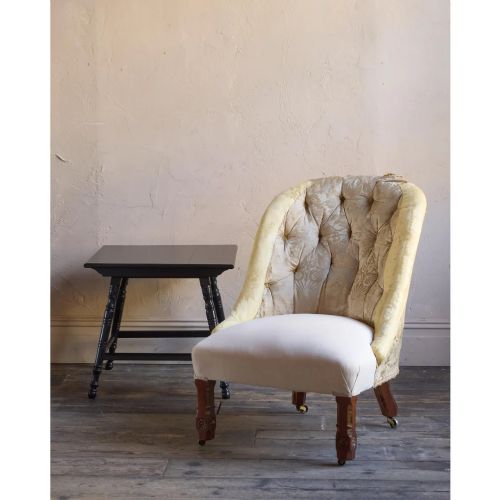
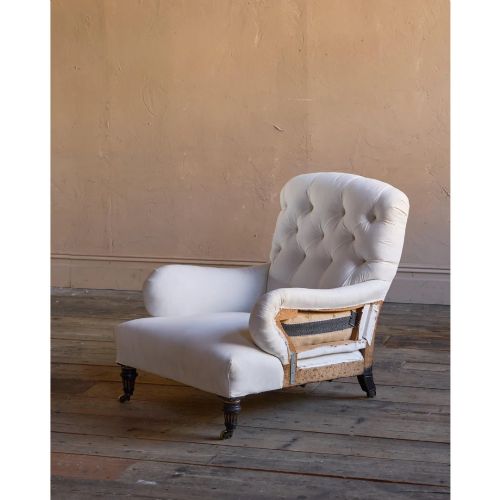
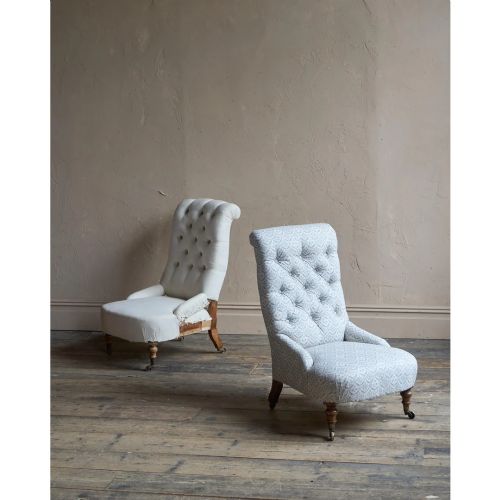
When you examine a low button back chair on this page, you are looking predominantly at nineteenth-century seating shaped as nursing chairs, slipper chairs, and bedroom chairs. These pieces sit low to the ground and feature deep buttoning across the backrest, designed originally for domestic comfort in parlours and chambers.
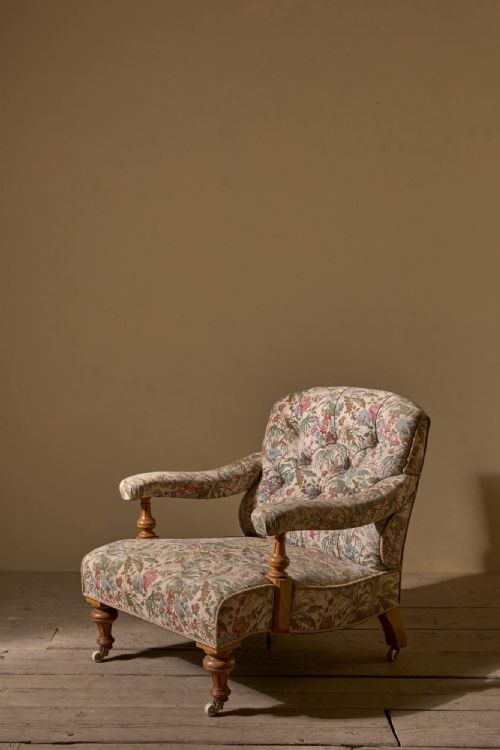
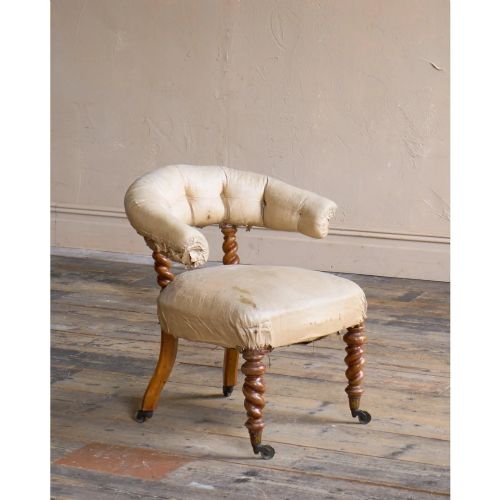
The evidence shows forms ranging from compact tub chairs and salon seating to open armchairs and corner chairs. Victorian examples dominate the selection, alongside Edwardian designs and pieces shaped by French Napoleon III or English Country House aesthetics.
Woods such as mahogany, walnut, oak, and brass components appear frequently in the frames. Many examples retain velvet, calico, fabric, or leather upholstery, while others arrive ready for recovering.
Materials and construction methods
Makers constructed these frames from solid hardwoods including mahogany, walnut, and oak, often turning or carving the wood for structural support and decorative detail. Iron frames also appear in specific Victorian iterations.
Upholstery relies on traditional techniques combining fabric, velvet, calico, and leather with deep buttoning. Brass castors, ceramic components, and fringe trim frequently finish the lower sections of these chairs.
Object forms on this page include slipper chairs, nursing chairs, tub backs, and salon armchairs.
Distinctions in quality
The distinction between ordinary and exceptional examples rests in the crispness of the timber framing and the precision of the buttoned upholstery. Superior pieces exhibit well-proportioned woodwork, substantial joinery, and refined turning on legs or barley twist frames.
Maker attribution elevates certain pieces significantly, particularly those bearing stamps or documented origins from renowned workshops. The integrity of the underlying frame and the quality of the textile covering further define the standing of each chair.
Howard and Sons·Gillows·C. Hindley and Sons
The Low Button Back Chair Glossary
- Button back
- A method of upholstery where depressions are formed in the padding by stitches or buttons pulled tight to secure the filling. This technique creates a distinctive diamond pattern across the backrest.
- Nursing chair
- A low-seated Victorian chair designed originally for mothers feeding infants near the fire. They feature compact dimensions and low centres of gravity.
- Slipper chair
- An upholstered chair with short legs designed to sit very close to the floor. Originally utilised in bedrooms for dressing, they offer a relaxed, low profile.
- Tub chair
- An armchair featuring a rounded, enclosed backrest that curves continuously into the arms. The resulting shape resembles an open barrel.
- Barley twist
- A carved wooden furniture leg or stretcher formed in a spiral twist resembling braided barley. This decorative woodworking detail appears frequently on Victorian frames.
Low Button Back Chair: Frequently Asked Questions
What is a low button back chair used for?
These pieces serve primarily as accent seating, bedroom chairs, or low occasional seating in living spaces. Their compact height and comfortable padded backrests make them practical for relaxed sitting in smaller rooms.
Historically, many of these formats functioned as nursing chairs or dressing room seats. Today, buyers place them in bedrooms, studies, and drawing rooms to add period character and accessible seating.
How do I identify a Victorian low button back chair?
Victorian examples typically feature turned wooden legs in walnut or mahogany, often fitted with brass castors or ceramic wheels. The upholstery relies on deep buttoning across the back, frequently paired with velvet or traditional fabric.
Examining the construction of the frame underneath reveals period joinery methods. Many pieces also display characteristic nineteenth-century proportions, sitting lower to the floor than standard armchairs.
Are these chairs suitable for daily use?
Most nineteenth-century examples remain structurally sound for regular daily seating if the frame is stable. Solid hardwood construction gives these pieces enduring strength.
Buyers should assess whether the internal padding and fabric require professional restoration. Many pieces listed are sturdy enough for modern living rooms and bedrooms.
What wood types should I expect to find?
Mahogany and walnut form the majority of the timber frames seen in these listings. Oak also appears on specific nineteenth-century corner chairs and occasional seating.
Some examples incorporate metal elements, including iron frames or brass components on the castors. The exposed woodwork often matches the prevailing interior style of the period.