

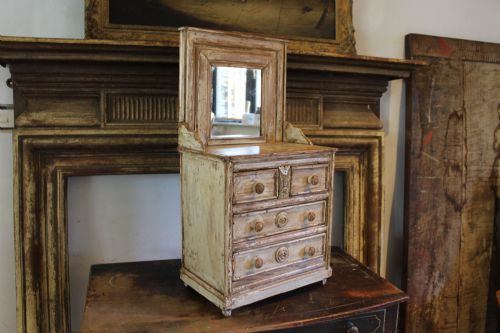
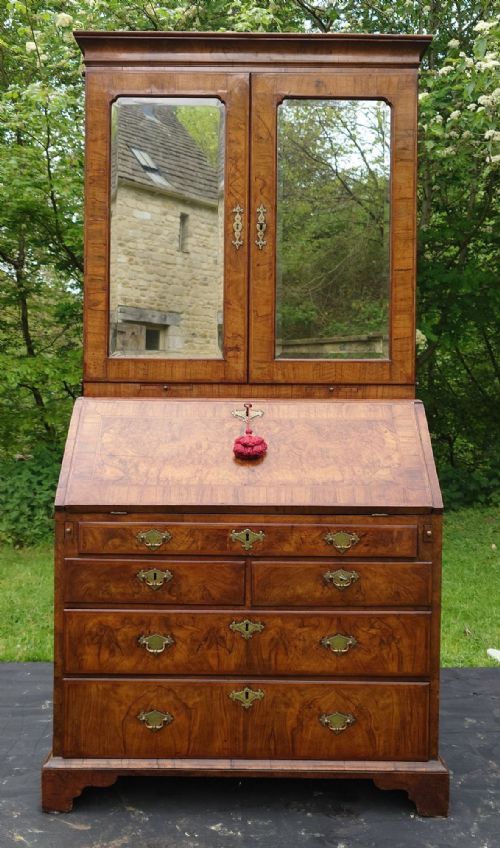


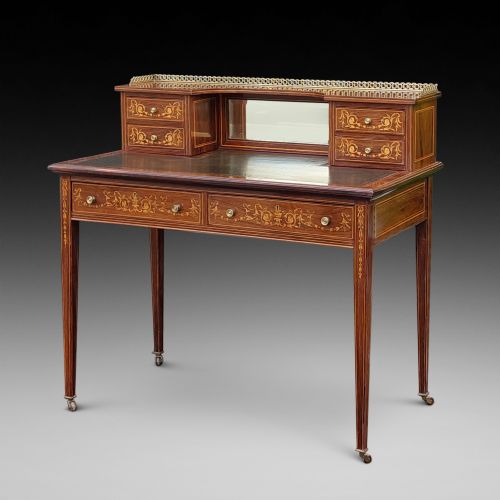
Antique Bureau with Mirror
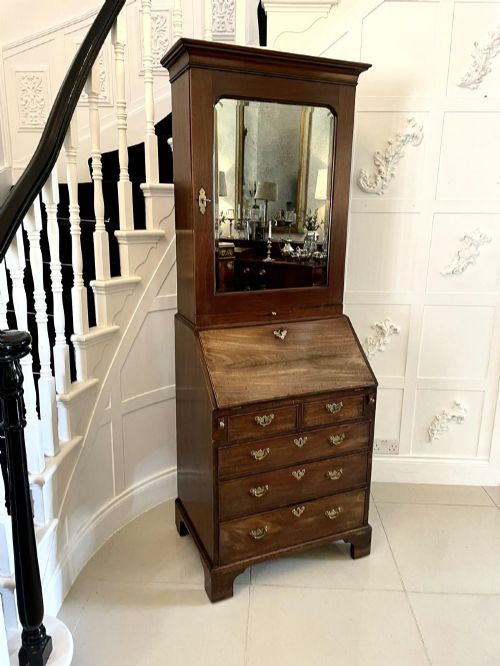
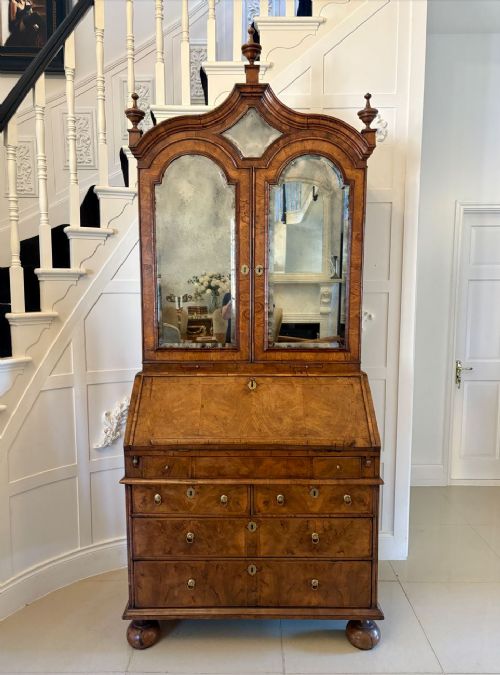
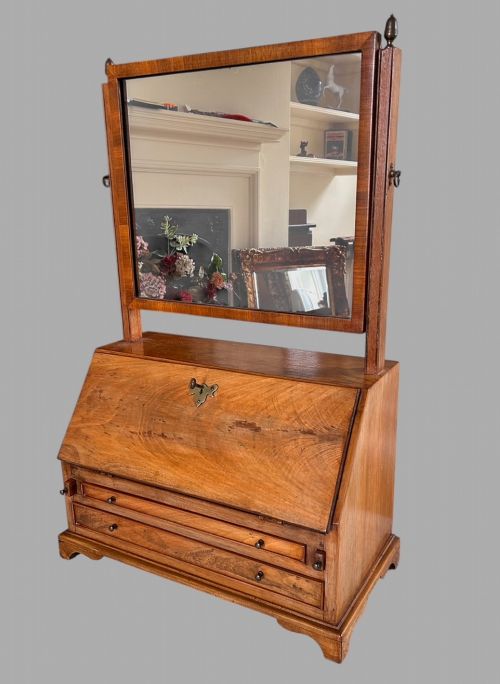
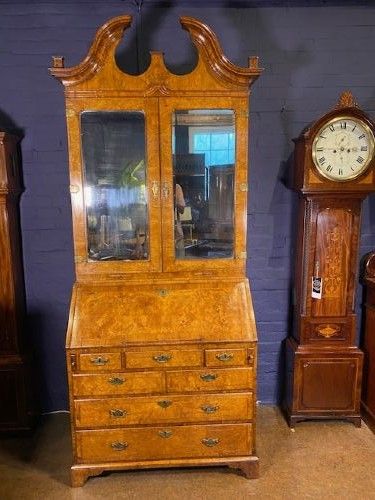
An antique bureau with mirror combines a fitted writing slope with reflective glass, appearing primarily as walnut bureau bookcases and satinwood dressing pieces.
Antique Bureau with Mirror
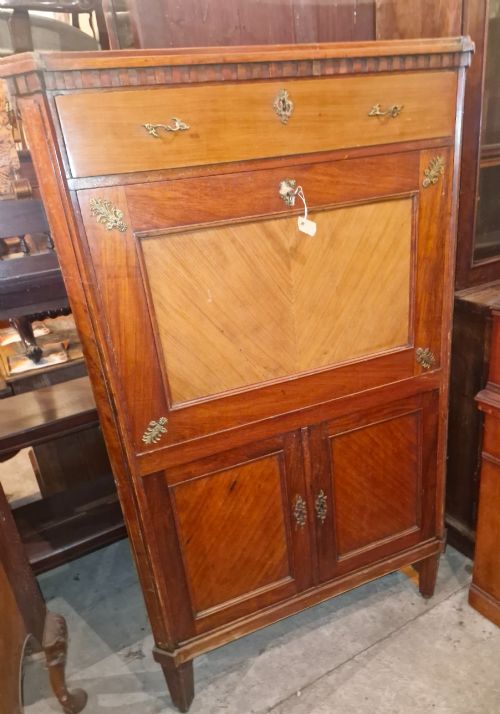
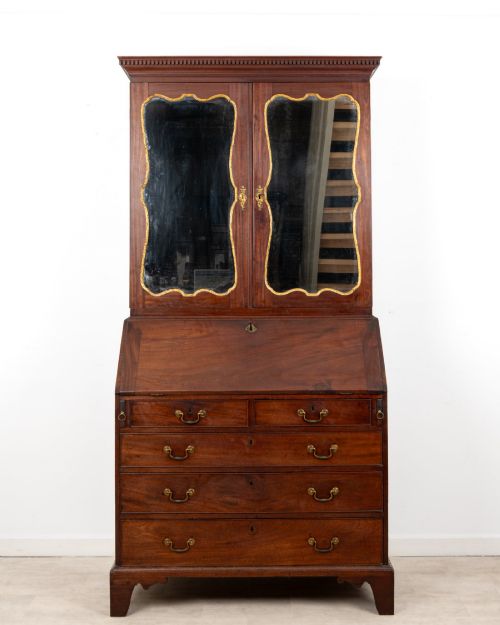
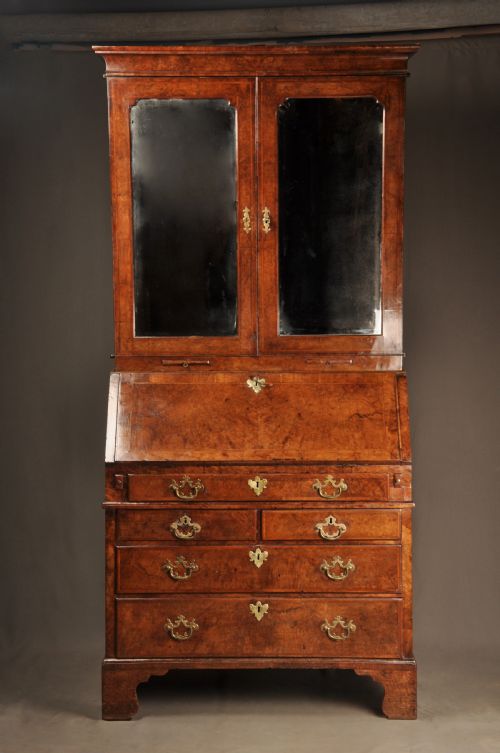
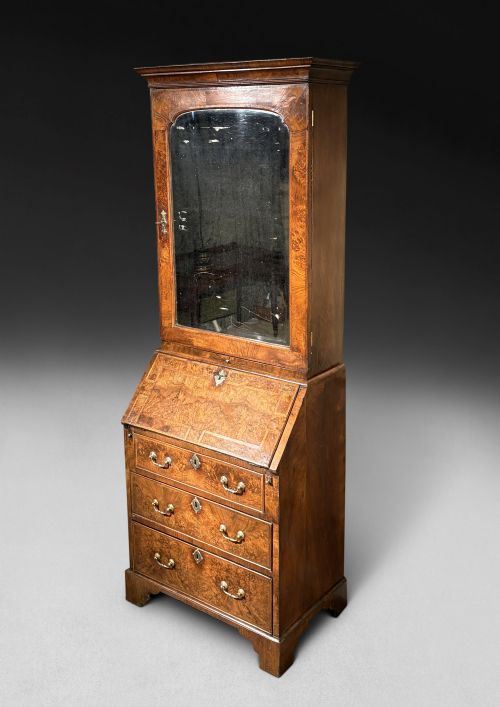
When searching for an antique bureau with mirror, a buyer encounters a diverse group of writing furniture that integrates vertical glass plates or mirrored doors into the design. These pieces range from substantial eighteenth-century bureau bookcases with mirrored cabinet doors to nineteenth-century satinwood table-top bureaus and compact bonheur du jour desks.
The most common forms on this page include walnut bureau bookcases from the eighteenth century, alongside Victorian and Edwardian ladies writing desks featuring mirrored superstructures. Materials span from burr walnut and figured mahogany to rosewood and satinwood, reflecting tastes from the Queen Anne period through to the Edwardian era.
How they were made
Cabinetmakers constructed these pieces using dense hardwoods like walnut, mahogany, rosewood, and satinwood, often applying burr veneers to curved or flat surfaces for decorative grain patterns. Brass hardware, such as hinges, handles, and escutcheons, secured the drawers and fall-fronts, while specialised glass-cutters produced the mirror plates fitted into doors or dressing superstructures.
Joinery techniques included dovetailed drawer construction and panelled doors for the tall bookcases, alongside delicate inlay work and hand-painted details seen on later Edwardian satinwood pieces.
One London maker stamped their oak dressing chest during an era when ladies' writing furniture was rapidly evolving to suit Edwardian writing habits.
What varies in quality
The choice of timber veneer significantly elevates a piece, with deeply figured burr walnut and finely matched satinwood commanding attention over plain mahogany or oak. The clarity and originality of the mirror glass, whether bevelled plate or original mercury glass, together with the crispness of internal pigeonholes and small drawers, separate high-end cabinetwork from standard production.
Proportion and scale also dictate worth, particularly in smaller bureau bookcases from the Queen Anne and George I periods where retaining original brasses and undisturbed timber surfaces marks superior manufacture.
Harris Lebus of London
The Antique Bureau with Mirror Glossary
- Bureau bookcase
- A writing cabinet featuring a fall-front desk compartment below a tall shelved bookcase enclosed by doors. These often incorporate mirrored panels.
- Bonheur du jour
- A small, light ladies writing desk originating in France, usually featuring a tiered superstructure with drawers, shelves, or a small mirror.
- Fall-front
- A hinged writing flap that pulls down to reveal a fitted interior of small drawers and pigeonholes. When closed, it conceals the writing surface.
- Superstructure
- An upper shelving or cabinet arrangement built onto the top of a desk or dressing table. It frequently houses a mirror.
- Burr walnut
- Timber cut from walnut tree growths or burls, yielding highly intricate, swirling grain patterns. It was favoured by cabinetmakers for grand furniture facades.
Antique Bureau with Mirror: Frequently Asked Questions
What is an antique bureau with mirror?
An antique bureau with mirror is a dual-purpose writing desk combined with a reflective glass element, such as mirrored cabinet doors on a tall bookcase or an upright glass plate on a dressing table.
These pieces unite practical storage and writing surfaces with decorative glass, appearing in various forms from compact table-top units to grand eighteenth-century bureau bookcases.
How were these desks used originally?
Owners utilised the fold-down writing slopes or flat surfaces for correspondence, keeping stationery and private papers organised within the internal compartments and small drawers.
The integrated mirrors served both practical grooming functions in dressing pieces and optical light-enhancement in grand tall bookcases placed in panelled rooms.
How do I date a walnut bureau bookcase?
Dating relies on examining the timber construction, cabinet proportions, hardware, and foot styles, with early eighteenth-century examples showing rich burr walnut veneers and double-dome tops.
Later Victorian and Edwardian revivals often incorporate machine-cut veneers, standardised brasses, and different interior layouts compared to their Queen Anne or Georgian predecessors.
Where should I place one in my home?
These pieces suit studies, living rooms, or bedrooms where their compact writing slopes and reflective surfaces can catch natural light while offering discreet enclosed storage.
Care should be taken to place them away from direct sunlight and dramatic humidity changes to protect fragile veneers and aged mirror silvering.