
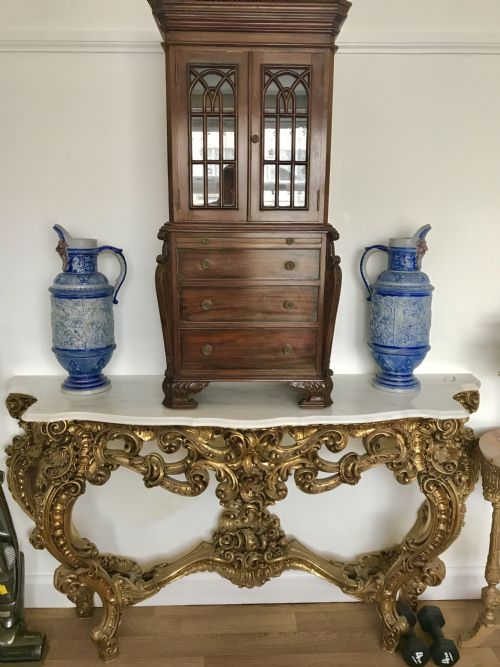
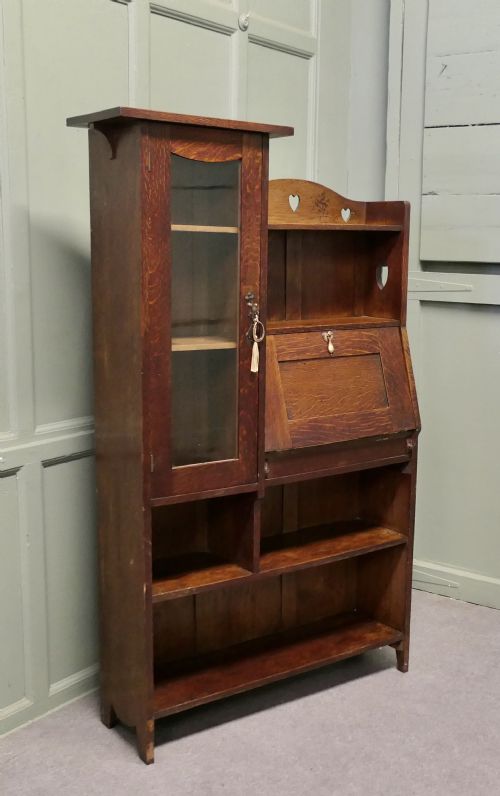


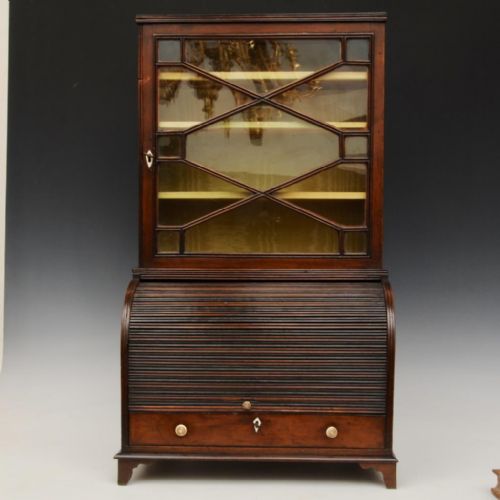
Small Bureau Bookcase
A small bureau bookcase packs a writing desk and a glazed shelving cabinet into a compact frame that suits smaller rooms.
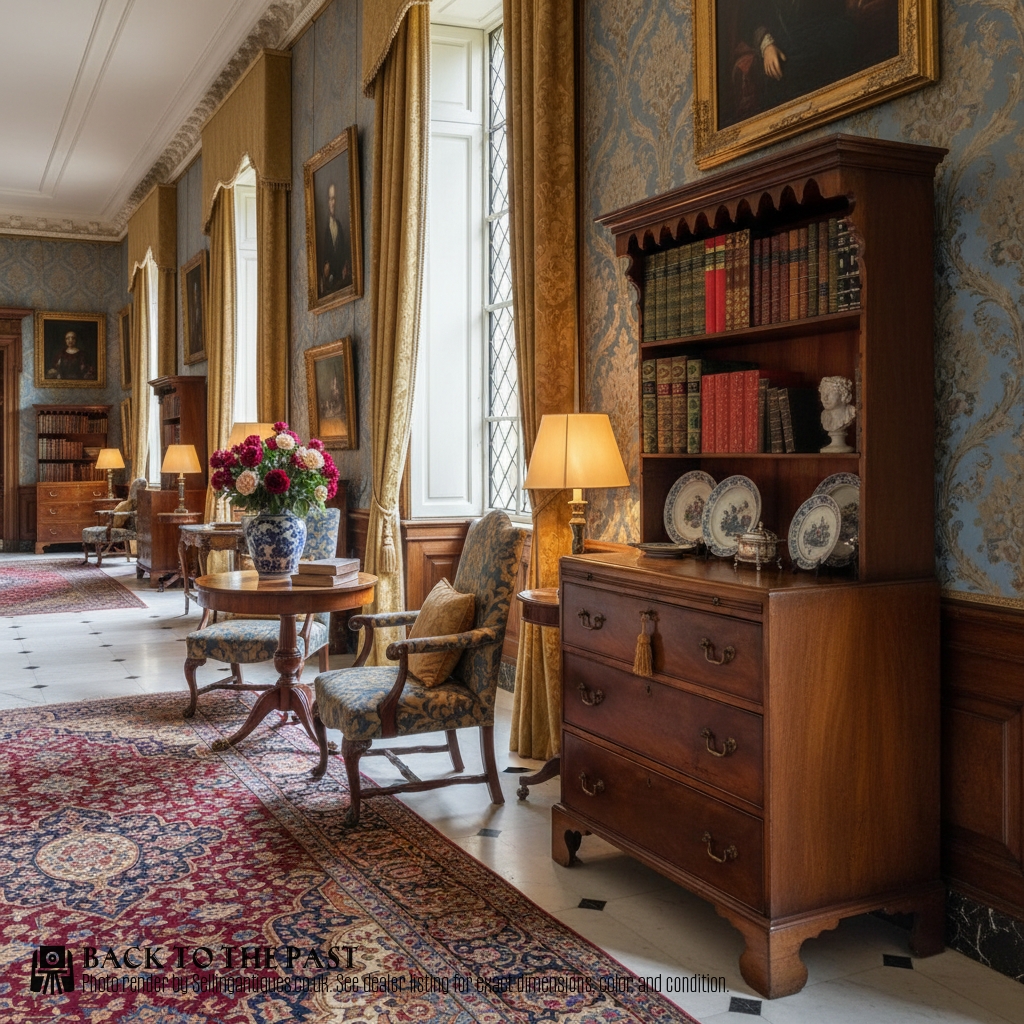
Small Bureau Bookcase
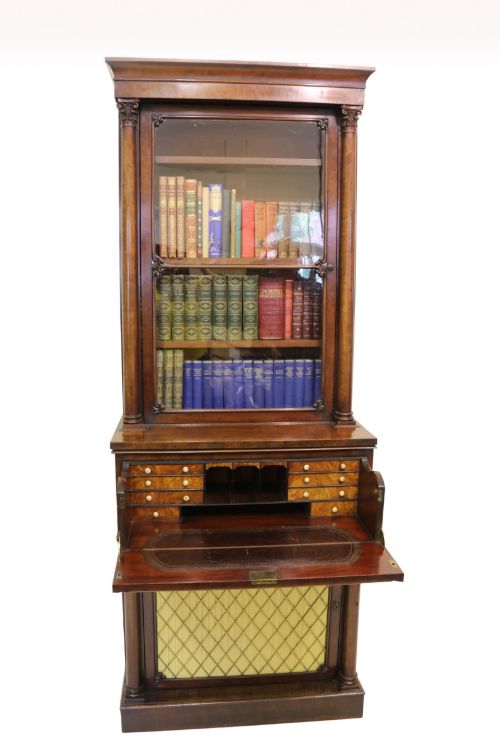
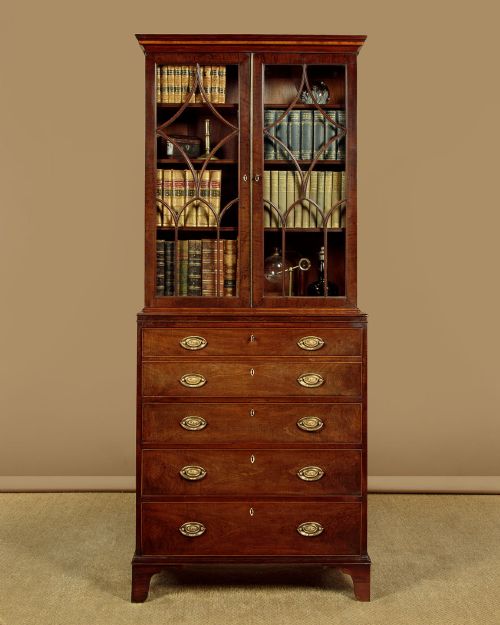
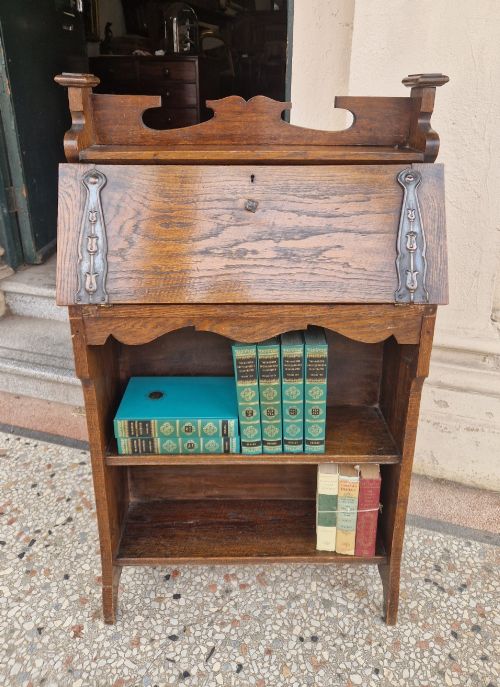
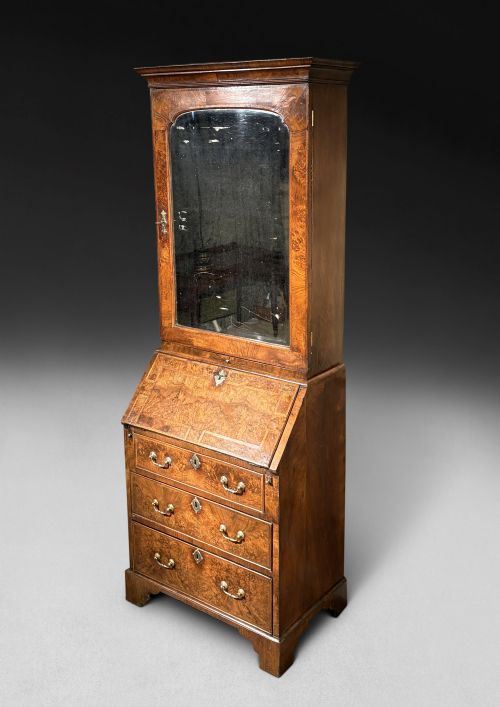
A small bureau bookcase combines a fall-front desk or secretaire drawer with upper shelving enclosed by glass doors, scaled down to fit domestic spaces rather than grand libraries. When you search for this phrase, you encounter pieces originating from the eighteenth and nineteenth centuries, alongside later revivals from the Edwardian and Arts and Crafts periods.
The architectural presence of these pieces ranges from walnut and mahogany examples in Georgian and Regency styles to sturdier oak versions from the Arts and Crafts era. Miniature and reduced-scale items also appear in the records, showing the work of apprentices or makers scaling down full-size forms.
Makers built these items to serve as private writing cabinets with integrated book storage, relying on fitted interiors with pigeonholes and small drawers behind the main fall-front or drawer.
Materials and construction
Cabinet makers utilised dense hardwoods such as mahogany, walnut, and oak, often selecting burr veneers or figured grains for the primary display surfaces on the fall-fronts and door panels.
Glazing bars divided the upper cabinet glass into panes, while interior fittings relied on tightly jointed drawer construction, sometimes supplemented by brass handles, escutcheons, and leather writing inserts.
One listed piece is a miniature mahogany bureau bookcase reduced to one-quarter size as an apprentice furniture sample.
Assessing the cabinetwork
The distinction between tiers of quality rests on the selection of timber veneers and the crispness of internal drawer carpentry. Finely figured burr walnut and master timber matching on the fall-front separate ambitious commissions from simpler country workshop output.
Proportion and the handling of cornices and glazing bars dictate the visual balance of the upper cabinet against the lower desk base. Original brass hardware and cleanly cut pigeonhole dividers elevate an example above one with replaced fittings or altered interiors.
Gillows of Lancaster·Heals
The Small Bureau Bookcase Glossary
- Glazing bars
- The wooden strips that divide the glass in the upper bookcase doors into individual panes.
- Burr walnut
- A figured wood veneer taken from the knotty growths of walnut trees, prized for its swirling grain patterns.
- Tambour
- A sliding door made of narrow vertical strips of wood glued to a fabric backing, allowing it to curve around corners.
Small Bureau Bookcase: Frequently Asked Questions
What fits inside a small bureau bookcase?
The upper section provides open shelving behind glass doors for books and display items, while the lower desk area contains small compartments and drawers for writing materials.
The drop-front or secretaire drawer folds down to create a compact writing surface for correspondence.
How do I date a bureau bookcase?
Cabinet style, timber choice, and construction methods indicate the period of manufacture, moving from eighteenth-century walnut and mahogany to nineteenth-century Regency forms and later Arts and Crafts oak.
Secondary woods inside drawers and the style of brass hardware offer further clues regarding age.
Where should I place one?
These compact cabinets suit sitting rooms, studies, or hallways where floor space is limited but vertical storage is required.
Keep them away from direct sunlight and radiators to protect timber veneers and prevent the wood from drying out.
Are all small bureau bookcases antique?
The evidence includes eighteenth and nineteenth-century pieces alongside early twentieth-century revivals and Arts and Crafts examples.
Makers continued to build in earlier styles well into the twentieth century, producing walnut and mahogany pieces with traditional proportions.