
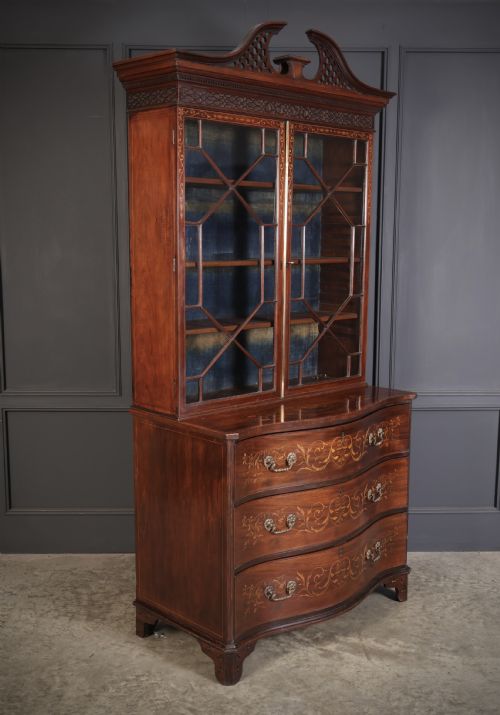


Georgian Bookcase Chest
When you handle a georgian bookcase chest, you meet a dual-purpose heavyweight built to store books above and linen or papers below.
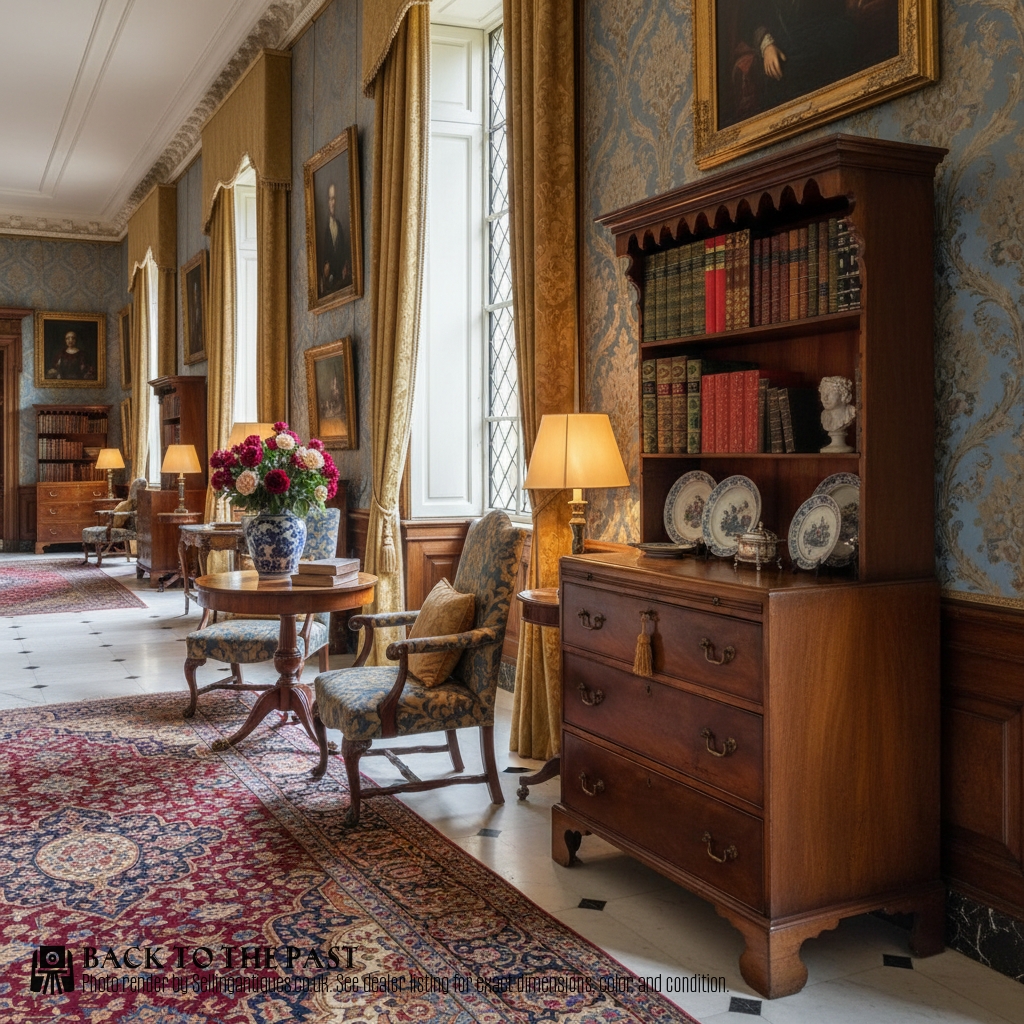
Georgian Bookcase Chest
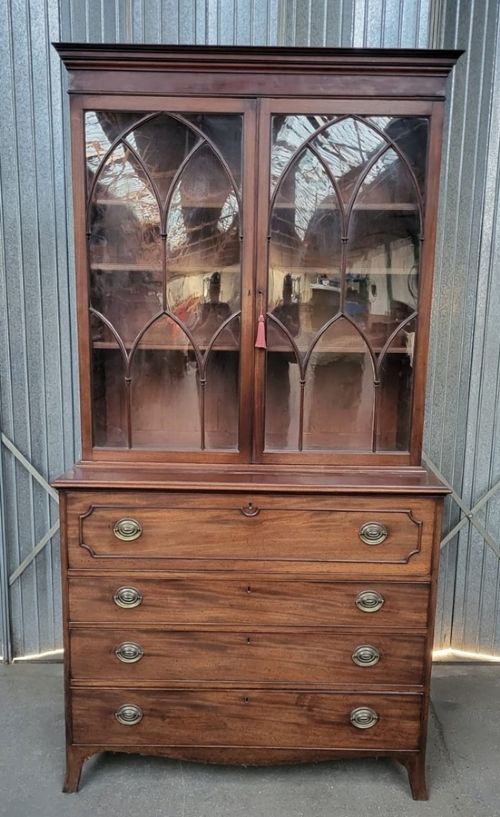
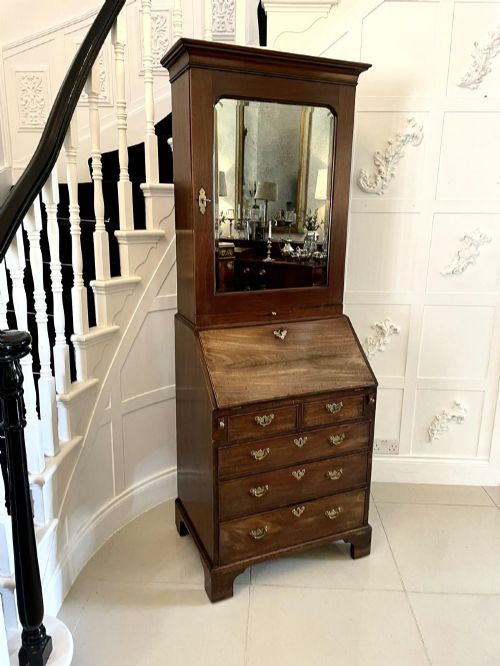
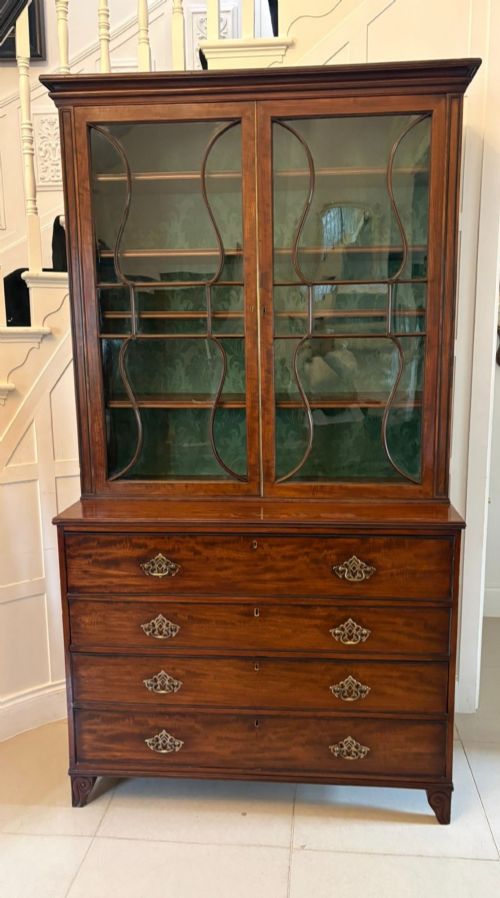
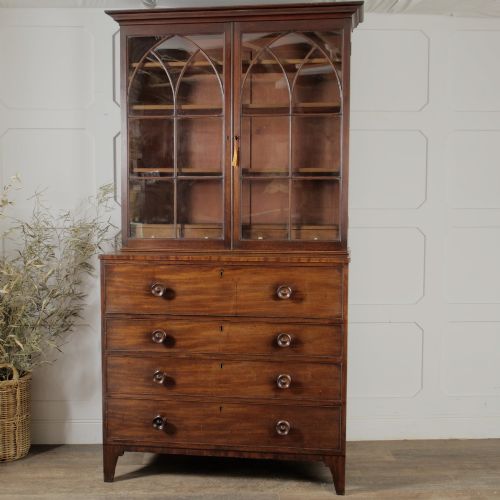
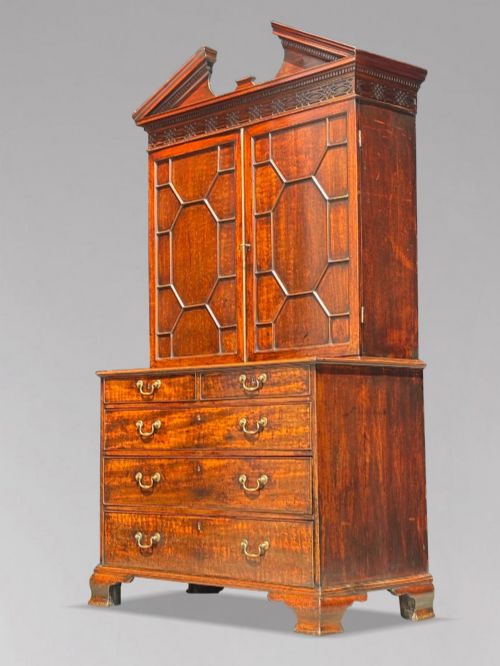
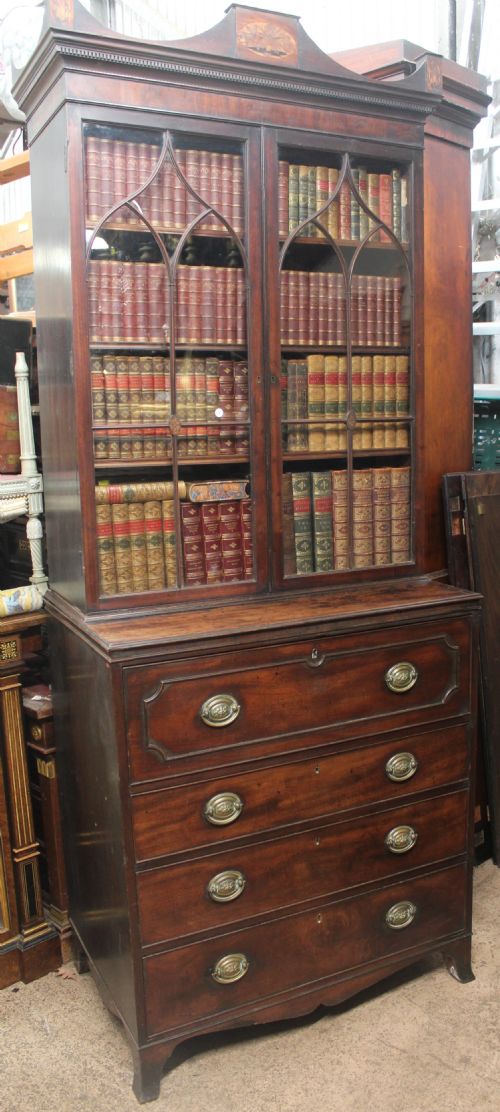
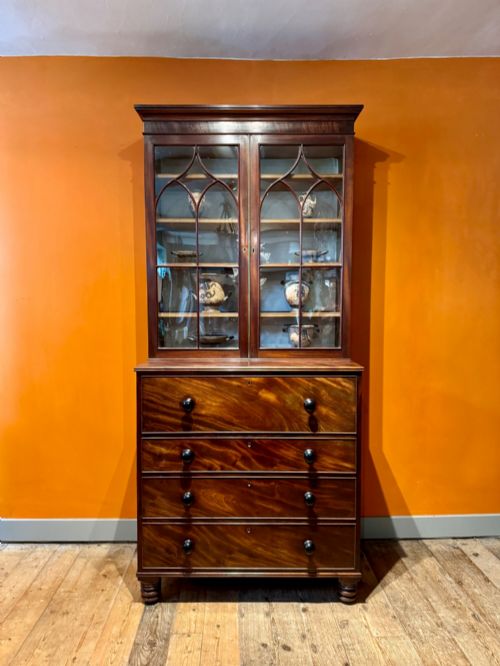
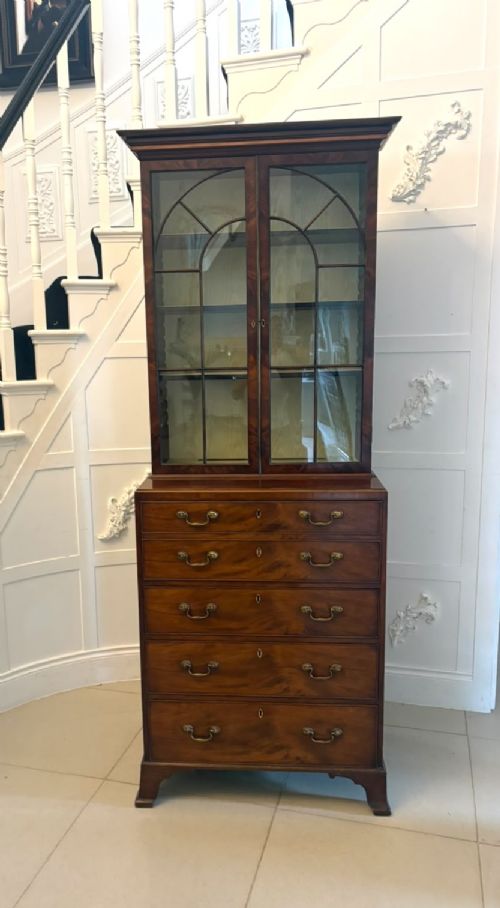
A georgian bookcase chest combines a glazed display cabinet top with a lower chest of drawers or a drop-front writing drawer, providing heavy storage for both library volumes and personal papers. The forms range from tall bureau cabinets to low press cupboards, spanning the eighteenth and nineteenth centuries.
Mahogany predominates on this page, accompanied by oak, walnut, and satinwood. Cabinetmakers built these pieces during the Georgian, George III, Regency, and George I periods, alongside later revivals from the nineteenth and twentieth centuries.
The most common formats met here pair astragal glazed doors with fitted writing drawers, though Dutch bombé cabinets and serpentine fronts also appear.
How they were made
Makers utilised solid timbers alongside figured veneers, applying mahogany, burr walnut, and satinwood over sturdy oak carcases. Marquetry inlay adds geometric or floral decoration to selected surfaces.
Glazing relies on delicate wooden glazing bars, known as astragals, arranged in geometric patterns to hold individual panes of glass within the upper cabinet doors.
Listings feature mahogany, oak, walnut, burr walnut, and satinwood across eighteenth and nineteenth-century periods.
What varies in quality
The choice of timber grain and the precision of the cabinet work separate standard utility pieces from high workshop productions. Figured mahogany veneers and crisp marquetry inlay signal superior craftsmanship.
Interior organisation dictates the standard of the piece, with complex pigeonholes, secret compartments, and finely fitted writing drawers reflecting greater time and skill invested by the maker.
Thomas Chippendale·Gillows
The Georgian Bookcase Chest Glossary
- Astragal
- A moulded bar dividing the glass panes in a cabinet door. These wooden strips create geometric patterns across the upper bookcase section.
- Secretaire
- A drawer containing a drop-front writing surface and small internal compartments. It conceals pigeonholes and writing materials behind a false drawer front.
- Bureau bookcase
- A writing cabinet featuring a sloping desk flap combined with upper shelving. It merges a desk workspace with a traditional bookcase top.
- Bombé
- A swelling, bulging contour found on furniture fronts and sides. This curved profile is characteristic of Dutch Baroque cabinet work.
- Marquetry
- Decorative veneer work forming pictures or patterns using different woods. Craftsmen cut thin pieces of satinwood and other timbers to fit flush into a contrasting background.
Georgian Bookcase Chest: Frequently Asked Questions
What is a georgian bookcase chest?
It is a tall cabinet that joins a glazed bookcase top with a lower chest of drawers or a desk base. These pieces served as libraries and writing desks in period homes.
Most examples split into two distinct sections for ease of transport. The top section holds books behind glass, while the bottom section handles heavy storage.
How do I use a secretaire drawer?
You pull out the top drawer and drop the front panel forward on brass hinges to reveal a writing surface. This reveals small drawers and pigeonholes inside.
Push the writing flap back up and lift the front panel to lock the drawer away. This mechanism kept correspondence private when guests visited.
How do I date these pieces?
Look at the timber choices, construction methods, and door glazing patterns to determine the period. Early pieces often feature walnut or oak, while later ones rely on figured mahogany.
Astragal bar thickness and foot styles also shift between the early eighteenth century and the Regency era. Cabinet work became lighter and more refined by the nineteenth century.
Where should I place one?
Position the piece against a sturdy wall in a study, drawing room, or library where floor space accommodates its height and depth. Ensure the room has stable humidity levels to protect antique timber.
Keep the cabinet away from direct sunlight and heat sources to prevent veneer lifting. Leave enough clearance in front of the piece to drop the writing drawer safely.