
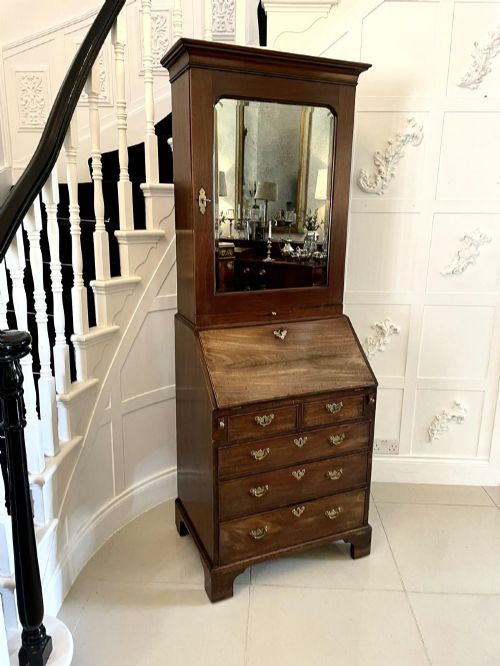
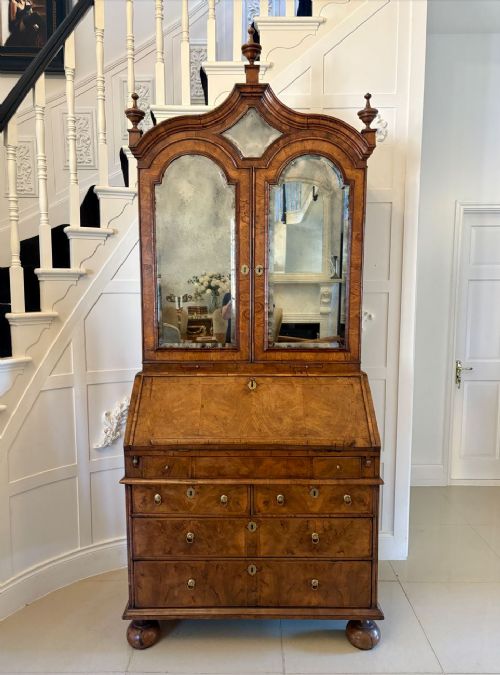
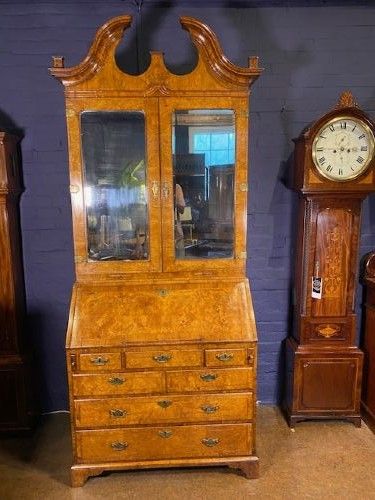
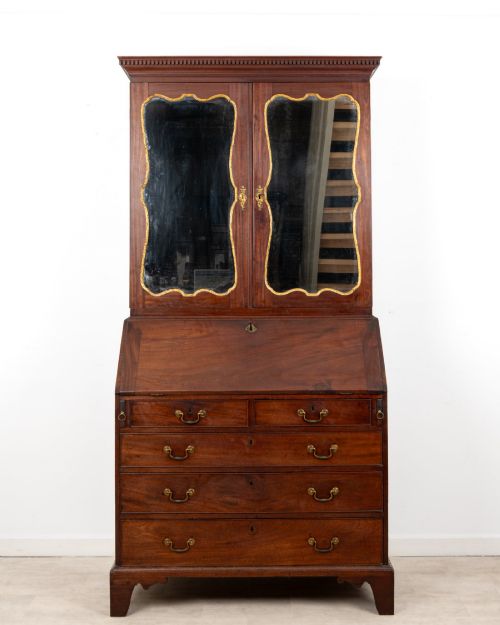


Writing Cabinet with Mirror
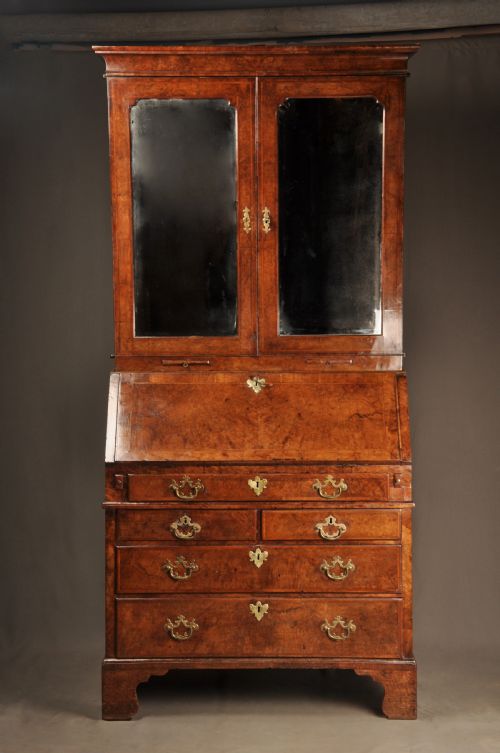
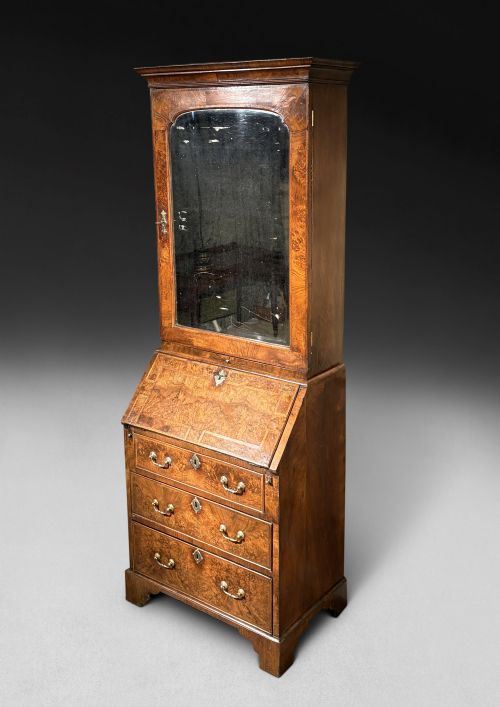
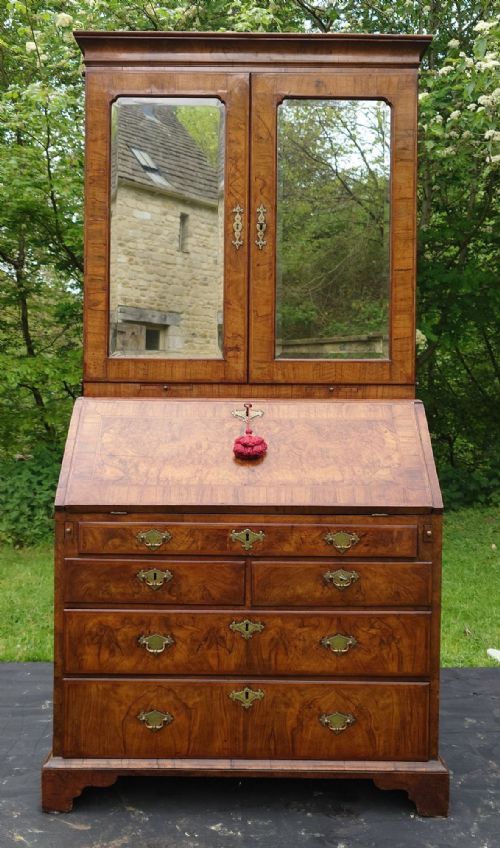
A writing cabinet with mirror combines a desk and a bookcase with reflective glass doors, offering both workspace and display.
Writing Cabinet with Mirror
When you search for a writing cabinet with mirror, you encounter pieces primarily from the 18th century, including the Georgian, Queen Anne, and William & Mary periods. These items combine a sloping writing surface with upper shelving enclosed by doors.
The most common form on this page is the bureau bookcase, alongside bureau cabinets and dressing tables. These objects originate from English workshops and Venetian centres, utilising timbers such as walnut, mahogany, and satinwood.
Smaller proportions appear frequently among the Queen Anne and George I examples. Buyers find variations ranging from double dome bookcases to fall-front desks fitted with mirror panels.
How they were made
Cabinetmakers constructed these pieces using dense hardwoods like walnut, mahogany, and burr walnut over oak carcases. Figured veneers were applied to flat surfaces to create symmetrical patterns across the fall-fronts and drawer faces.
Mirror glass was set into door panels, often held by wooden glazing bars or bevelled edges to catch the light. Brass hardware, including escutcheons and drop handles, completed the construction.
The listings span multiple centuries, ranging from 1700 through the Georgian era to 1900.
What varies in quality
Quality rests in the selection of timber and the matching of grain across the facade. Finer pieces display carefully chosen burr walnut or figured mahogany veneers that wrap continuously around the carcass.
Proportion and cabinetwork detail set the standard, seen in the tightness of the dovetails and the original state of the mirrored glass doors. Superior examples retain their early brasses and well-executed interior pigeonholes.
The Writing Cabinet with Mirror Glossary
- Bureau bookcase
- A combination of a sloping-front desk and an enclosed upper shelving unit. It provides a fold-down writing surface above drawers and below glazed doors.
- Burr walnut
- A specialised timber cut from walnut tree growths, yielding intricate, swirling grain patterns. Cabinetmakers prized this wood for high-status furniture fronts.
- Fall-front
- A hinged writing flap that drops forward to horizontal, revealing an interior fitted with small drawers and pigeonholes. It forms the primary workspace of the bureau.
- Double dome
- An upper cabinet roof line shaped with two adjacent arched curves. This architectural feature appeared on large case furniture.
- Glazing bar
- A narrow wooden strip holding individual panes of glass within a door frame. These strips divide the mirrored or clear glass into smaller segments.
Writing Cabinet with Mirror: Frequently Asked Questions
What is a writing cabinet with mirror?
A writing cabinet with mirror is a dual-purpose furniture form that integrates a sloping desk for correspondence with an upper cabinet enclosed by mirrored doors. These pieces served both practical workspace needs and decorative display functions in domestic interiors.
Originating primarily during the late 17th and 18th centuries, they reflect the cabinetmaking standards of the Georgian and Queen Anne eras. The inclusion of mirror glass helped brighten rooms by reflecting candlelight.
How do I date an 18th-century piece?
Dating relies on observing structural characteristics, timber choices, and hardware styles specific to periods like William & Mary or George III. Early pieces often feature walnut timbers and candle slides, while later examples frequently employ mahogany.
Examining secondary woods like oak inside the drawers also assists in confirming the manufacturing era. Construction techniques changed over the decades, moving from hand-cut dovetails to more refined joinery.
Where should I place one?
These cabinets suit studies, living rooms, or hallways where their height and reflective glass doors can catch natural light. Placing them away from direct heat sources protects the antique timber and veneer from drying out.
Because they combine storage and display space, they function well against solid walls in rooms with adequate ceiling clearance. Their deep footprints require careful positioning to maintain clear traffic flow.
How do I care for walnut veneer?
Maintaining walnut veneer involves keeping the piece in a stable environment with moderate humidity and minimal temperature fluctuation. Applying occasional microcrystalline wax helps nourish the timber surface without building up residue.
Avoid using modern liquid polishes or placing the cabinet in direct sunlight, which can fade the figured grain. Gentle dusting with a dry, soft cloth preserves the historic finish.