
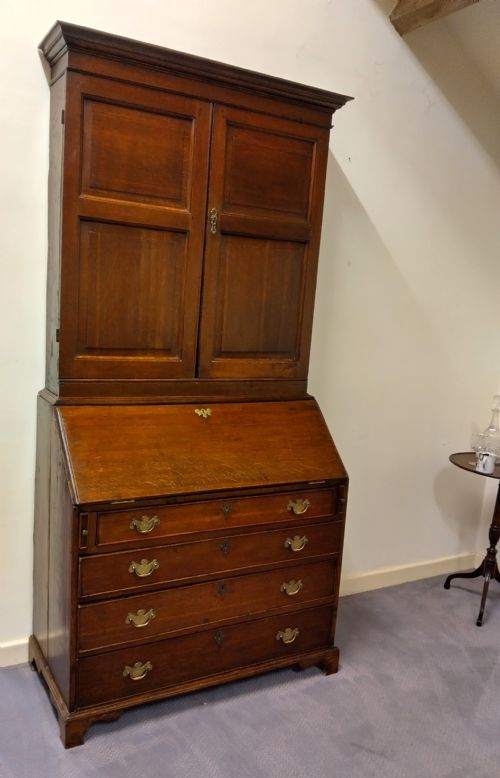
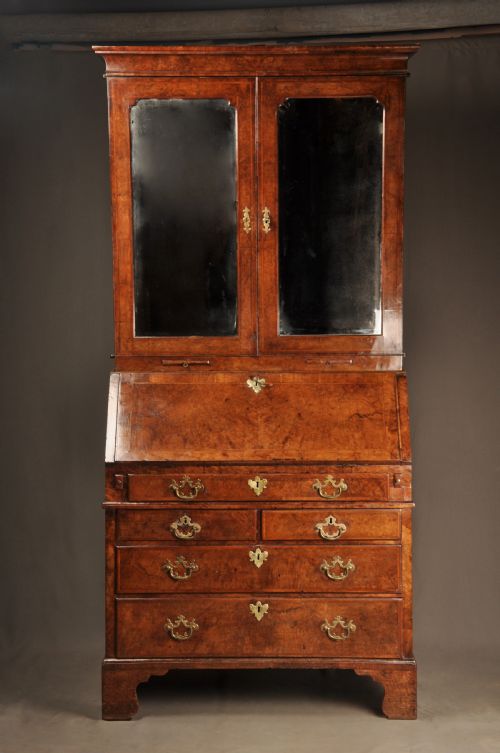
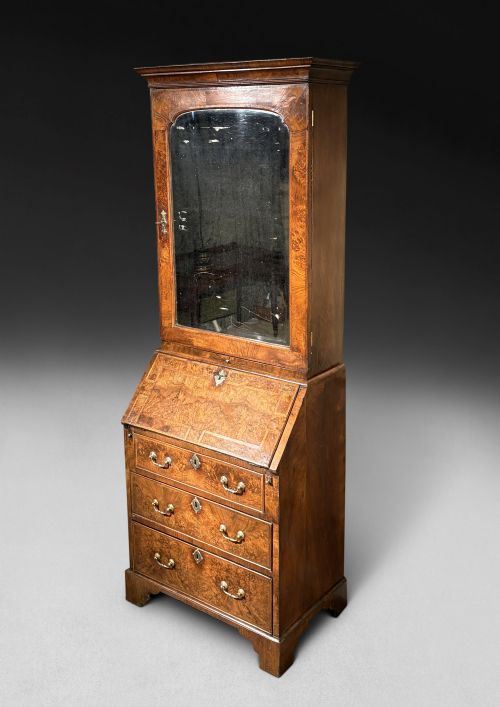


Early 18th Century Bookcase
An early 18th century bookcase brings architectural presence and rich figured timbers into a room, offering both display space and a concealed writing surface.
Early 18th Century Bookcase
An early 18th century bookcase primarily takes the form of a bureau bookcase, bureau cabinet, or secretaire, combining a fitted writing drawer or fall-front desk with upper shelving. These tall pieces were designed for domestic studies and libraries during the reigns of Queen Anne and the early Georgian monarchs.
The version you are most likely to meet on this page is constructed from walnut or burr walnut, frequently built in two or three distinct sections for transport and placement. They range from small proportions suitable for modest chambers to double-domed and double-door examples of considerable scale.
While walnut predominates, the evidence also includes pieces fashioned from sturdy oak, Cuban mahogany, satinwood, and pine, reflecting the evolving timber preferences of cabinet makers through the decades.
How they were made
Cabinet makers utilised dense native and imported timbers, applying figured veneers such as burr walnut onto primary carcases of oak or pine. Cross-banding and feather-banding were commonly employed to frame drawer fronts and panel edges.
Upper doors often feature glazed panels, sometimes with mirrored glass or astragal bars, protecting books from dust while maintaining visibility. Brass hardware, including drop handles, escutcheons, and candle slides, served both functional and decorative roles.
One early oak bureau bookcase on record has been adapted specifically to accommodate a television.
What varies in quality
The choice of veneer and the skill in matching grain patterns across large surfaces distinguish finer examples from simpler provincial work. Burr walnut and figured mulberry display intricate figuring that requires exceptional dexterity in sawing and laying.
The architectural harmony of the upper section - whether single, double-domed, or flat-topped - determines the visual balance of the piece. Interior fitments, including concealed compartments, pigeonholes, and sliding wells, reveal the thoroughness of the original workshop.
The Early 18th Century Bookcase Glossary
- Bureau bookcase
- A dual-purpose article of furniture featuring a sloping desk flap above drawers, surmounted by a glazed or panelled cabinet for books.
- Burr walnut
- Timber taken from walnut tree growths that produce complex, swirling grain patterns highly prized for cabinet veneers.
- Secretaire cabinet
- A piece containing a fitted writing drawer with a drop-front panel, often disguised as a standard drawer to maintain clean exterior lines.
- Astragal bars
- Slender mouldings of wood or metal used to hold individual panes of glass within a glazed cabinet door.
- Candle slide
- A pull-out wooden board mounted beneath the upper cabinet doors to hold lighting while the desk was in use.
Early 18th Century Bookcase: Frequently Asked Questions
How were early 18th century bookcases used?
These pieces served as the administrative and literary hub of a household. The upper section housed valued volumes and manuscripts behind locked doors, while the fold-down desk provided a private surface for correspondence and accounts.
Lower drawers stored larger documents and papers. Candle slides pulled out below the glass doors to provide direct illumination for writing during evening hours.
How do I tell George I from later periods?
George I examples typically display rich walnut veneers, herringbone banding, and candle slides, often constructed in multiple stacked sections. The proportions remain relatively restrained compared to the heavier mahogany designs that followed.
Later Georgian pieces shift towards Cuban mahogany and satinwood, incorporating neoclassical details or refined astragal glazing patterns associated with the Sheraton style.
Are these pieces built in one section?
Most examples are constructed in multiple stacked sections, usually dividing into a lower bureau base and an upper bookcase cabinet. This multi-part construction was essential for moving heavy furniture through domestic doorways.
Some grander variants separate further into three distinct components, allowing the base, middle desk, and top cornice to be handled individually.
Where should I place a bureau bookcase?
A study, library, or spacious drawing room provides an appropriate setting where the vertical height and architectural detailing can be fully appreciated. Ensure the room has stable humidity to protect delicate wood veneers and historic carcases.
Allow adequate floor clearance in front of the piece so the fall-front desk can open fully without obstruction.