

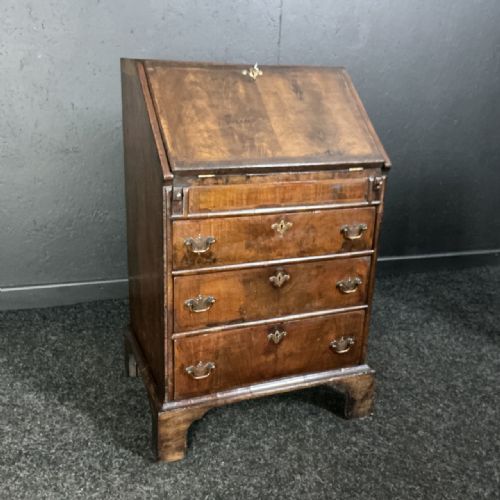
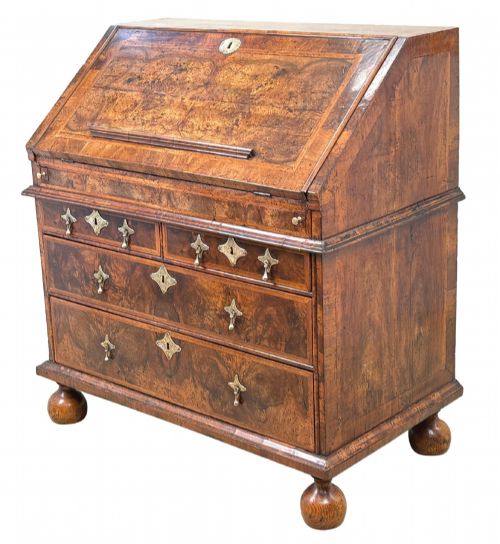

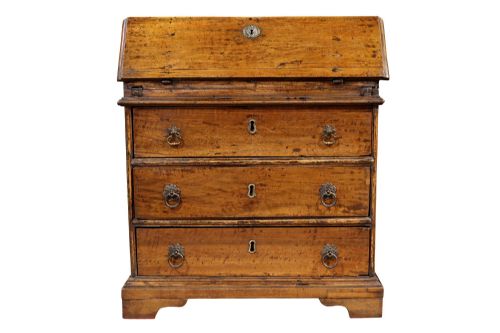


Queen Anne Slope Front Bureau
A queen anne slope front bureau is a fitted writing desk with a hinged flap, bringing early eighteenth-century elegance and domestic utility into modern rooms.
Queen Anne Slope Front Bureau
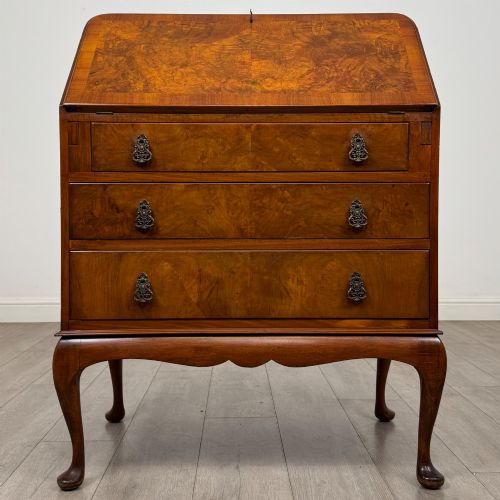
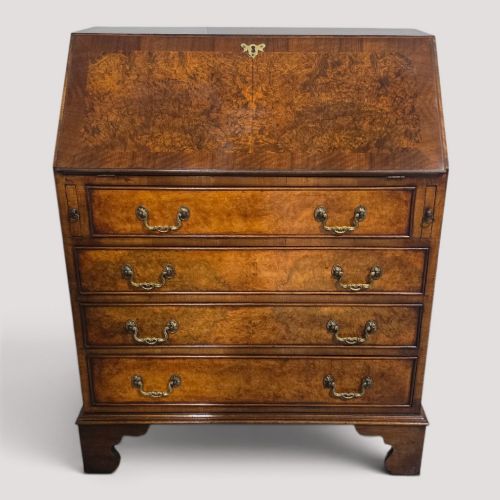
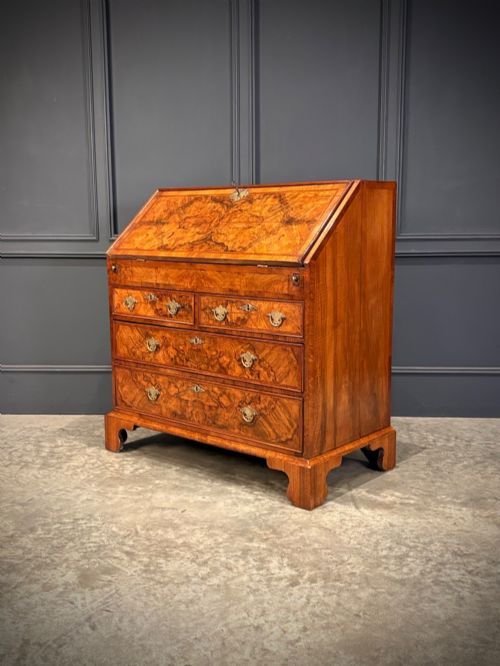
A queen anne slope front bureau provides a dedicated writing surface that conceals internal pigeonholes and small drawers when the slant lid is closed. These writing desks appear primarily in eighteenth-century pieces alongside later revival interpretations.
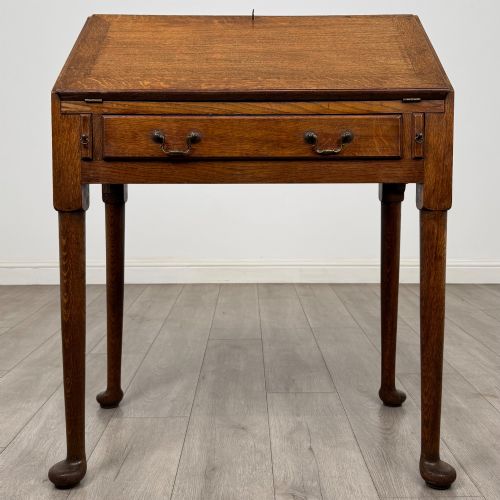
Walnut dominates the selection, frequently enhanced by burr figures or marquetry inlay, while oak, elm, yew wood, and mahogany appear across different periods. Formats range from standard desk bodies to compact examples raised on stands or bun feet.
Revival iterations from the twentieth century sit alongside period pieces originating from the seventeen-hundreds. Buyers encounter everything from simple elm writing desks to elaborate bureau bookcases of small size.
How They Were Made
Cabinet makers utilised choice timber veneers, applying burr walnut and burr elm over stable secondary woods to achieve rich patterned surfaces. Timber selection defined the primary visual impact of the slant front and drawer fronts.
Joinery relied on traditional framing and dovetailing to construct the carcase and interior drawers. Original ironwork and brass handles completed the construction, securing functional movement for the dropping writing flap.
Some diminutive walnut examples sit comfortably upon bun feet, proving that seventeenth-century desks understood the charm of miniature proportions.
What Varies in Quality
The choice of timber grain sets apart standard examples from exceptional pieces, particularly where figured burr walnut or intricate marquetry inlay decorates the exterior. Superior execution shows in the crispness of internal drawer divisions and the harmony of veneer matching across the slope front.
Proportion dictates desirability, with smaller formats and pieces raised on bun feet or integrated stands commanding particular attention. The integrity of the timber surface and the presence of period mounts distinguish finer examples from later revivals.
Coxed and Woster
The Queen Anne Slope Front Bureau Glossary
- Bureau
- A writing desk featuring a sloping flap that opens to reveal fitted drawers and pigeonholes. This form evolved to serve correspondence and record-keeping needs in domestic interiors.
- Burr walnut
- A distinctive timber veneer harvested from tree growths, producing swirling patterns highly prized by cabinet makers. It creates rich decorative surfaces on eighteenth-century furniture.
- Marquetry
- The art of applying decorative pieces of veneer to form intricate geometric or floral patterns. Craftsmen utilised contrasting timbers to adorn the exterior panels.
- Bun feet
- Rounded, compressed feet shaped like buns, frequently supporting early eighteenth-century case furniture. They lift the bureau slightly off the floor.
- Pigeonholes
- Small, open compartments fitted inside the bureau interior for sorting letters and papers. They sit above the small internal drawers behind the slope front.
Queen Anne Slope Front Bureau: Frequently Asked Questions
What is a slope front bureau?
A slope front bureau is a compact writing desk with a hinged slanted lid that folds down to create a writing surface. Inside, small drawers and pigeonholes organise correspondence.
These pieces combine enclosed storage with a dedicated workspace, making them practical for letter writing and document storage in period or modern interiors.
How do I date a walnut bureau?
Dating relies on examining construction methods, timber choice, and hardware styles such as brass handles and ironwork. Early eighteenth-century examples display specific walnut veneers and dovetailing techniques.
Later revival pieces from the twentieth century often use different secondary timbers and modern manufacturing traces that distinguish them from original period furniture.
Where should I place a bureau?
A bureau fits well in a living room, study, or hallway where its compact footprint and flat back allow it to sit flush against a wall. The closed slope front keeps paperwork hidden from view.
Leaving adequate space in front of the piece ensures the flap can open fully for writing use without blocking room circulation.
Are these desks suitable for daily use?
These desks accommodate contemporary writing and laptop use while providing organised storage within the internal compartments. The sloping lid offers a stable surface for casual correspondence.
Regular care for walnut and other timber surfaces preserves the polished finish against daily wear.