
Antique Bureau Desk Drawers
These antique bureau desk drawers combine fitted compartments and writing surfaces with storage, spanning periods from the seventeenth century through the Edwardian era.
Antique Bureau Desk Drawers
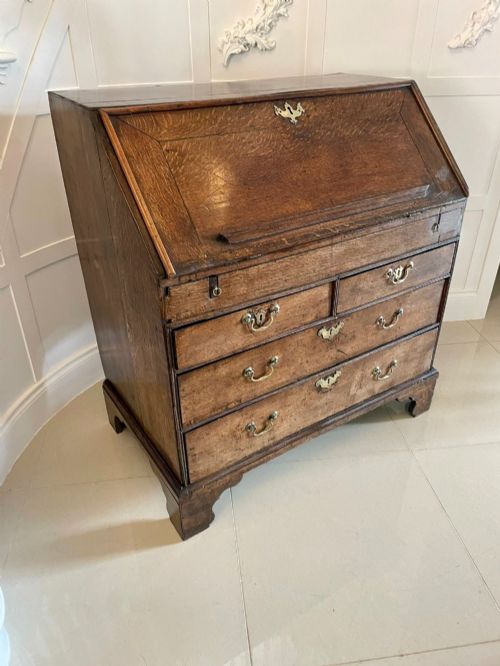
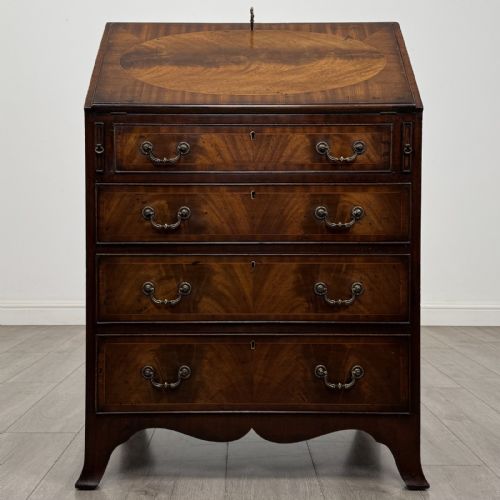
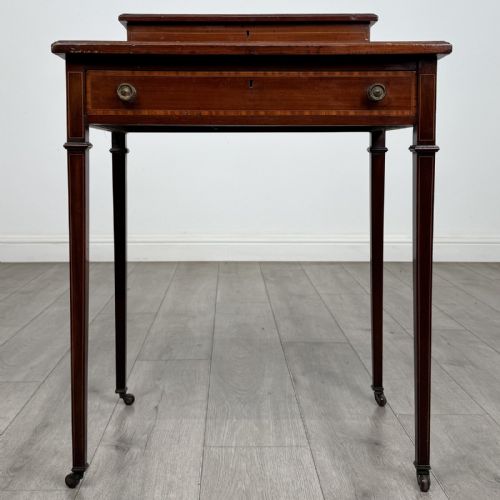
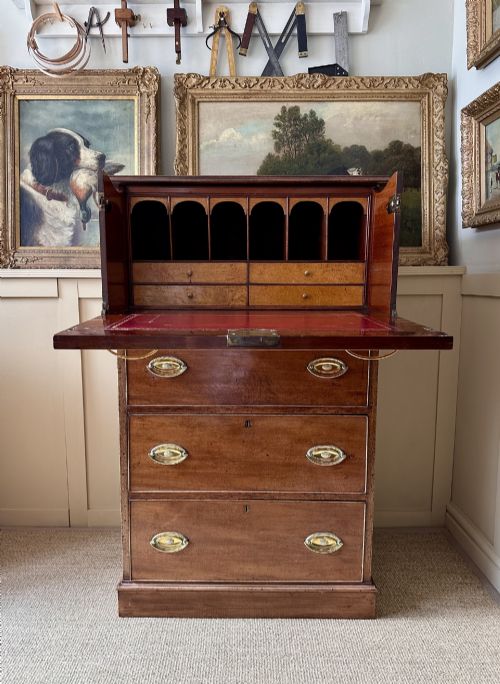
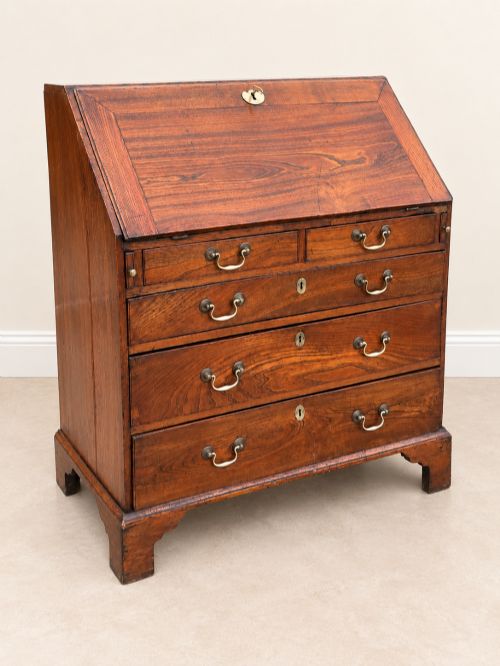
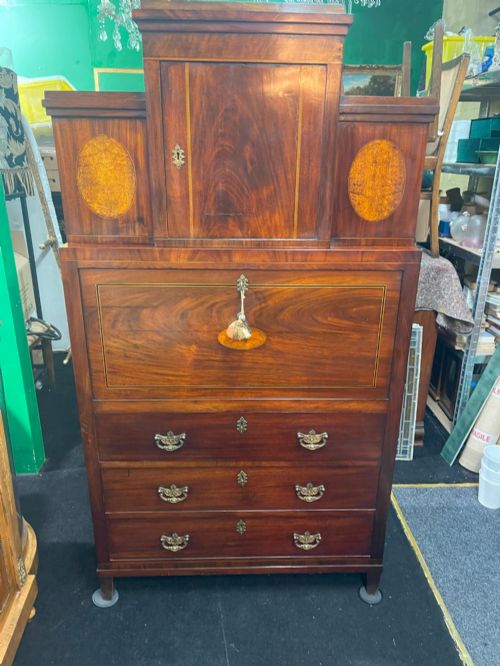
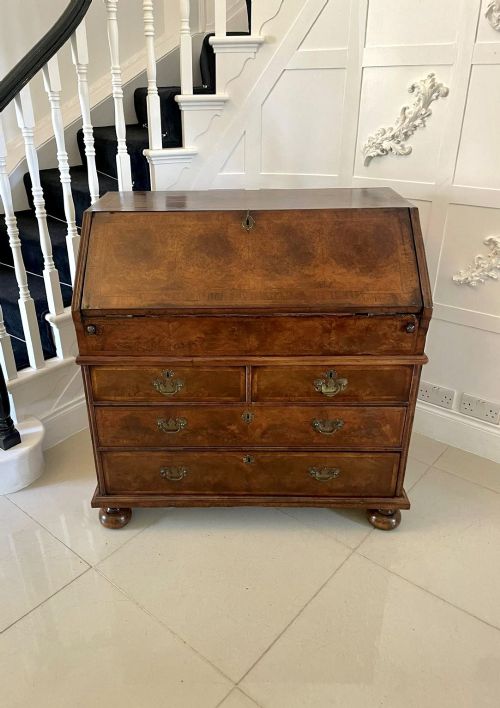
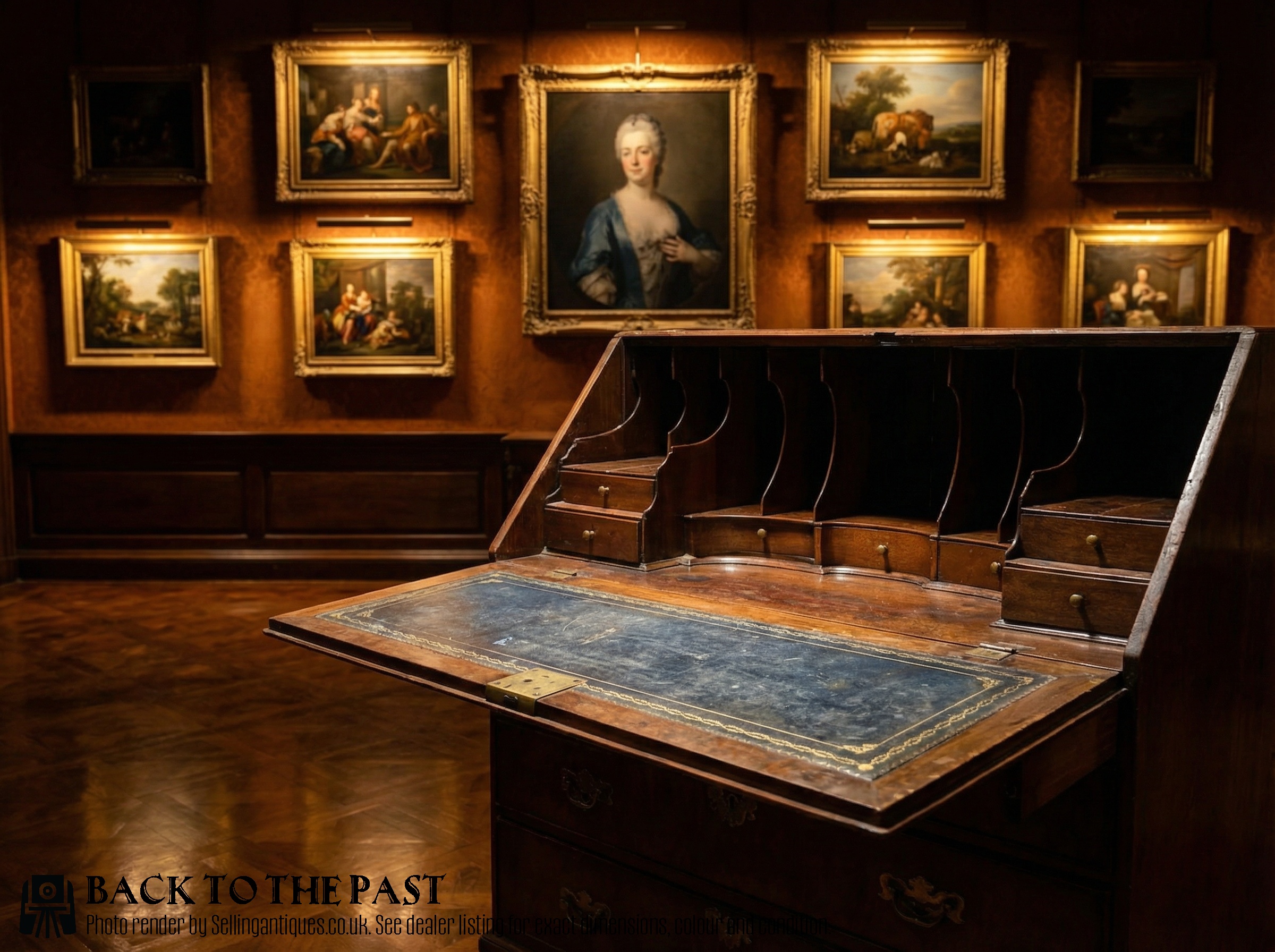
Antique bureau desk drawers encompass a varied group of writing furniture that unites a fall-front slope or pull-out secretaire drawer with lower storage drawers. The versions met on this page range from compact oak examples of the seventeenth century to mahogany and walnut pieces from the Georgian, Victorian and Edwardian periods.
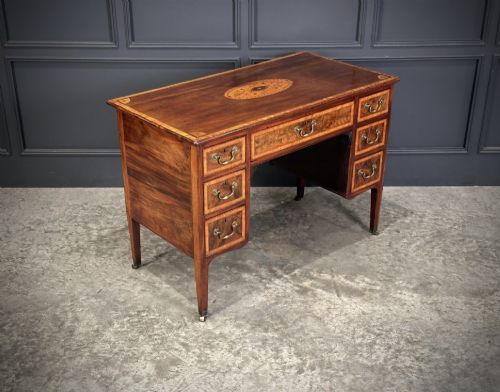
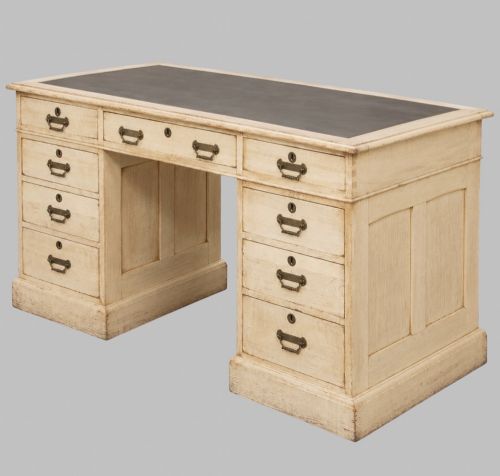
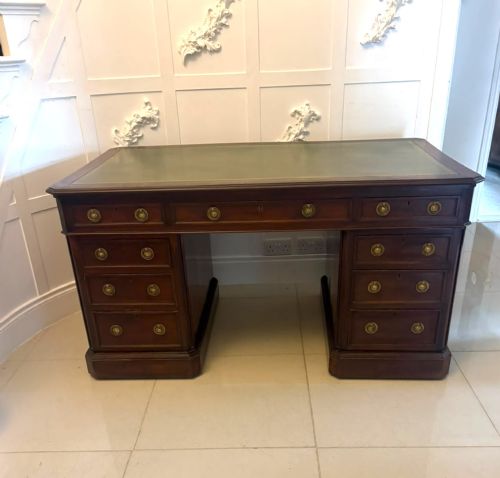
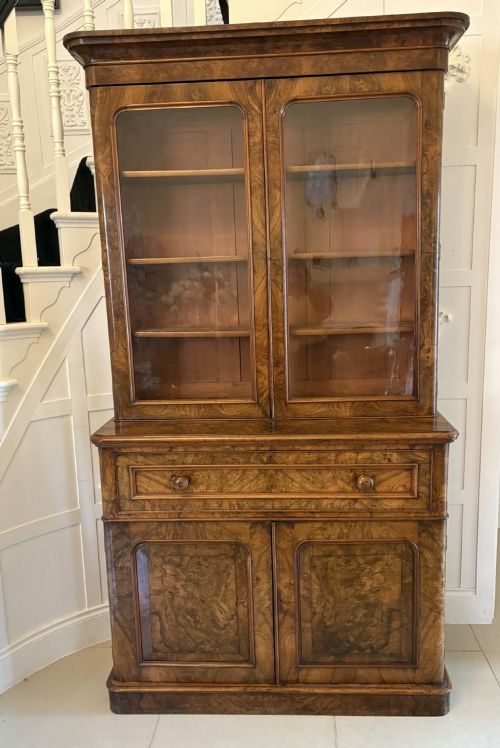
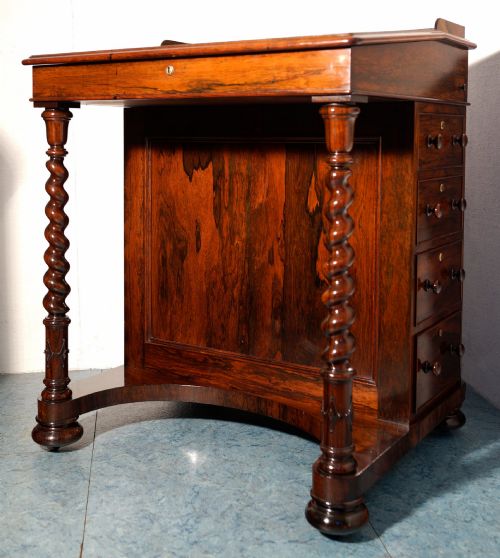
Many incorporate upper bookcase sections with glazed doors, while others remain as standalone chests or pedestal desks fitted with leather writing surfaces. Construction encompasses standard writing bureaux alongside specialised forms such as Davenport desks and bachelor chests.
How they were made
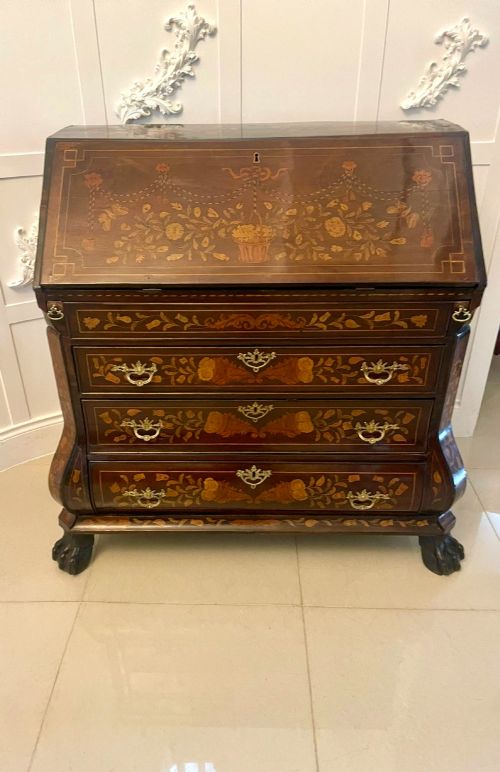
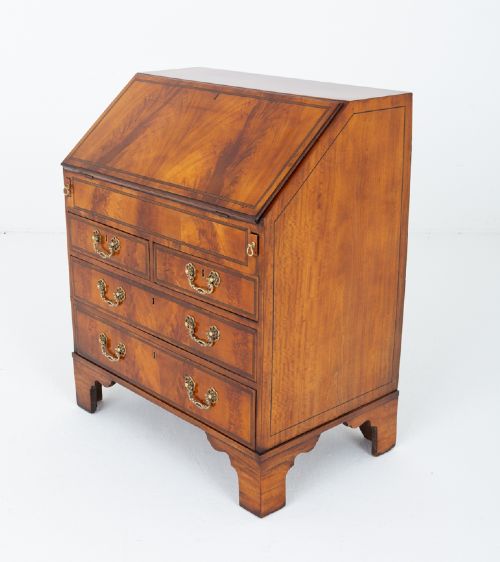
Makers constructed these pieces primarily in solid timbers including oak, mahogany, walnut and rosewood, frequently applying burr walnut or flame mahogany veneers across primary surfaces. Brass hardware such as drop handles and escutcheons accompanied drawer construction, whilst writing surfaces utilised leather inserts.
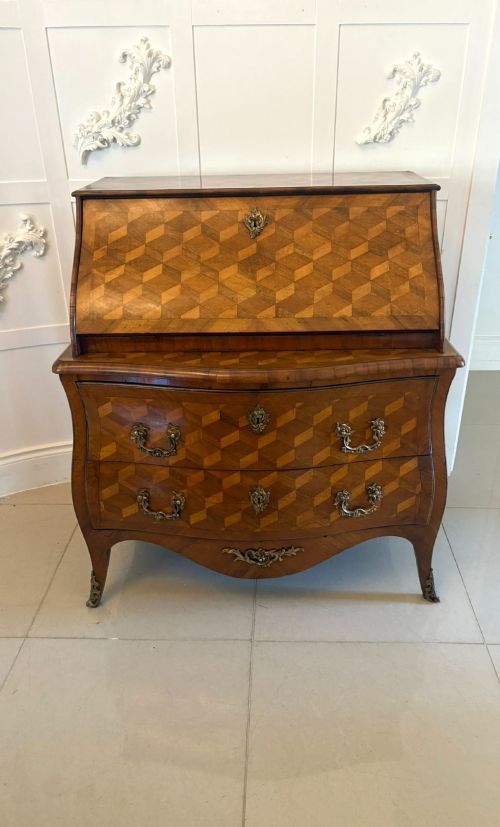
Decorative techniques recorded across the evidence include floral marquetry, parquetry, hand painting, linenfold carving, and green man detailing. Carved elements appear frequently on oak pieces from the Victorian and Edwardian periods.
At least one early oak bureau has been adapted for television use, proving that antique furniture continues to find modern utility.
What varies in quality
Quality rests upon the selection of timber veneers and the precision of cabinetmaking within the interior pigeonholes and small drawers. Pieces featuring figured walnut or detailed floral marquetry demonstrate greater ambition than plain regional variants.
The integration of secondary elements, such as original brass fittings, leather writing surfaces, and well-proportioned secretaire drawers, distinguishes superior examples from later adaptations.
Gillows·Heals of London
The Antique Bureau Desk Drawers Glossary
- Bureau
- A writing cabinet featuring a sloping fall-front that opens to reveal a fitted interior of small drawers and pigeonholes above lower storage drawers.
- Secretaire
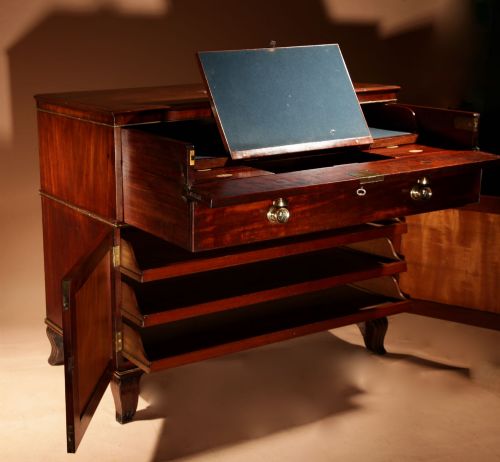
- A cabinet or chest of drawers containing a pull-out writing drawer or drop-front desk compartment. It often conceals internal compartments behind a disguised drawer front.
- Davenport
- A compact small desk featuring a sloping top and drawers accessed from the side. The form became popular during the nineteenth century.
- Marquetry
- The art of forming decorative patterns using thin veneers of wood and other materials applied to a wooden structure. Floral designs frequently appear on eighteenth-century walnut examples.
- Linenfold
- A style of carved wooden panelling resembling folded vertical linen fabric. It appears predominantly on oak pieces from the Edwardian era.
- Bombe
- A swollen or bulging contour characteristic of continental and high-style English case furniture. It is seen on eighteenth-century walnut and marquetry pieces.
Antique Bureau Desk Drawers: Frequently Asked Questions
What is an antique bureau desk?
An antique bureau desk is a dual-purpose piece of furniture that combines a writing surface with lower storage drawers. The writing area is typically enclosed behind a sloping fall-front or a pull-out drawer.
Opening the fall-front reveals an arrangement of small drawers and pigeonholes designed for correspondence and paperwork. Below this desk section sits a chest of drawers for general storage.
How do I date an old bureau?
Dating requires examining the secondary timbers, construction methods, and hardware used in the drawers. Earlier pieces from the seventeenth and eighteenth centuries often employ oak linings and hand-cut dovetails.
Stylistic markers such as bracket feet, cabriole legs, and veneer types provide further chronological evidence. Comparing the decorative motifs to known periods helps narrow the manufacturing date.
Where should I place a bureau desk?
Bureau desks suit studies, living rooms, and bedrooms due to their compact footprint and enclosed storage capacity. The fall-front provides a dedicated writing surface that can be closed when not in use.
Positioning the piece away from direct sunlight protects vulnerable wood veneers like burr walnut and mahogany. Adequate clearance is necessary to allow the fall-front to open fully.