


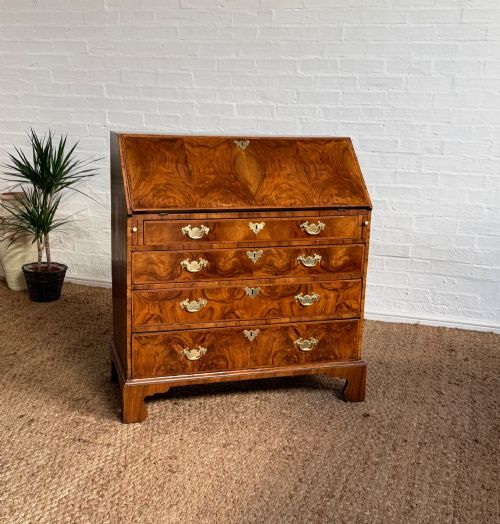
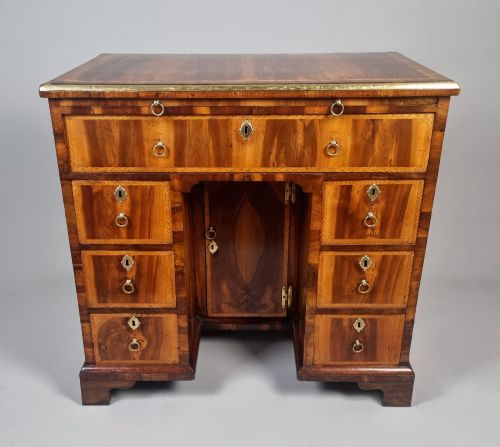
Antique Bureau Desk Chest
An antique bureau desk chest combines a chest of drawers with a fitted writing surface, offering enclosed workspace and substantial storage.
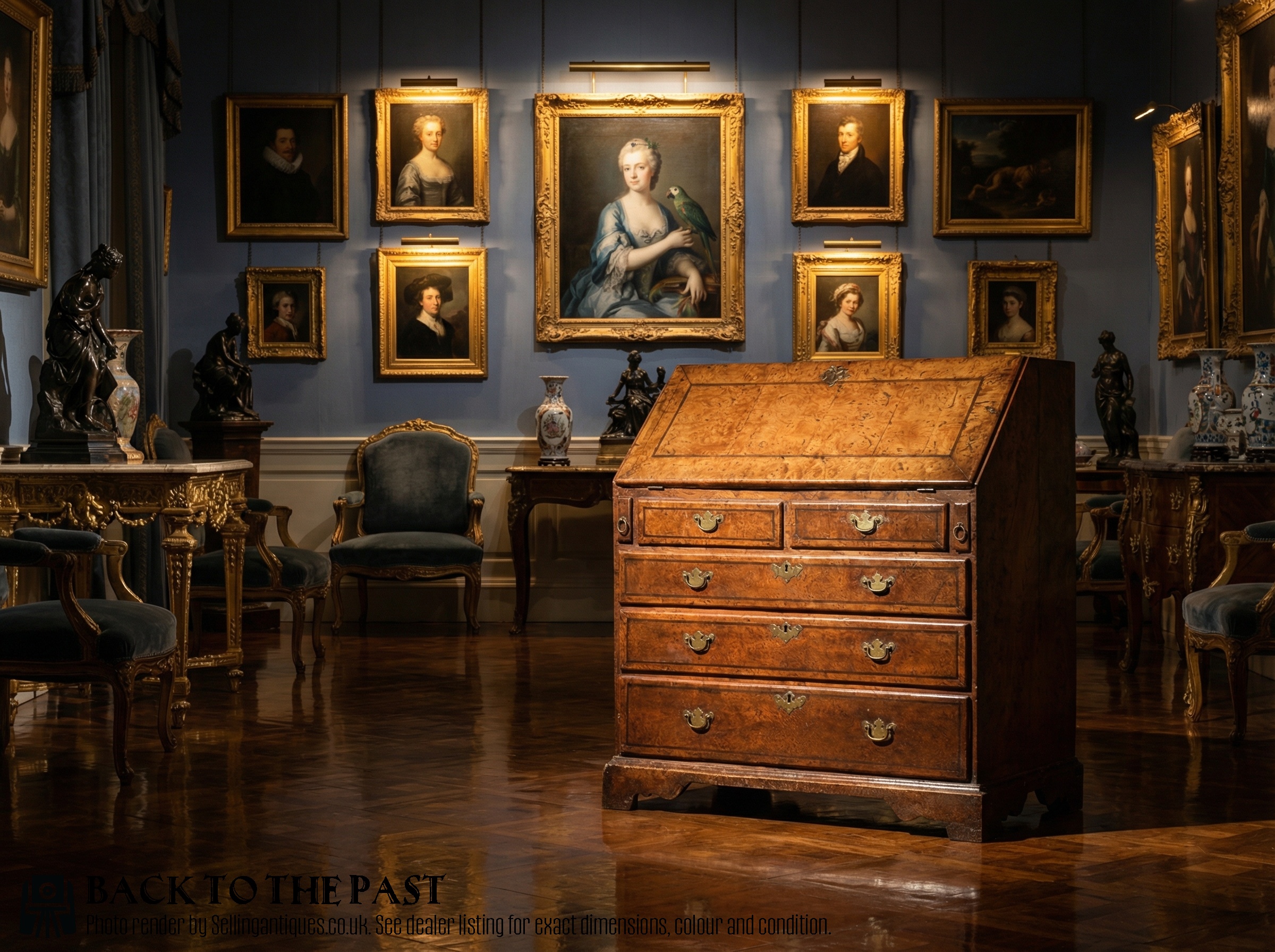
Antique Bureau Desk Chest
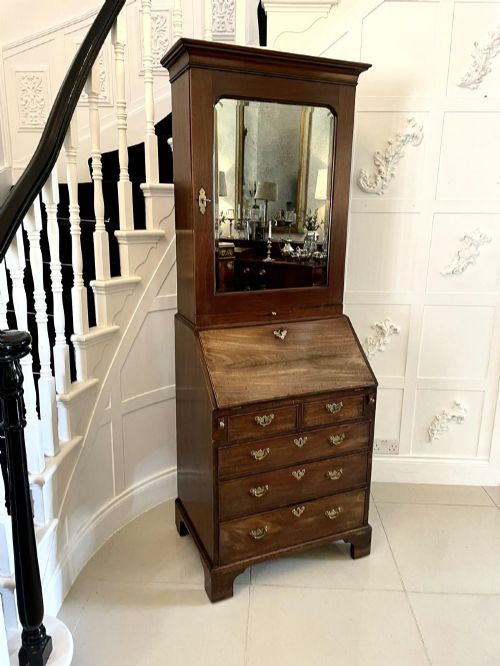
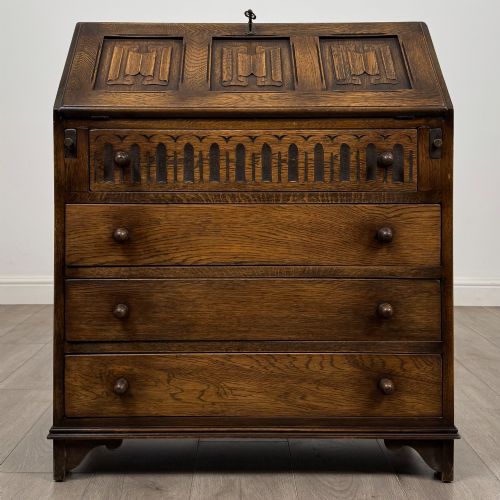
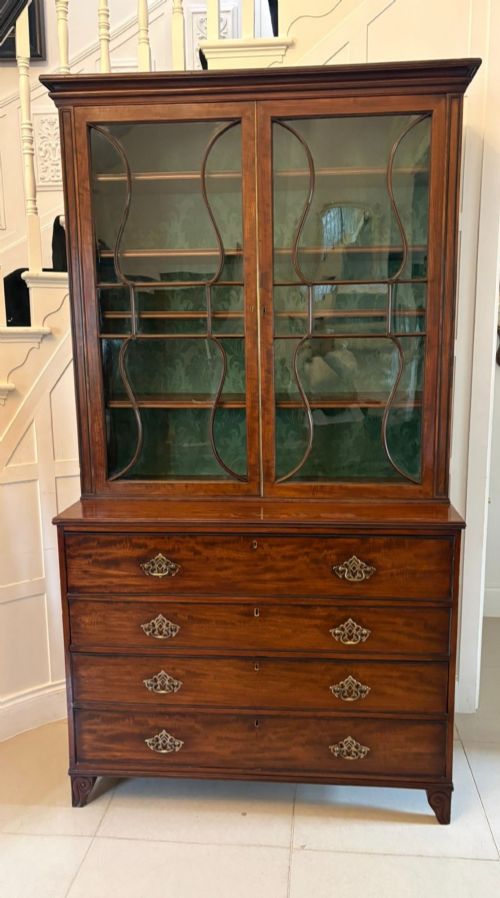
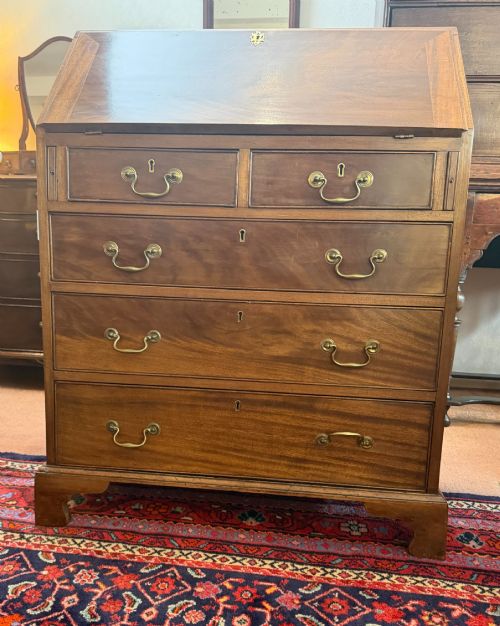
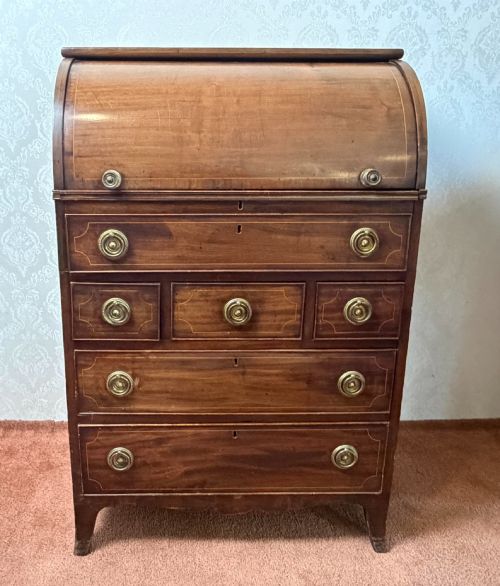
When you search for an antique bureau desk chest, you encounter a form that merges a set of drawers with a fall-front writing flap or a pull-out secretaire drawer. These pieces originate primarily from the eighteenth and nineteenth centuries, spanning Georgian, Regency and Victorian periods.
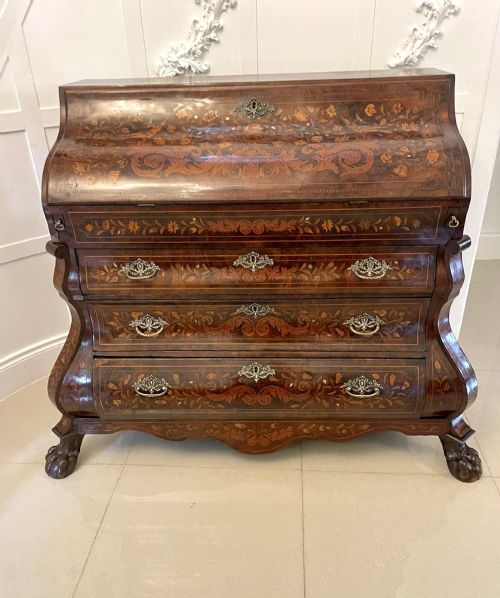
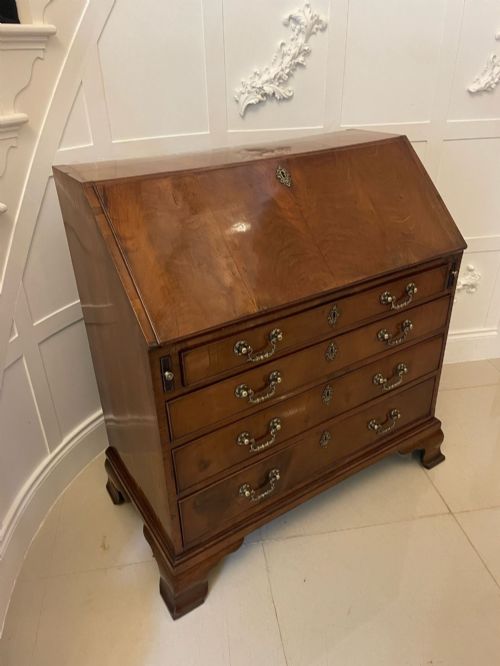
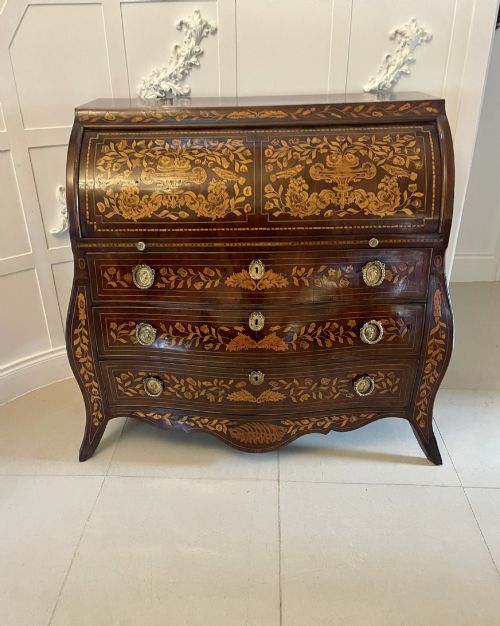
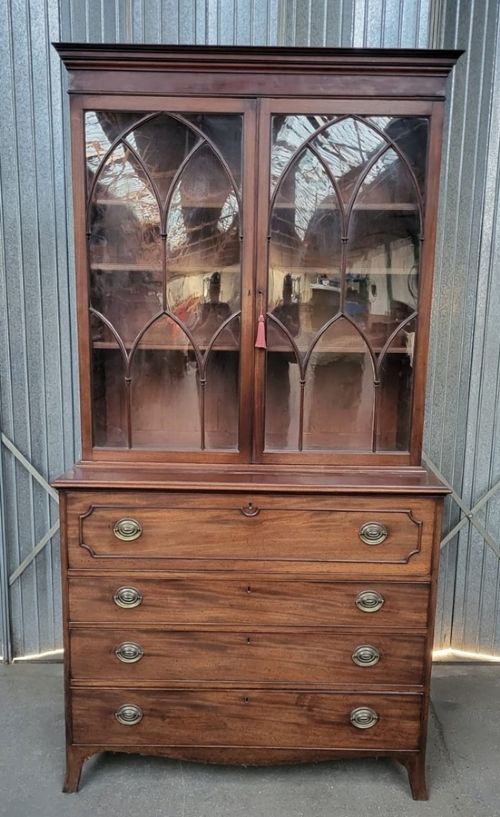
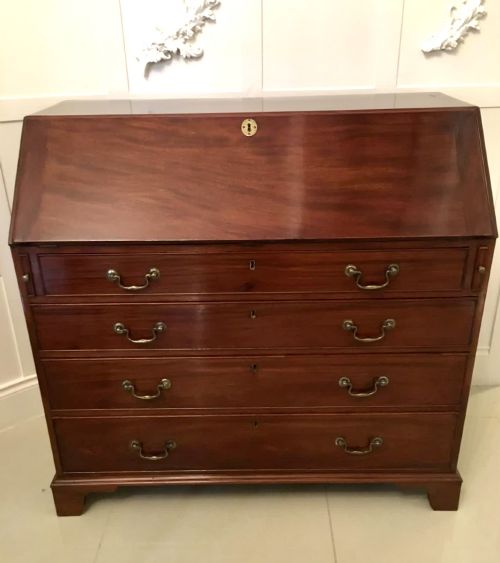
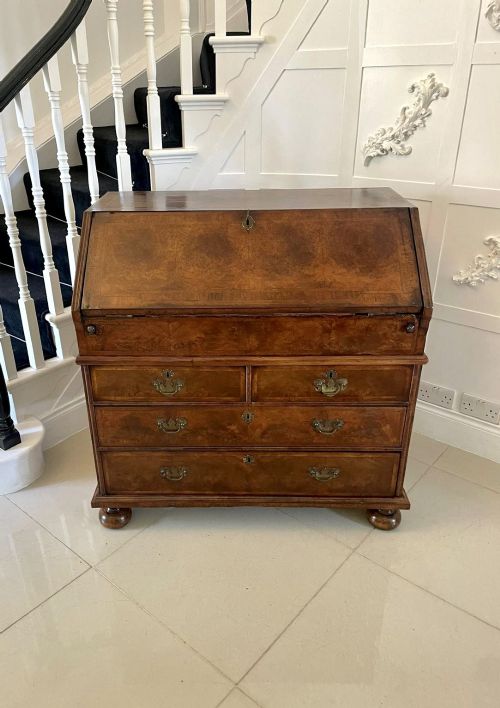
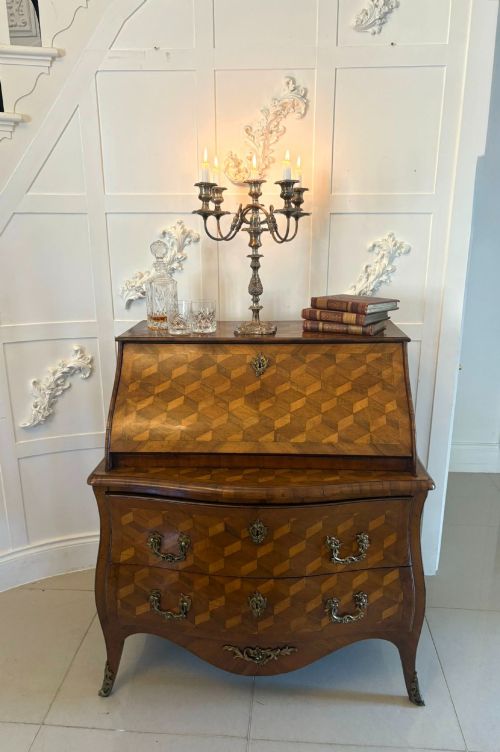
The versions most commonly met on this page include mahogany and walnut fall-front bureaux alongside taller secretaire bookcases and chests fitted with internal compartments. Regional variations include Dutch marquetry and French bombe shapes, alongside simpler English oak and walnut examples.
How They Were Made
Cabinetmakers utilised solid timbers and veneers of mahogany, walnut, oak and rosewood, often applying decorative elements such as burr walnut banding, floral marquetry and parquetry. Drawer construction typically relies on hand-cut dovetails and oak or deal linings.
Writing compartments feature fitted pigeonholes, small drawers and occasionally secret compartments behind sliding panels, paired with baize or leather writing surfaces.
Many pieces contain hidden internal compartments designed for secret letters, accessed only by removing small decoy drawers.
What Varies in Quality
The distinction between tiers rests upon timber selection and the precision of the cabinetwork, such as figured mahogany or burr walnut matched across the fall front and drawer facades. Elaborate floral marquetry and intricate internal fittings elevate the standing of a piece.
Proportion and the retention of original brass handles, escutcheons and bracket feet or plinth bases strongly influence the character of the furniture.
George Oakley·Maison Krieger
The Antique Bureau Desk Chest Glossary
- Bureau
- A writing cabinet featuring a sloping fall front that opens to reveal a fitted interior of drawers and pigeonholes above a chest of drawers.
- Secretaire
- A piece of furniture containing a drawer or compartment that pulls down or out to serve as a writing desk, often integrated into a chest of drawers or bookcase.
- Marquetry
- Decorative veneer work formed by fitting together small pieces of wood, ivory or shell to create pictorial or floral designs on the surface.
- Fall front
- The hinged writing flap on a bureau that drops down to a horizontal position to provide a writing surface.
- Escritoire
- A writing desk or cabinet, typically taller in proportion, with a drop-front writing surface dating from the seventeenth and eighteenth centuries.
Antique Bureau Desk Chest: Frequently Asked Questions
What is an antique bureau desk chest?
An antique bureau desk chest is a dual-purpose piece of furniture that functions as both a set of drawers and a writing desk. The design typically incorporates a hinged flap that opens to reveal a fitted interior.
These pieces were produced extensively during the Georgian and Victorian eras for domestic correspondence and record keeping.
How do you use a fall front bureau?
To use the writing surface, you unlock and lower the hinged flap, which is usually supported by wooden pull-out lopers. This reveals small drawers and pigeonholes for stationery.
When writing is finished, the flap lifts back to a vertical position, concealing the papers and maintaining a tidy appearance in the room.
What woods were used for these desks?
Cabinetmakers primarily constructed these pieces using dense hardwoods such as mahogany and oak, particularly during the eighteenth century. Walnut and burr walnut were also widely favoured for their rich grain.
Finer examples incorporate exotic veneers, rosewood, satinwood and marquetry inlay.
How do I date an antique bureau?
Dating relies on examining construction methods, timber types and hardware styles. Early pieces from the walnut and early mahogany periods feature hand-cut dovetails and specific bracket foot designs.
Later Victorian and Edwardian examples show machine assistance, different secondary woods and distinct decorative motifs.