



English Oak Writing Cabinet
An english oak writing cabinet brings together sturdy regional timber and clever interior compartments designed for correspondence and records.
English Oak Writing Cabinet
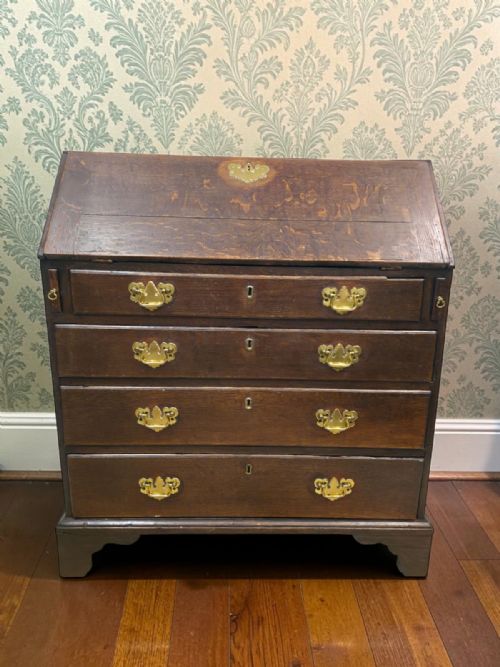
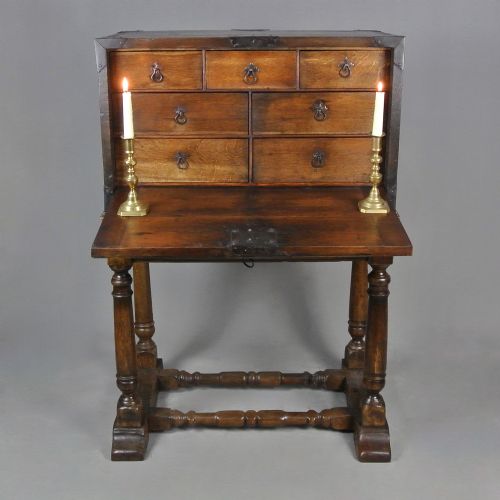
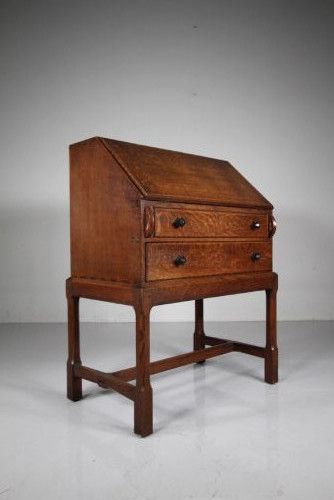
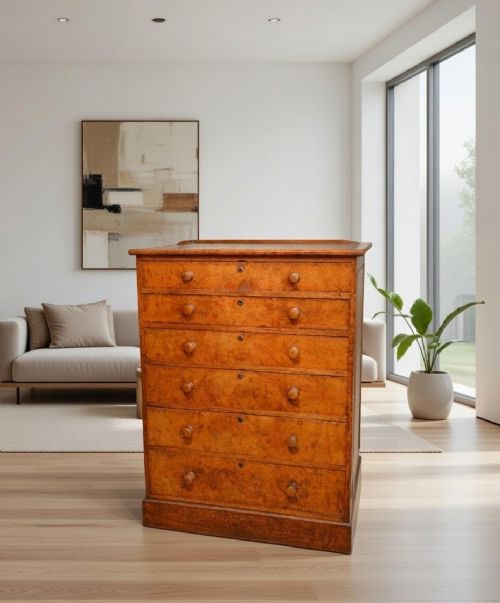
When searching for an english oak writing cabinet, buyers encounter fall-front bureaux, slope-front boxes, and fitted stationery chests spanning from the seventeenth century through to the mid-twentieth century. The selection ranges from robust early strong boxes and Jacobean forms to refined Georgian slope-front desks and later Arts and Crafts or revival pieces.
The version most commonly met on this page is the fall-front bureau or desk, which opens to reveal internal pigeonholes and small drawers. Alongside these stand smaller desktop writing boxes and stationery cabinets designed for domestic or professional correspondence.
How they were made
Makers utilised solid English oak, occasionally selecting pollard oak for distinct grain patterns, combined with secondary woods for internal partitions. Metalwork played a functional role, utilising brass for handles and escutcheons alongside wrought iron hinges and locks.
Construction methods relied on traditional joinery to handle the weight of dense timber and the stress of drop-down writing surfaces. Surfaces were finished to highlight the natural grain, sometimes incorporating green baize or leather on the writing flaps.
Certain pieces carry the carved signature mouse of Robert Mouseman Thompson, offering a discreet trademark tucked away on the woodwork.
What varies in quality
The distinction between standard examples and superior work lies in the selection of the timber and the refinement of the interior arrangement. Finer pieces display carefully chosen grain, meticulous dovetailing in the internal drawers, and balanced proportions.
Age and untouched original hardware also influence standing, where pieces retaining their period brasswork and functional internal mechanisms command greater interest than heavily altered examples.
Stanley Webb Davies·Robert Mouseman Thompson
The English Oak Writing Cabinet Glossary
- Fall-front
- A hinged panel that drops down to form a horizontal writing surface. This feature conceals internal compartments and drawers when closed.
- Pollard oak
- Timber taken from trees that have been pollarded, producing a dense and highly figured grain pattern. Cabinet makers valued this wood for decorative drawer fronts and panels.
- Stationery box
- A desktop container fitted with divisions for paper, envelopes, and writing implements. These often feature fall-front or sloping lids.
- Strong box
- A heavy security chest, typically constructed from thick oak and reinforced with iron strapwork. These pieces date to the seventeenth century and served to protect valuable documents.
- Bureau
- A writing desk equipped with a sloping lid or fall-front enclosing a set of pigeonholes and small drawers. They frequently sit upon a chest of drawers or a dedicated stand.
English Oak Writing Cabinet: Frequently Asked Questions
What is an english oak writing cabinet?
An english oak writing cabinet is a piece of antique furniture built for storing writing materials and documents, featuring a sloping lid or fall-front writing surface.
These pieces range from small desktop stationery boxes to full-sized floor-standing bureaux originating from the seventeenth century onwards.
How do I date an oak bureau?
Dating relies on observing construction methods, handle styles, and overall proportions. Earlier seventeenth-century pieces show heavy timber and ironwork, while Georgian examples display refined cabinet-making.
Secondary woods inside drawers and the type of fixings used also provide clear indicators of the period of manufacture.
Where were these cabinets used?
These cabinets served in the principal rooms, studies, and offices of period homes to manage personal and business correspondence.
Smaller desktop boxes were easily moved between rooms or placed on top of existing tables for writing letters.
How do I maintain the wood?
Maintaining oak furniture involves keeping the timber away from direct heat sources and sudden humidity changes to prevent splitting.
Applying traditional wax polish occasionally helps nourish the grain and protects the surface finish without building up heavy residue.