
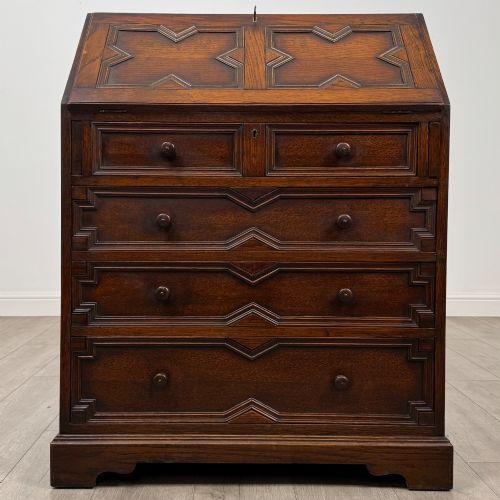
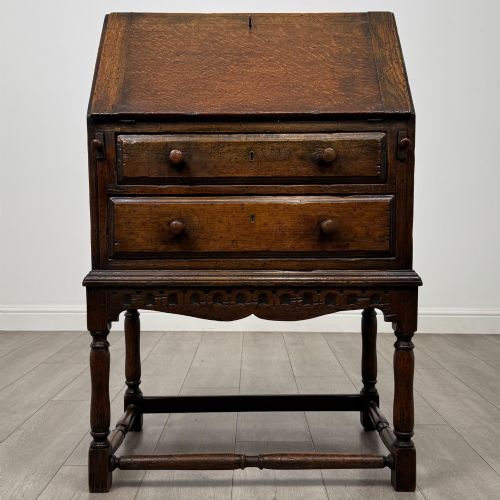
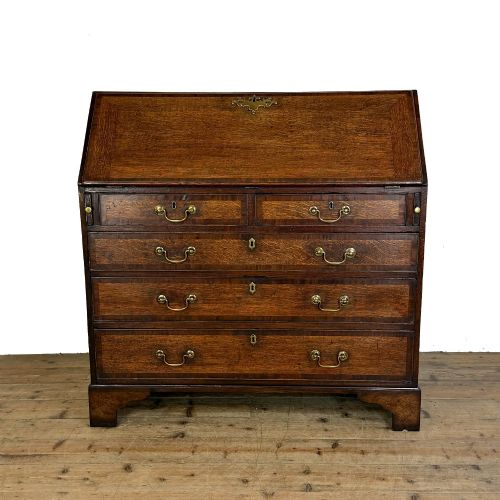


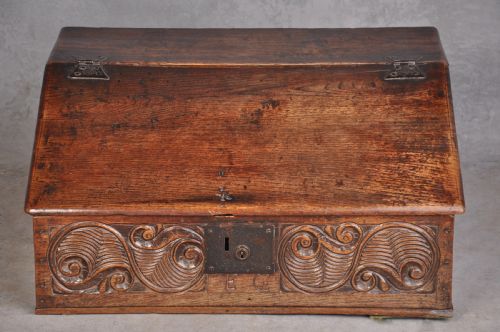

Traditional Oak Writing Slope Desk
These traditional oak writing slope desk examples are solid timber fall-front bureaux designed for correspondence, offering period utility and timeless craftsmanship.
Traditional Oak Writing Slope Desk
When you search for a traditional oak writing slope desk, you encounter fall-front bureaux and Davenport desks spanning the seventeenth century through to the Edwardian period. The selection on this page relies heavily on eighteenth-century and Georgian pieces alongside later vernacular adaptations.
The primary forms include fall-front bureaux that reveal internal compartments upon opening, alongside Davenport desks fitted with drawers. These items originate from workshops utilising solid timber and select veneers, often reflecting regional English cabinet-making traditions.
How they were made
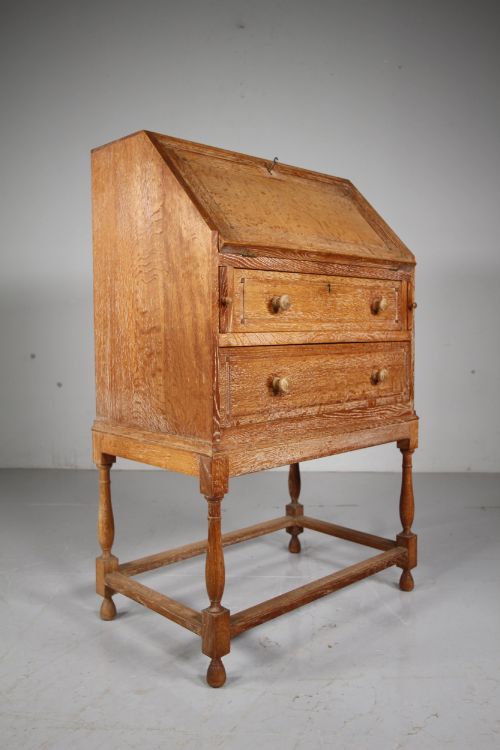
The construction relies predominantly on solid timber and select veneers, framed with structural elements in iron and metal hardware. Pollard oak and standard oak provide the primary corpus for these pieces.
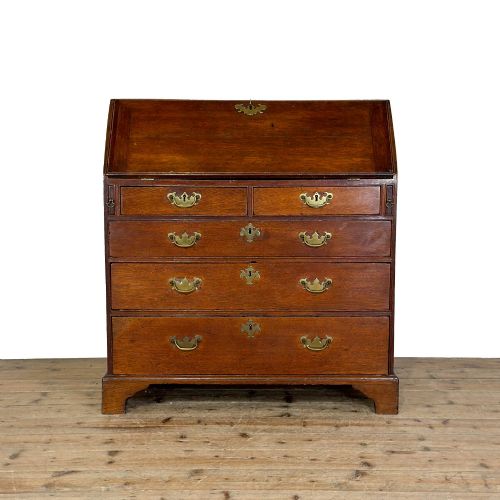
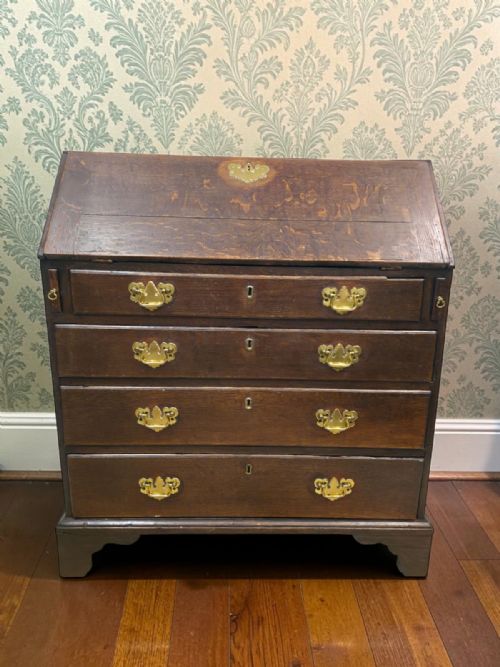
Functional detailing incorporates brass fittings, fitted leather writing surfaces, and cut glass ink stands. Joinery methods range from vernacular seventeenth-century box construction to refined Georgian cabinet work.
Materials across the selection combine solid oak and oak veneer with brass handles, leather inserts, and cut glass ink stands.
What varies in quality
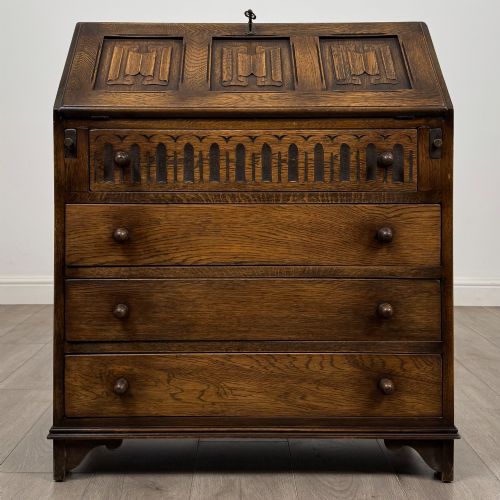
Quality separates standard vernacular items from pieces displaying superior cabinet-making, such as fine carved linenfold panels or unusual internal configurations. The selection of timber, from plain boards to figured pollard oak veneers, dictates visual depth.
The integration of original brass hardware, fitted leather surfaces, and structural integrity define the upper tier of the range. Simpler vernacular boxes sit at the other end, possessing rustic charm without sophisticated internal fittings.
Heals of London
The Traditional Oak Writing Slope Desk Glossary
- Bureau
- A writing desk featuring a sloping fall-front that opens to reveal a fitted interior of small drawers and pigeonholes. It typically sits atop a chest of drawers or a stand.
- Fall-front
- The hinged writing flap of a bureau that drops down to form a horizontal surface for writing. When closed, it conceals the internal compartments.
- Pollard oak
- Timber taken from trees that have been pollarded, producing a richly figured, mottled grain highly valued for decorative veneers. It appears on distinct nineteenth-century forms.
- Davenport desk
- A compact box desk featuring a sloping writing surface and drawers opening to the side. It emerged during the nineteenth century as a space-saving writing cabinet.
- Linenfold
- A style of relief carving imitating folded linen, frequently found on panels of early oak furniture. It reflects Tudor and Jacobean revival aesthetics.
Traditional Oak Writing Slope Desk: Frequently Asked Questions
What is a traditional oak writing slope desk?
It is a fall-front bureau or compact desk constructed from oak, designed specifically for writing letters and storing stationery. These pieces range from seventeenth-century vernacular boxes to refined Georgian and Edwardian examples.
The internal arrangement typically includes small drawers and pigeonholes hidden behind the sloping writing flap.
How do I date an oak bureau?
Dating relies on observing construction methods, timber selection, and stylistic details such as carved linenfold panels or simpler vernacular box joints. Seventeenth-century pieces display heavier vernacular framing, while Georgian examples show more refined proportions.
Hardware like brass handles and hinges also helps determine the exact period of manufacture.
Where were these desks used?
These desks served as essential furniture for household correspondence in studies, bedrooms, and reception rooms. Their lockable fall-fronts kept private papers and account books secure.
Compact forms like Davenports allowed writers to work comfortably in smaller spaces.
Are these desks made of solid oak?
The listings feature pieces constructed from solid timber, though certain examples incorporate pollard oak veneers or secondary woods. Grain patterns vary from plain surfaces to highly figured veneers depending on the period.
Internal elements often utilise secondary timbers for drawer linings and dividers.
How do I care for an oak writing surface?
Maintain the timber by keeping the piece away from direct heat sources and sudden changes in humidity. Occasional application of suitable wax polish preserves the natural sheen of the oak.
Protect fitted leather surfaces from moisture and direct sunlight to maintain the material.