




Antique Bronze Writing Set
An antique bronze writing set brings sculptural presence and period craftsmanship to a desk, offering functional inkwells alongside heavy cast metals and marble.
Antique Bronze Writing Set
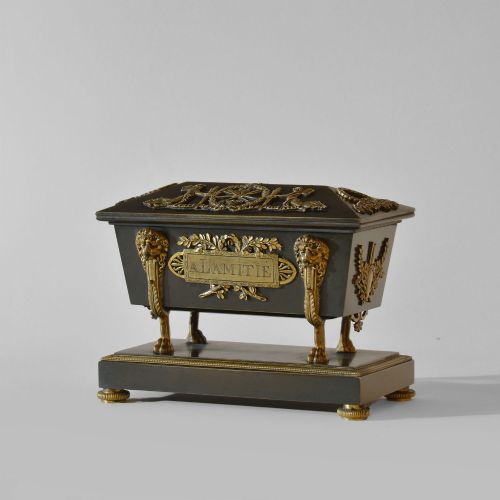
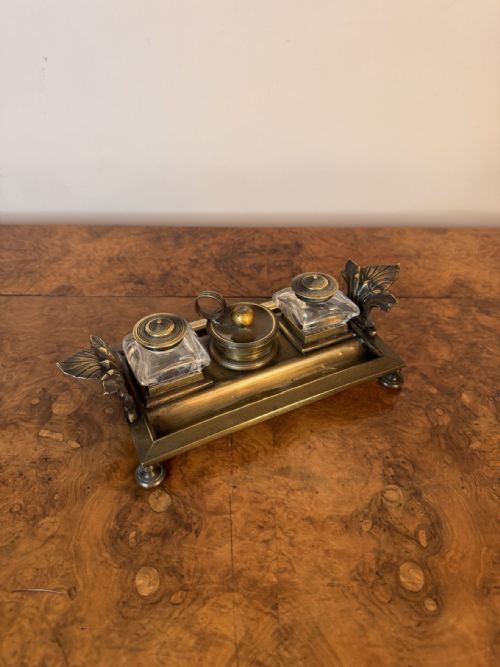
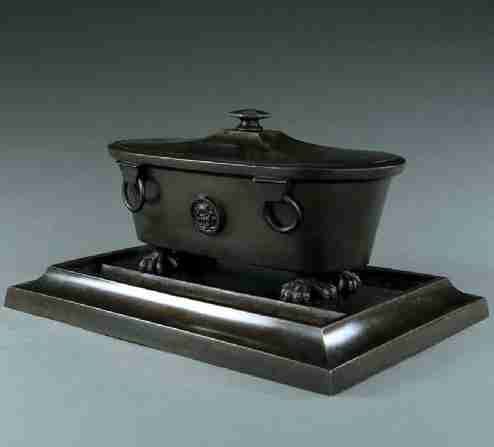
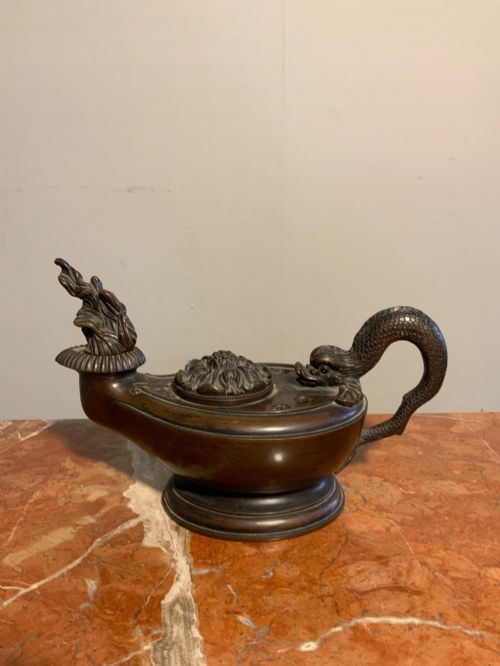
An antique bronze writing set comprises coordinated desk accessories designed for correspondence, most frequently centred on an inkstand or inkwell paired with bases, pen rests, and sometimes matching candlestands. Buyers searching for an antique bronze writing set encounter desk sets that incorporate marble, glass bottles, and mahogany alongside cast metal components.
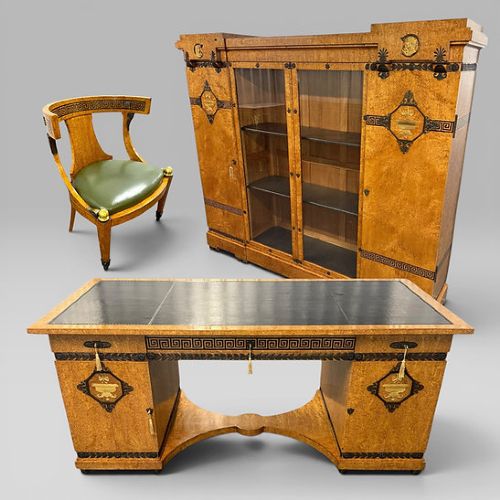
The objects appearing on this page span the nineteenth and early twentieth centuries, reflecting diverse periods from French Empire and Victorian designs to flowing Art Nouveau forms. These pieces range from simple single inkwells to complex office sets featuring desk clocks, cabinets, and chairs by named makers.
Assessing quality in desk accessories
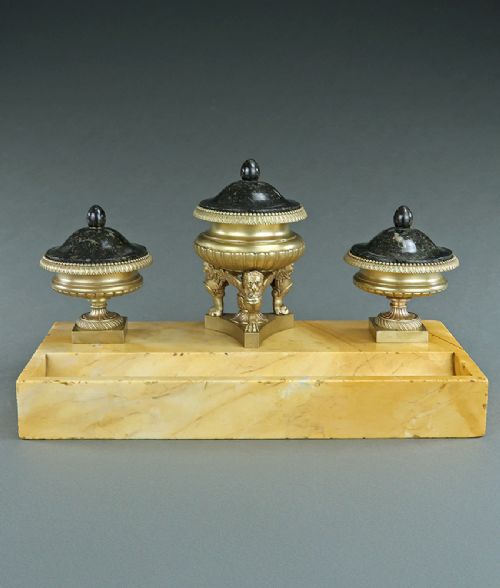
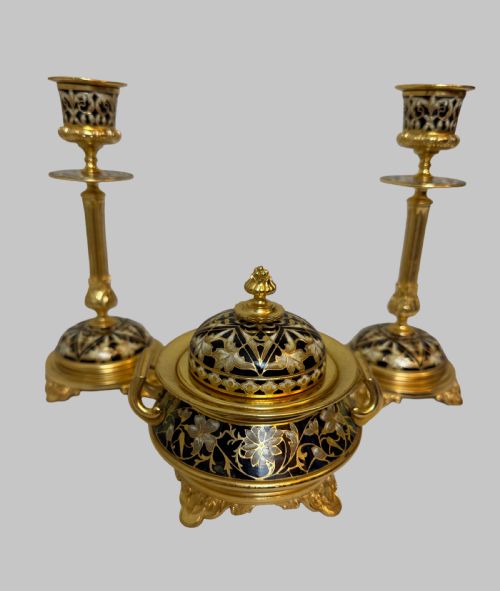
The inclusion of original glass ink bottles, matching candlestands, and signed maker stamps elevates a set. The harmonious combination of gilt ormolu with high-grade marble or champlevé enamel distinguishes superior examples.
Antique Bronze Writing Set Retail Price Guide 2026
Typical asking prices for bronze writing set among the pieces listed under this phrase on Sellingantiques today, from the lower quarter to the upper quarter. They describe what is for sale here now, not the wider market.
Design styles span French Empire, Art Nouveau, Neoclassical, Victorian, and Grand Tour influences.
Mercier Frères·Lefebvre of Belgium·Moser·Albert Marionnet·Jules Dalou
The Antique Bronze Writing Set Glossary
- Encrier
- A French term for an inkstand or inkwell, usually featuring a fitted tray for pens and one or more ink reservoirs. These desk pieces often combine bronze and marble.
- Ormolu
- Gilded bronze produced by applying a mercury-gold amalgam to a bronze base and heating it to leave a rich golden layer. This finish characterises many nineteenth-century French desk sets.
- Champlevé
- An enamel technique where troughs or cells are dug into the metal surface and filled with vitreous enamel before firing. It frequently decorates nineteenth-century stands and inkwells.
- Grand Tour
- A cultural journey undertaken by wealthy young Europeans that popularised classical antiquities and bronzes as souvenirs. Such pieces heavily influenced nineteenth-century desk accessories.
- Sienna marble
- A yellow-orange Italian marble with dark grey or purple veins, prized for luxury architectural and decorative items. It forms the supportive base for various ormolu inkwells.
Antique Bronze Writing Set: Frequently Asked Questions
What is included in a writing set?
A writing set typically includes an inkstand or inkwell mounted on a base, often accompanied by pen rests and sometimes matching candlestands or desk clocks.
More elaborate configurations incorporate matching office furniture, cabinets, or multiple ink reservoirs with original glass bottles.
How do I care for bronze and marble?
Bronze and ormolu require gentle dusting with a soft, dry cloth to protect the gilt surface from moisture and abrasive cleaning agents.
Marble bases benefit from occasional wiping with a damp cloth, ensuring no liquid seeps into unsealed stone or metal joints.
How are different periods identified?
Stylistic cues such as strict classical symmetry indicate French Empire or Neoclassical periods, while asymmetrical floral motifs point towards Art Nouveau.
Materials and mounting techniques also help narrow the date, alongside maker signatures found on the bronze castings.
Were these sets meant for daily use?
These pieces served as functional desk accessories for writing letters and managing correspondence in nineteenth-century offices and homes.
Many incorporated practical elements like pen rests and enclosed ink bottles to keep desks organised.