


Antique Bronze Mantel Candlesticks
Antique bronze mantel candlesticks bring sculptural elegance and heavy metal craftsmanship to a room, ranging from Regency pairs to French Empire designs.
Antique Bronze Mantel Candlesticks
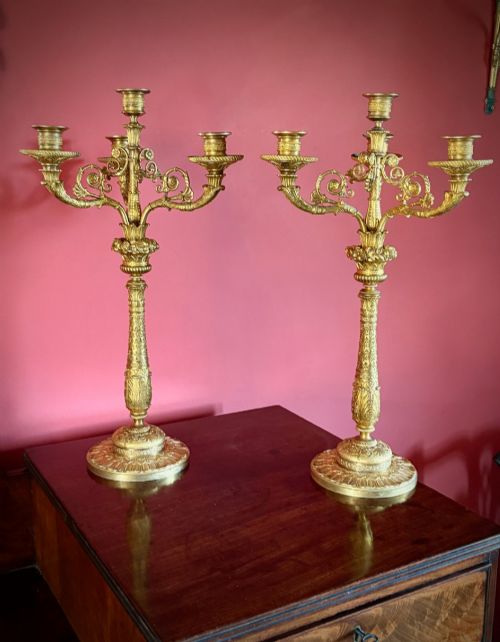
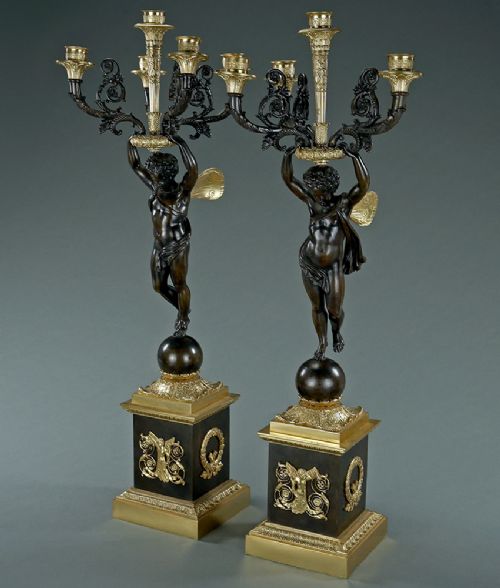
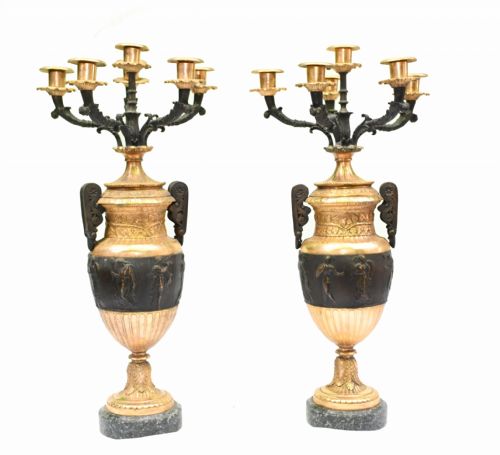
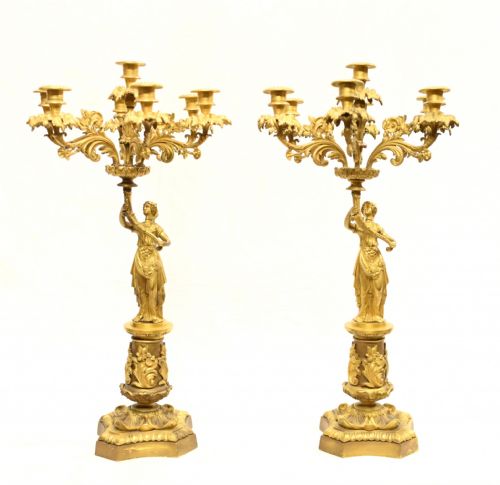
These pieces are decorative lighting supports designed for placement on mantelpieces, predominantly taking the form of paired candlesticks and multi-branch candelabra. The selection spans periods from the eighteenth century through the Victorian era, heavily featuring French Empire, Regency, and Louis XVI styles.
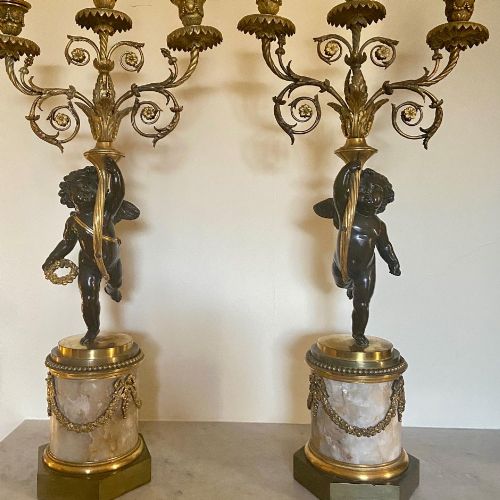
Buyers encounter sculptural motifs including putti, animals, and classical figures cast in metal, frequently accompanied by garniture elements like marble bases or cut glass lustres.
How they were made
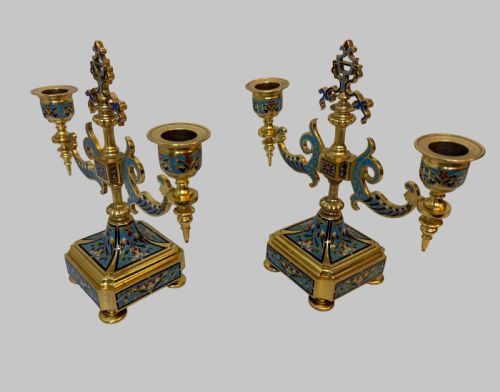
Manufacturers utilised bronze, patinated bronze, ormolu, and gilt bronze, often combining cast metal with contrasting materials such as marble, slate, and champlevé or cloisonné enamel. Craftspeople employed precision casting and mercury gilding to achieve the sharp detail and bright metallic finishes seen on Regency and French Empire pieces.
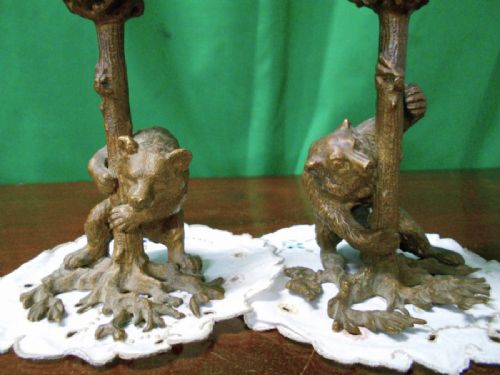
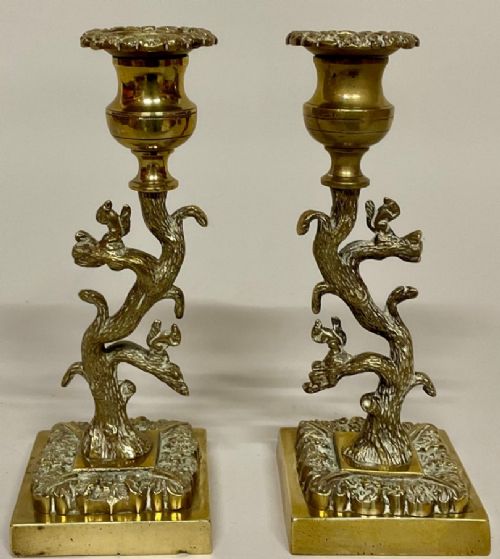
Squirrels climb bronze branches and bears populate Black Forest bases among the candlelight.
What varies in quality
The degree of crispness in the metal chasing and the depth of the original gilding distinguish finer examples from standard production. Superior items display meticulous attention to anatomical details on figural mounts and incorporate high-grade secondary materials like solid marble plinths and hand-cut glass components.
Thomas Hope·Francois Redmond
The Antique Bronze Mantel Candlesticks Glossary
- Ormolu
- Gilded bronze produced through an application of a mercury and gold amalgam, fired to leave a rich golden layer on the metal surface. This finish gives eighteenth and nineteenth-century French pieces their characteristic bright appearance.
- Patinated bronze
- Metal treated chemically to produce a dark, uniform surface colour instead of a bright metallic polish. It provides a strong visual contrast against gilt bronze mounts.
- Candelabra
- A branched candlestick holding multiple candles on a single base. These often feature removable arms to allow conversion into single candlesticks.
- Lustre
- A glass pendant hung from the sconce or drip pan of a candlestick to reflect candlelight. They are commonly associated with Regency and Georgian cut glass lighting.
- Campana
- A vase-shaped candle sconce resembling a classical bell or inverted cup. It is a standard form found on Regency and Empire mantel pieces.
Antique Bronze Mantel Candlesticks: Frequently Asked Questions
How were antique bronze mantel candlesticks used?
These items stood on living room and parlour mantelpieces to hold candles for room illumination during the evening. Their heavy bronze and marble bases kept them stable while reflecting candlelight across the hearth.
Over time, many transitioned into purely decorative garniture objects paired with mantel clocks. Their sculptural figures and gilt surfaces added focal points to nineteenth-century domestic interiors.
How do I clean antique ormolu and bronze?
Dust the surfaces gently with a soft, dry brush to prevent dirt accumulation within the cast crevices. Avoid abrasive metal polishes that can strip away historic gilt layers and ormolu finishes.
Moisture and harsh chemicals damage patinated bronze and exposed mercury gilding. Professional conservation is advisable if the metal requires deeper cleaning.
How do I identify French Empire style?
French Empire style relies on classical military motifs, mythological figures, and precise symmetry. You will often see patinated bronze bodies contrasted against bright ormolu mounts.
Sienna marble bases and architectural details like columns or campana sconces frequently accompany these pieces. The aesthetic reflects early nineteenth-century neoclassical tastes popularized during the Napoleonic era.
What is the difference between bronze and spelter?
Bronze is a durable copper alloy capable of holding exceptionally sharp cast details and heavy gilding. It forms the primary structural material of high-end nineteenth-century mantel pieces.
Spelter is a cheaper zinc-based substitute used to imitate bronze in later Victorian reproductions. It feels lighter and is more brittle than genuine bronze.