
French Gilt Candlesticks
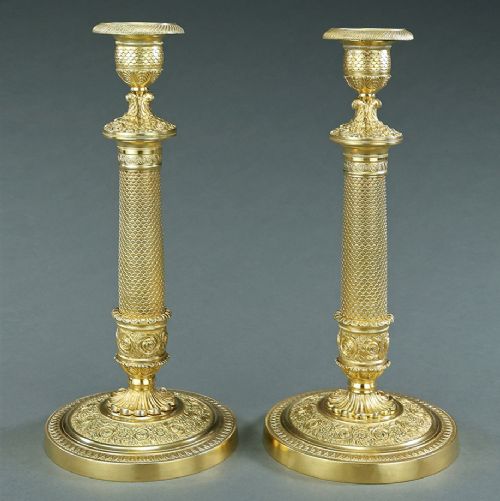
French gilt candlesticks bring ornate neoclassical and empire design into a room through cast metal and bright surface finish.
French Gilt Candlesticks
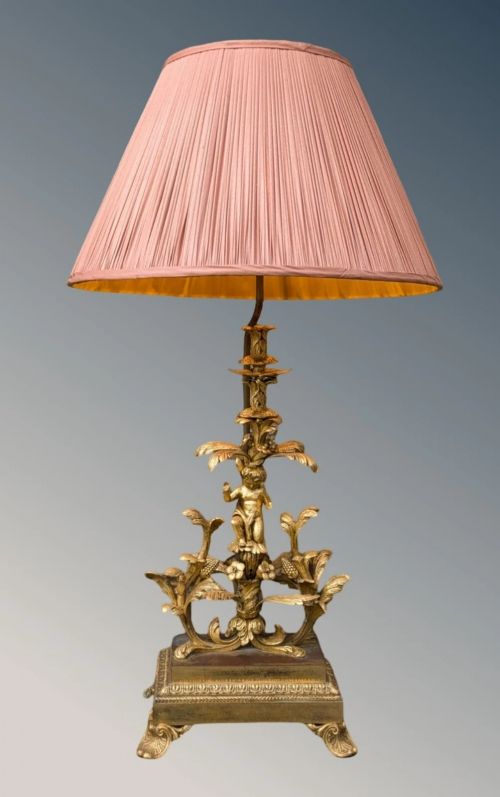
French gilt candlesticks encompass bronze, ormolu and brass lighting pieces designed to hold taper candles or support later electrical conversions. Most examples on this page date from the nineteenth century, reflecting periods from the French Empire through the late Victorian era.
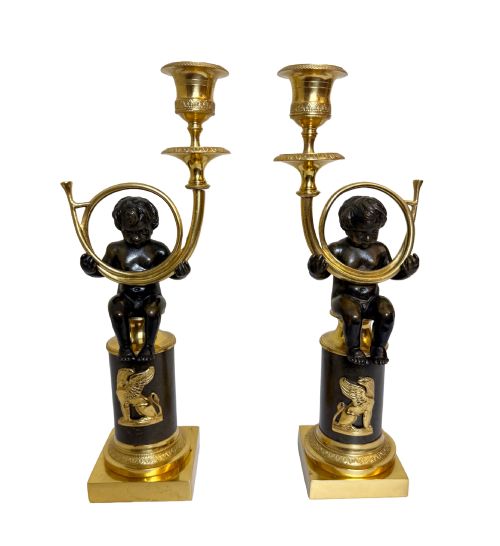
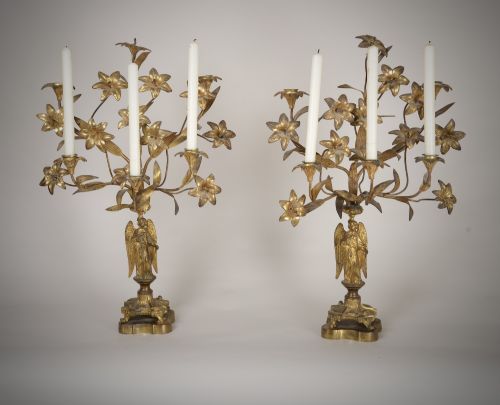
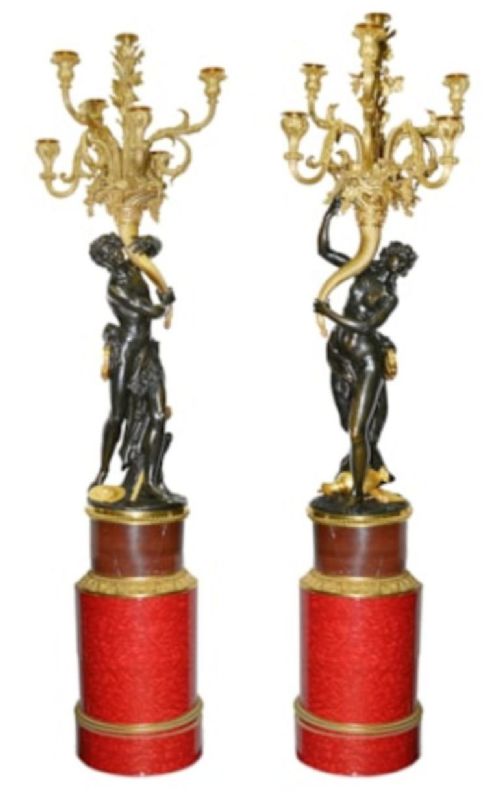
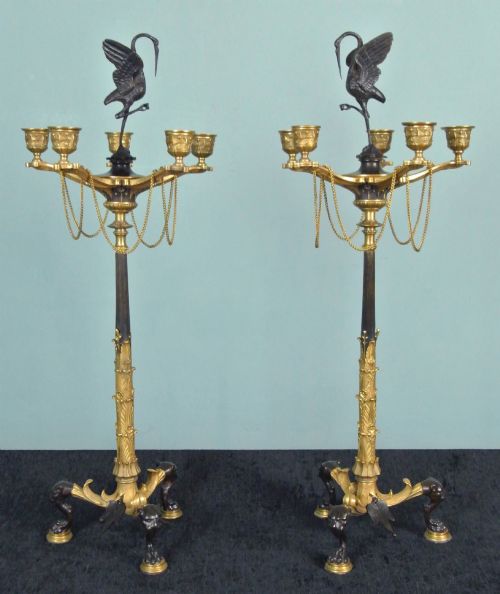
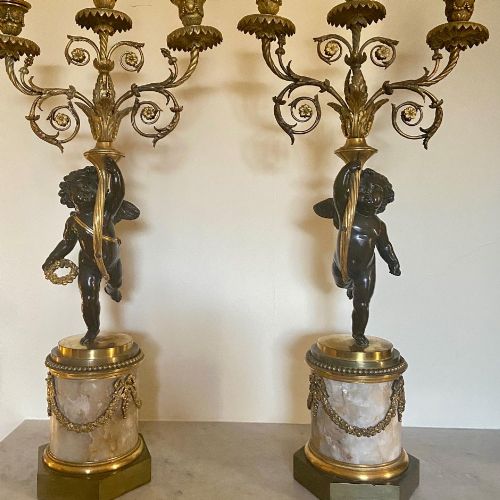
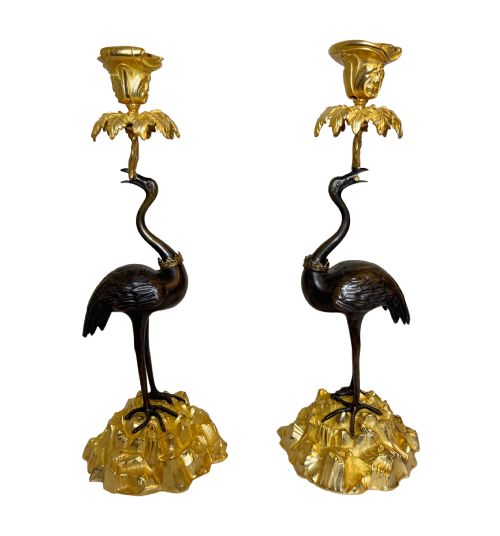
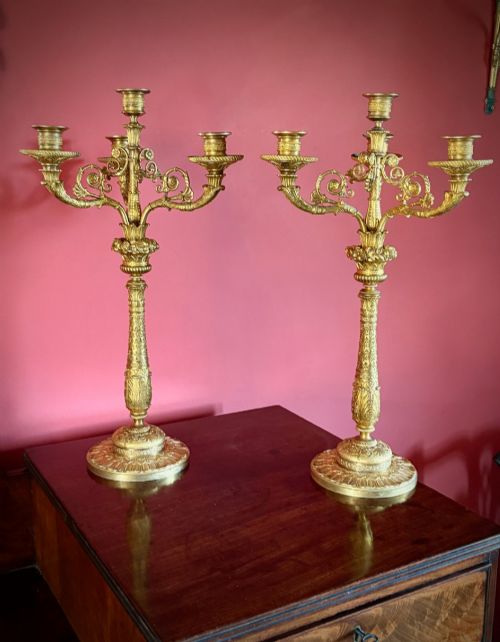
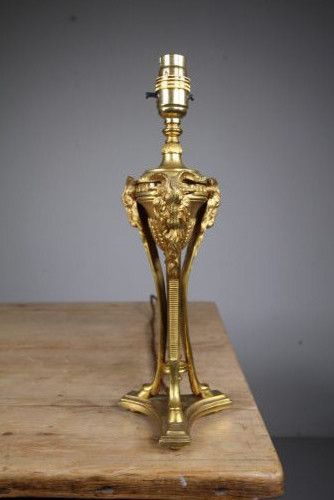
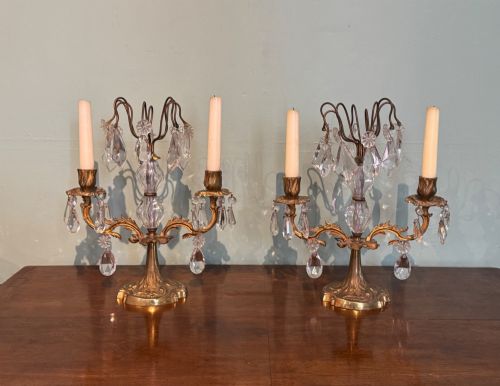
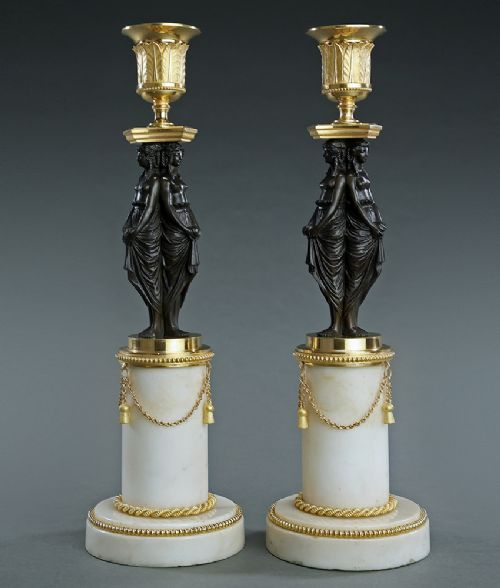
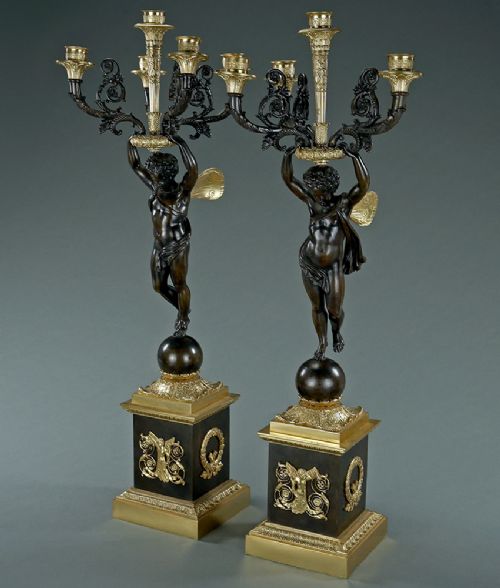
The inventory ranges from simple column forms and tripod bases to elaborate figural pairs incorporating cherubs, putti and caryatids. Buyers will also encounter multi-branch candelabra and desk accessories sharing the same gilded finish and decorative vocabulary.
Many items show strong historic revival influences, notably Louis XVI, Rococo and Retour d'Egypte styles. These decorative lighting objects served both functional and display purposes in formal interiors.
How they were made
Foundry workers cast components in bronze, brass or ormolu using traditional techniques before applying mercury gilding or modern electrogilding methods to achieve the characteristic golden surface. Combinations of patinated dark bronze with bright gilt elements provide tonal contrast across many pieces.
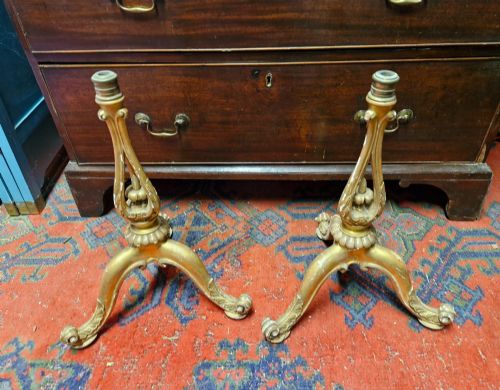
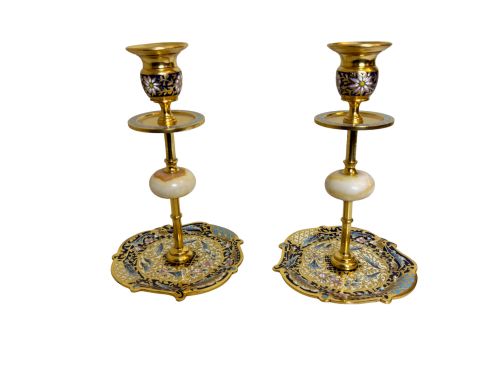
Makers frequently mounted metalwork onto bases of white marble, onyx, fluorspar or timber, sometimes integrating champlevé enamel panels or cut glass drops. Structural components were often assembled from multiple cast parts secured by internal threaded rods.
Design influences span French Empire, Neoclassical, and Rococo Revival styles, alongside desk accessories and inkstands.
What varies in quality
The integrity of the mercury gilding or fire gilt layer dictates visual warmth and longevity. High quality pieces retain distinct matte and polished contrasting areas rather than a flat, uniform modern plating.
Barbedienne·Francois Redmond·Dugourc·Abel Landry
The French Gilt Candlesticks Glossary
- Ormolu
- Gilded bronze produced through an application of gold amalgam heated to vaporise the mercury. This historical technique creates a deep, durable golden finish found on fine antique metalwork.
- Champlevé
- An enamelling technique where troughs are dug into a metal surface and filled with vitreous enamel powder before firing. The resulting coloured patterns sit flush with the surrounding metal borders.
- Caryatid
- A sculpted female figure serving as an architectural support instead of a column. These figures frequently appear supporting the stems of nineteenth-century candelabra.
- Retour d'Egypte
- A decorative style inspired by Napoleon's campaign in Egypt. Motif elements include sphinxes, lions' paw feet and pharaonic symbols applied to furniture and metalwork.
- Cassolette
- A decorative vase or urn with a reversible lid that functions as a candleholder or incense burner. They appear frequently in pairs alongside traditional candlesticks.
French Gilt Candlesticks: Frequently Asked Questions
Were these candlesticks converted to lamps?
Many nineteenth-century examples on the market have been adapted for electricity over the decades. Conversions often retain the original bronze and ormolu bodies while routing wiring through the central column.
Unconverted pairs retain their original socket cups and pricks for wax candles. Collectors weigh the convenience of electric lighting against the historical integrity of untouched pieces.
How can I tell the period?
Stylistic cues point towards specific decades, such as military motifs for Empire pieces or floral asymmetry for Rococo Revival designs. Examining the casting quality and assembly screws also helps indicate nineteenth-century production methods.
Base materials provide further clues, as onyx and champlevé enamel work became particularly popular during the later Victorian decades. Comparing forms with documented foundry catalogues confirms approximate dates.
What is the difference between candlesticks and candelabra?
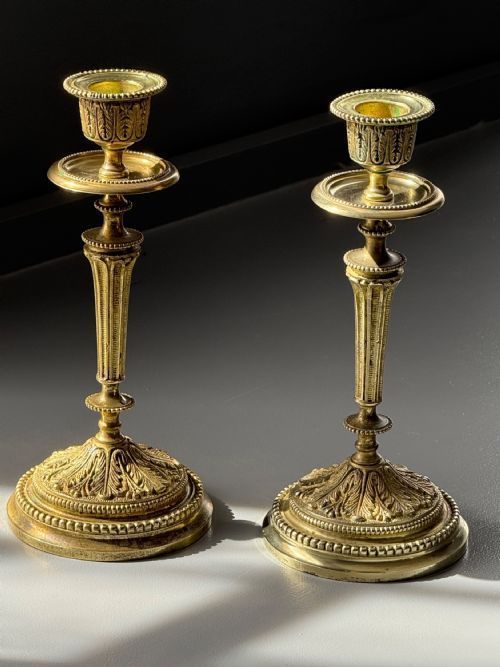
Candlesticks feature a single nozzle designed to support one candle at a time. They typically present a simpler vertical shaft rising from a stable base.
Candelabra incorporate multiple branches extending from a central stem to hold several candles simultaneously. These larger pieces often display more complex figural casting and greater overall height.