


Antique Bronze Clock Set
An antique bronze clock set brings together a striking central timepiece with matching garnitures to anchor a mantelpiece with nineteenth-century French elegance.
Antique Bronze Clock Set
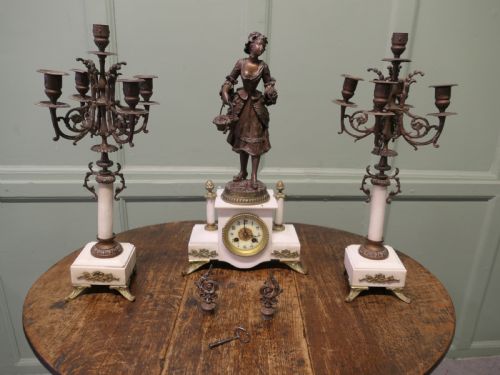
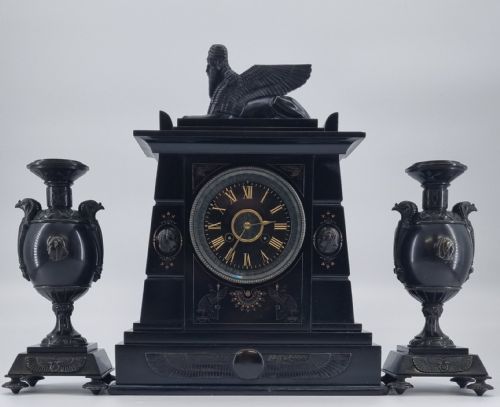
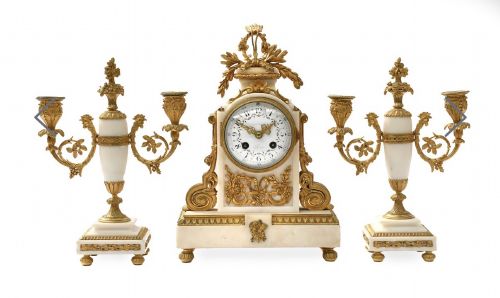
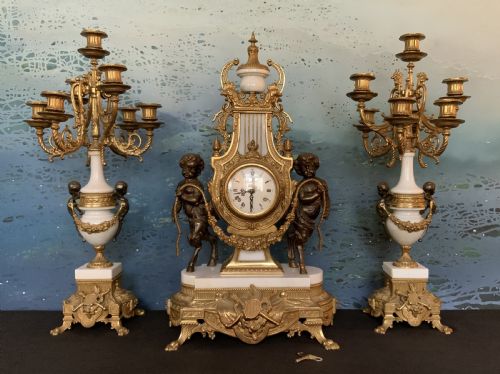
When you search for an antique bronze clock set, you encounter matching three-piece assemblies comprising a central mantel clock flanked by twin candelabras, urns or figures. The pieces on this page are predominantly nineteenth-century French productions, spanning decorative movements from Rococo and Baroque revivals to Louis XVI styles and Egyptian motifs.
Most examples combine a heavy metal framework with stone bases, often protected beneath original glass domes. The matched companions repeat the motifs of the central clock, creating a balanced display designed specifically for a grand salon or drawing-room mantelpiece.
How they were made
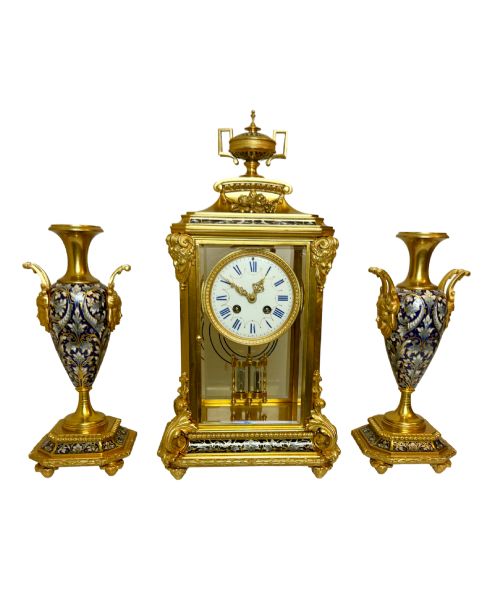
Maker-craftsmen cast these works in bronze, brass or white and coloured marbles, applying mercurial gilt or ormolu to achieve a bright, enduring golden surface. Many incorporate hand-painted enamel dials and delicate cloisonné or champlevé enamel panels set directly into the metal body.
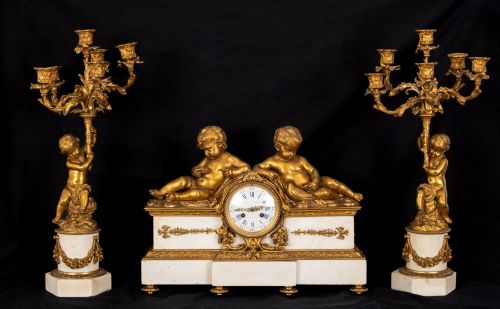
Foundries combined sculptural figures of cherubs, goddesses and mythological beasts with structural marble or onyx housings to create eight-day striking mechanical movements. Master bronze-smiths chiselled and chased the cast metal surfaces by hand after casting to sharpen every scroll and foliate detail.
What varies in quality
The choice and integration of materials also mark the hierarchy, where solid white or black marble combined with heavy fire-gilded ormolu outshines simpler brass-mounted alternatives. Signed movements by notable French makers indicate a higher grade of internal mechanical engineering.
Henry Dasson·A D Mougin·H Luppens Paris·Japy Freres·Samuel Marti·Louis Japy·Verger Freres of Paris
The Antique Bronze Clock Set Glossary
- Ormolu
- Gilded bronze produced by applying a mixture of mercury and gold to a bronze base and heating it until the mercury vaporised. This historic technique leaves a rich, warm golden lustre that differs significantly from modern electroplating.
- Clock garniture
- A matching set of decorative objects designed to flank a central mantel clock. Typically consisting of two candelabras or ornamental urns, they complete a symmetrical display.
- Champlevé
- An enamelling technique where troughs or cells are hollowed out of the metal surface and filled with vitreous enamel powder before firing. The resulting design shows vibrant bands of colour divided by metal lines.
- Portico clock
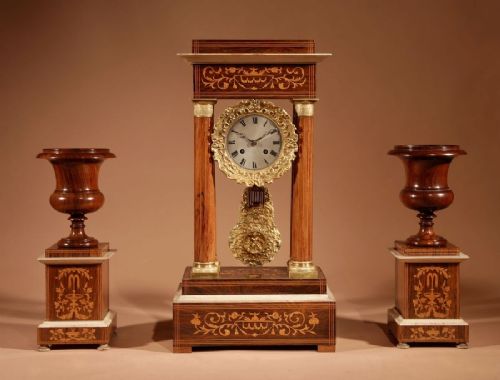
- A distinct architectural clock style supported by four slender columns resembling a classical temple facade. They often feature a swinging pendulum suspended centrally within the open arch.
- Lyre clock
- A timepiece shaped to resemble the ancient stringed musical instrument, frequently constructed from porcelain or marble with bronze mounts. The dial sits within the body while the pendulum swings below.
Antique Bronze Clock Set: Frequently Asked Questions
What is a clock garniture?
A clock garniture is a matched set of decorative items designed to sit alongside a central mantel clock, usually consisting of a pair of matching candelabras or ornamental urns.
These side pieces share the exact materials, casting style and decorative motifs of the clock to provide a balanced and uniform arrangement on a mantelpiece.
What periods do these clocks represent?
The majority of these sets date from the nineteenth century, reflecting various French revival movements such as Louis XVI, Rococo, Baroque and Second Empire aesthetics.
Stylistic cues like scrolling acanthus leaves, classical urns, cherubs and architectural marble columns help identify the specific design period of each piece.
How do I care for marble and bronze?
Maintenance involves gentle dusting with a soft, dry cloth to protect the delicate ormolu surface and the polished marble housing.
Harsh chemical polishes, abrasive cloths and water must be avoided entirely, as they can strip the historic gilding and stain porous stone.