


Antique Bronze Charger
An antique bronze charger brings heavy metal craftsmanship and intricate surface decoration to a wall or table.
Antique Bronze Charger
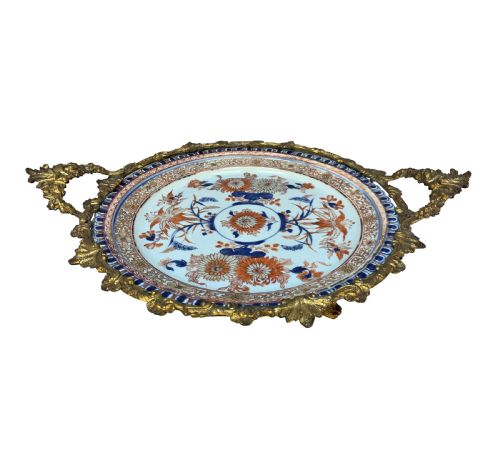
An antique bronze charger is a large decorative plate or wall plaque cast, beaten, or raised from metal alloys and adorned with motifs from various global traditions. These substantial display pieces served primarily as focal points for rooms rather than dining vessels.
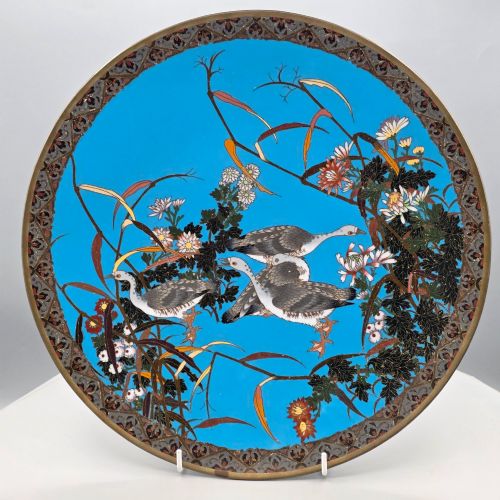
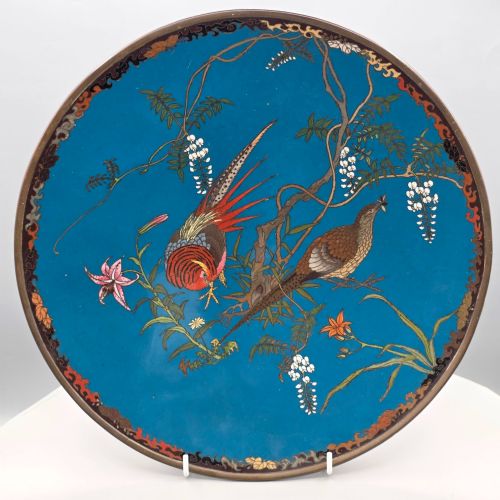
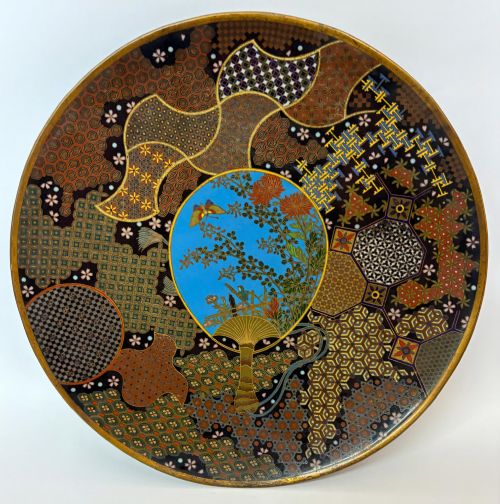
The selections available here draw heavily from Japanese Meiji period workshops, alongside nineteenth-century European neoclassical revivals and Middle Eastern Cairo ware. Buyers frequently encounter intricate cloisonné enamel designs or heavily embossed repoussé work from the latter half of the nineteenth century.
Forms span wide circular platters, shallow dishes, and heavily mounted architectural centrepieces that weigh several kilograms. Their origins range across distant stylistic revivals, uniting diverse cultures through heavy metalwork.
Determinants of Quality
Quality rests on the crispness of the chasing, the density and control of the cloisonné wirework, and the overall weight of the metal cast. Superior examples display precise symmetry, secure enamel work free of extensive stress cracking, and deeply articulated relief figures.
The depth of artistic execution separates standard production items from masterworks signed by renowned studios or individual makers. Heavy gauge bronze and disciplined hand-hammering indicate superior structural integrity in the finished object.
Listings feature items from the 16th century through to the 1920s, dominated by Japanese Meiji period cloisonné and 19th-century European bronze.
Kinkozan·Ernst Wahliss·Faulkner Bronze Company
The Antique Bronze Charger Glossary
- Charger
- A large ornamental plate or platter designed for display on a wall or sideboard rather than for table service. These substantial objects provide a broad canvas for detailed metalwork and enamel decoration.
- Cloisonné
- A technique where thin metal wires are soldered to a metal base to create compartments, which are then filled with enamel paste and fired. This method produces intricate, colourful surface patterns.
- Repoussé
- A metalworking method in which the artisan hammers a design from the reverse side to create a raised relief on the front. This process gives flat metal plates a three-dimensional texture.
- Ormolu
- Finely ground metallic gold applied to a bronze object through a mercury amalgam process or modern electroplating. The finish yields a rich golden lustre.
- Meiji Period
- The era in Japanese history spanning from 1868 to 1912, noted for a surge in high-quality decorative arts exported to Western markets. Enamelled metalwork from this time achieved exceptional technical refinement.
Antique Bronze Charger: Frequently Asked Questions
How were antique bronze chargers displayed?
These large plates were typically hung on walls using specialised brackets or stood upon heavy sideboards and tables as centrepieces. Their considerable weight required secure mounting to support the dense metal.
In nineteenth-century interiors, they functioned primarily as decorative art objects that showcased wealth and an appreciation for global craftsmanship.
What is Cairo Ware?
Cairo ware describes nineteenth-century metalwork produced in Egypt featuring intricate silver and copper inlay against a dark bronze or brass background. Artisans hammered precious metals into etched channels to create complex geometric and calligraphic patterns.
These pieces reflect the Victorian fascination with Islamic and Middle Eastern design traditions.
How do I care for bronze enamel pieces?
Maintenance requires gentle dusting with a soft, dry cloth to prevent abrasive particles from scratching the delicate enamel or patinated bronze surfaces. Avoid using liquid metal cleaners, chemical solvents, or water, as moisture can damage old enamel and compromise exposed metal.
Keep the pieces away from direct sunlight and damp environments to preserve the integrity of the original finish.