


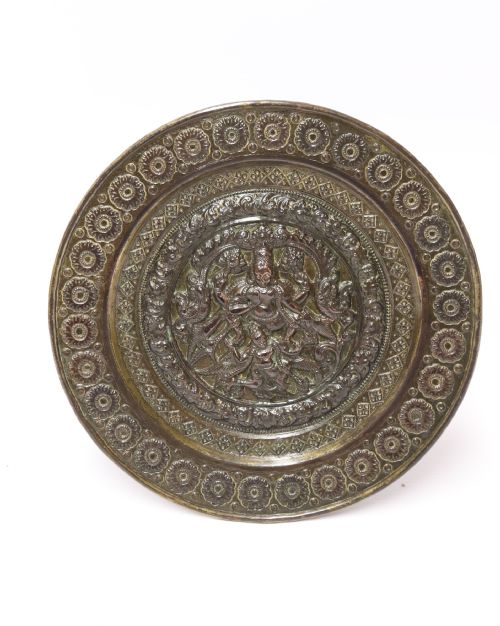
19th Century Bronze Plate
These 19th century bronze plate examples offer remarkable craftsmanship, combining classical motifs and intricate Japanese enamel work for any discerning collector.
19th Century Bronze Plate
A 19th century bronze plate encompasses decorative chargers, platters, and plaques produced across various international workshops and European Grand Tour centres. Buyers searching this phrase typically encounter large Japanese cloisonné enamel chargers alongside European neoclassical bronze and silver-plated platters.
The selection ranges from massive forty-centimetre chargers featuring dragon or koi designs to small neoclassical platters and French gilt metal table pieces. These objects served primarily decorative functions in period interiors, displayed on walls, cabinets, or mantelpieces rather than utilised for dining.
Materials and construction
Bronze forms the primary structural body for European neoclassical and French Empire pieces, often finished with silver or gilt plating. Japanese examples utilise bronze or copper bases combined with intricate wirework to partition vibrant enamel fields.
Surface decoration relies on specialised techniques such as cloisonné enamel, totai shippo porcelain application, and detailed casting. Makers integrated contrasting metals like copper and brass to achieve varied textural effects across chargers and platters.
Materials documented across the available pieces include bronze, silver plate, copper, brass, porcelain, and intricate wirework.
Factors determining quality
The preservation of the original plating or enamel surface significantly dictates the standing of a piece. Finer items retain intact enamel without loss and display crisp relief work rather than softened contours from excessive wear or poor initial casting.
Ferdinand III
The 19th Century Bronze Plate Glossary
- Charger
- A large ornamental plate or platter designed specifically for display rather than table service. These substantial vessels often feature complex pictorial or geometric surface decoration.
- Cloisonne
- An enamelling technique where metal wire is soldered to a metal base to form compartments, which are then filled with coloured paste and fired. This method creates vibrant, compartmentalised designs.
- Neoclassical
- A style spanning the eighteenth and nineteenth centuries that draws inspiration from the classical art and culture of ancient Greece and Rome. It is characterised by symmetry, restraint, and classical motifs.
- Totai shippo
- A Japanese enamelling process where enamel is applied directly onto a porcelain or pottery body rather than a traditional metal base. This technique produces distinctive textured surfaces.
- Grand Tour
- A traditional trip through Europe undertaken by upper-class young men to absorb classical culture. Souvenirs collected along the way often included small bronzes and decorative plates.
19th Century Bronze Plate: Frequently Asked Questions
What are 19th century bronze plates made of?
These items primarily consist of cast bronze or copper bases, frequently enhanced with silver plating, gilding, or extensive enamel work.
Japanese examples incorporate fine metal wires to create compartmentalised enamel designs, while European pieces often rely on cast neoclassical relief ornamentation.
How were decorative chargers used historically?
Decorative chargers and platters served as display pieces in formal reception rooms, dining parlours, and cabinets of curiosity.
Due to their elaborate enamel work or delicate plated surfaces, they were intended for visual appreciation rather than functional dining use.
How do I identify Japanese Meiji period pieces?
Meiji period chargers frequently feature distinctive motifs such as dragons, leaping koi, and floral patterns rendered in vibrant cloisonné enamel.
Many of these significant Japanese export pieces bear maker signatures on the reverse or within the design field.
What is a Grand Tour bronze piece?
Grand Tour bronze plates are decorative items acquired by travellers visiting classical European sites during the nineteenth century.
They typically display neoclassical ornamentation, classical figures, or architectural motifs inspired by ancient Roman and Greek antiquities.