


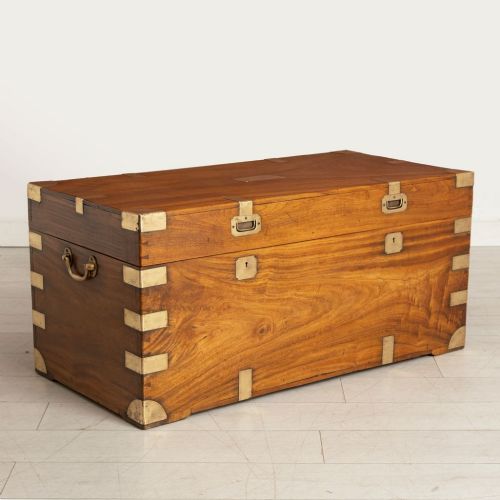
Antique Brass Trunk
When you search for an antique brass trunk, you find robust travel chests and campaign boxes built to withstand global transit.
Antique Brass Trunk
An antique brass trunk serves as a portable container designed for military officers, merchants, and travellers navigating distant colonies and trade routes during the eighteenth and nineteenth centuries. These pieces function as durable storage for uniforms, documents, and personal belongings across land and sea.
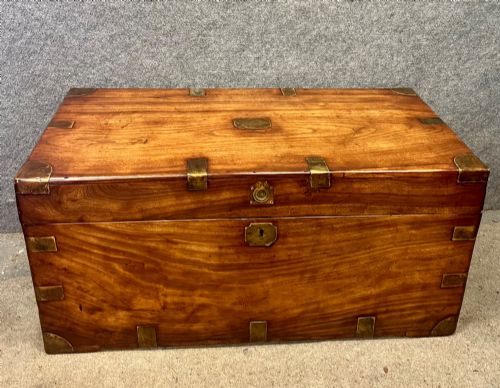
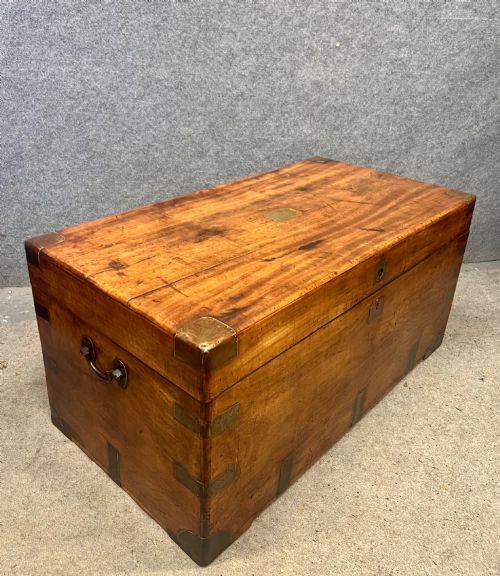
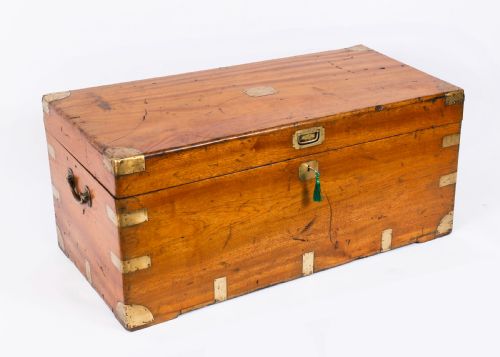
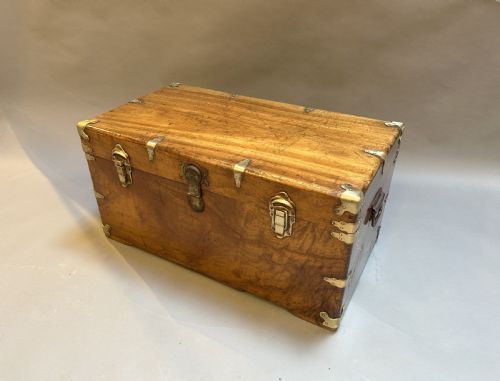
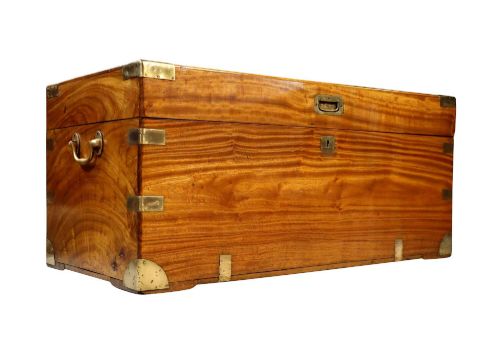
The most common examples encountered on this page originate from nineteenth-century campaign contexts, often constructed in teak, camphor wood, or padouk. Many feature recessed brass carrying handles, reinforced corners, and strapwork designed to endure rigorous handling.
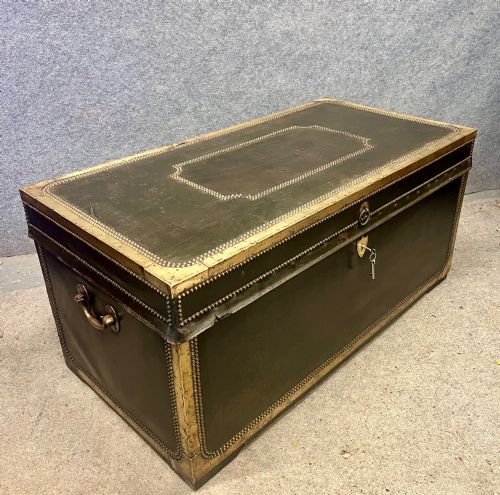
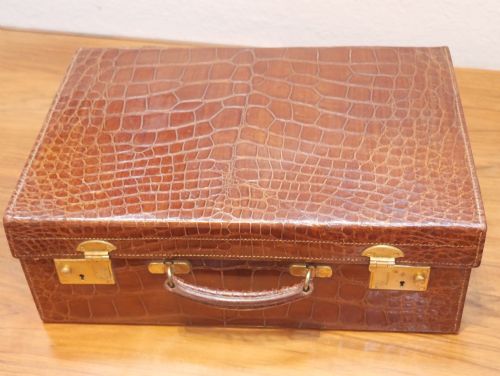
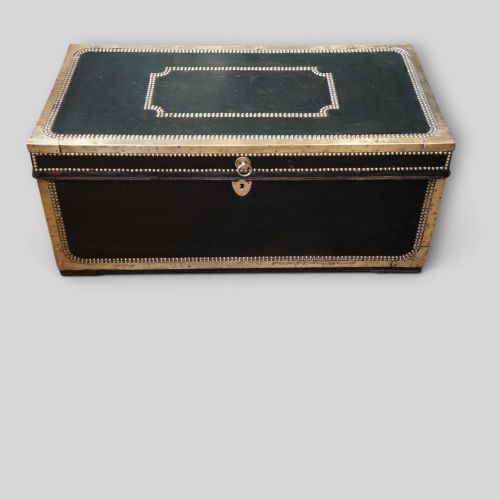
Alternative forms include leather-covered travelling trunks studded with brass nails, alongside heavy domestic chests adapted for valuables. These items bridge utilitarian travel gear and decorative furniture suited to modern interiors.
How they were made
Cabinetmakers utilised dense timbers such as camphor wood, teak, padouk, and oak to construct the primary carcass, selecting woods that resisted humidity and insect damage during long voyages. These boards joined with dovetail or rebated joints to provide structural rigidity.
Brass plate, binding, and corner pieces fastened the exterior using numerous small screws or tacks, absorbing impact and protecting vulnerable edges. Craftsmen integrated iron straps and leather coverings on specific specimens, adding further layers of resilience.
The listings feature trunks constructed from camphor wood, teak, padouk, oak, and mahogany across the eighteenth and nineteenth centuries.
What varies in quality
The distinction between ordinary utility boxes and superior pieces rests on the precision of the brass work and the selection of timber. Heavy gauge brass mounts, neatly flush-fitted into the wood, indicate careful workshop production rather than hurried mass output.
Original interior fittings, such as compartmentalised trays, secret drawers, and functional brass locks with matching keys, elevate the standing of a trunk. The integrity of the secondary woods and the retention of original surface patination further define the hierarchy.
Samuel Pratt·Wm. Insall of Bristol·LOUIS VUITTON
The Antique Brass Trunk Glossary
- Campaign trunk
- A portable chest built in sections or with folding elements for military officers on active service. These boxes frequently feature recessed handles to maximise space efficiency.
- Camphor wood
- An aromatic hardwood native to Asia, prized for its insect-repellent properties and distinct scent. Cabinetmakers frequently selected this timber for maritime chests.
- Zanzibar chest
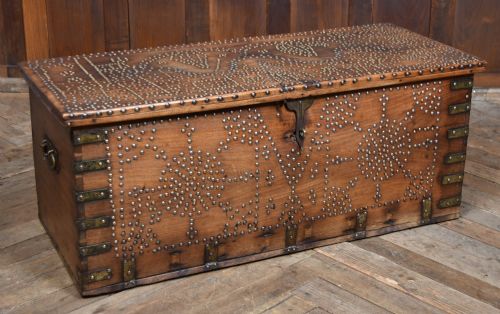
- A heavily decorated storage chest featuring brass studding, strapwork, and elaborate hardware associated with East African trade routes. These pieces often incorporate carved wooden details.
- Padouk
- A heavy, durable tropical hardwood displaying rich reddish-brown tones utilised in colonial furniture. This material withstands humid climates without warping.
- Brass bound
- A construction method where metal strips and brackets reinforce the exterior edges of a wooden chest. This technique prevents splitting during transit.
Antique Brass Trunk: Frequently Asked Questions
What is an antique brass trunk?
An antique brass trunk is a heavy-duty travelling chest reinforced with brass straps, corners, and mounts to survive long journeys by ship or rail. These sturdy containers were essential luggage for officers and merchants during the eighteenth and nineteenth centuries.
Today, these chests serve as practical coffee tables or storage boxes in homes, offering deep compartments for blankets and household items while displaying rich wood grain and patinated metalwork.
How were campaign trunks used?
Campaign trunks were designed to pack uniforms, books, and instruments for military personnel moving between distant outposts. Their modular construction allowed easy transport on pack animals or carriages.
Owners relied on durable hardwood bodies and protective brass fittings to shield contents from moisture, dust, and rough handling during extended expeditions across colonies.
How do I identify camphor wood?
Camphor wood is identified by its distinct, medicinal aroma, which remains detectable decades after manufacture. The timber displays a pale reddish-brown hue with a fine, interlocking grain.
Cabinetmakers favoured this specific wood for military chests because its natural oils deterred moths and protected stored textiles from tropical humidity.
Where were Zanzibar chests made?
Zanzibar chests originated along the East African coast and the island of Zanzibar through extensive trade links with India, Oman, and the Persian Gulf. Local craftsmen constructed these heavy storage boxes using imported teak and hardwood.
These pieces feature dense brass studding, geometric sheet brass ornamentation, and complex locking mechanisms that reflect diverse cultural influences from maritime trade.
How do I care for a brass bound chest?
Care for a brass bound chest involves maintaining stable indoor humidity to prevent the hardwood body from shrinking or cracking. Regular dusting keeps the surface clean without stripping historical patination.
Avoid harsh chemical cleaners on the brass mounts; gentle polishing preserves the aged metallic lustre accumulated over centuries of handling and travel.