
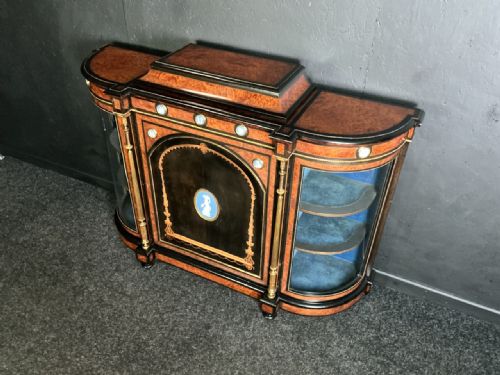
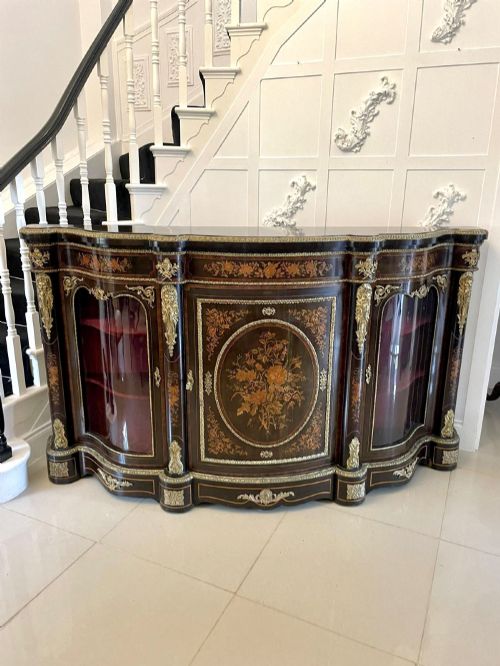
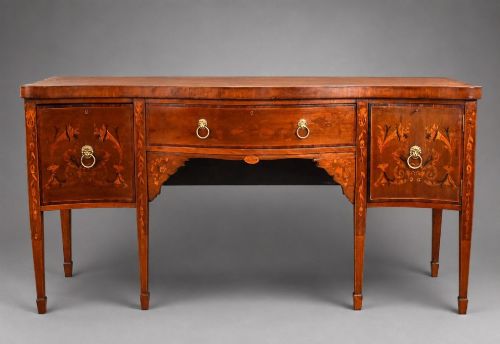
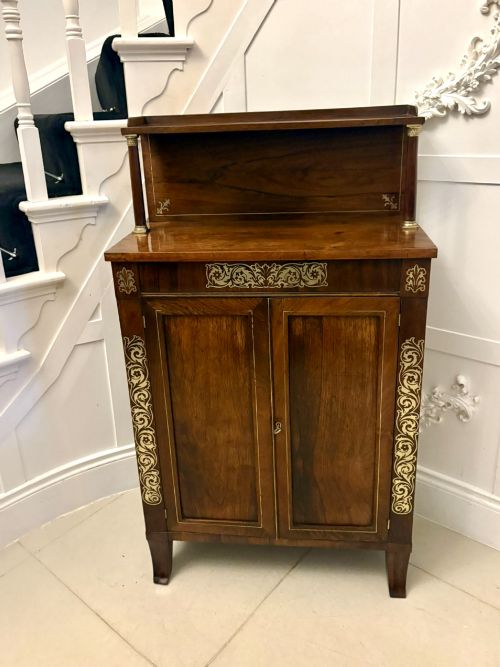
Antique Brass Inlay Credenza
An antique brass inlay credenza brings refined nineteenth-century timber and polished metal together to anchor a room with functional elegance.
Antique Brass Inlay Credenza
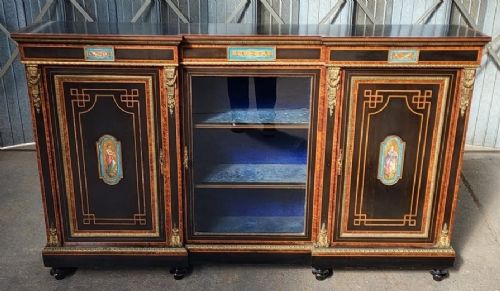
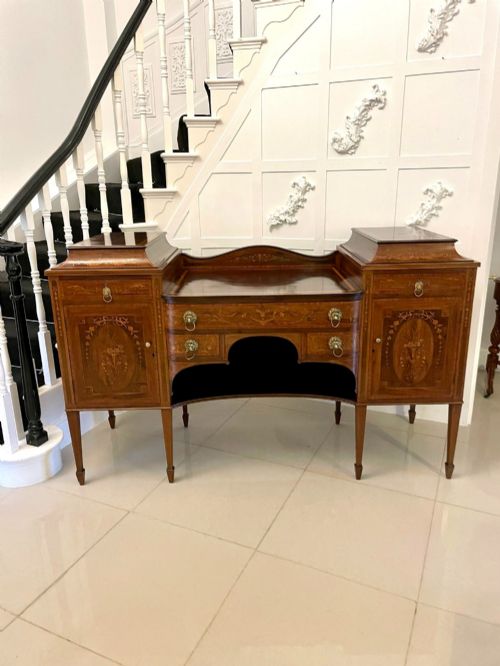
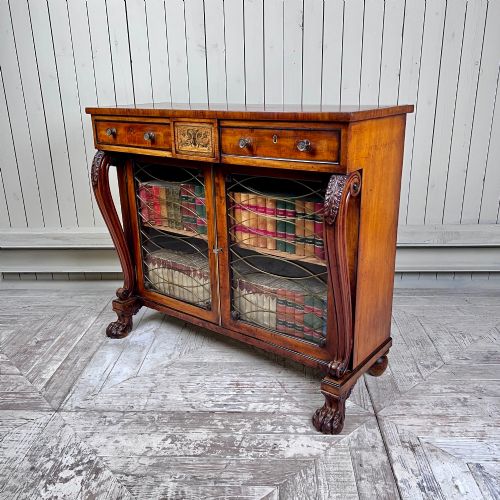
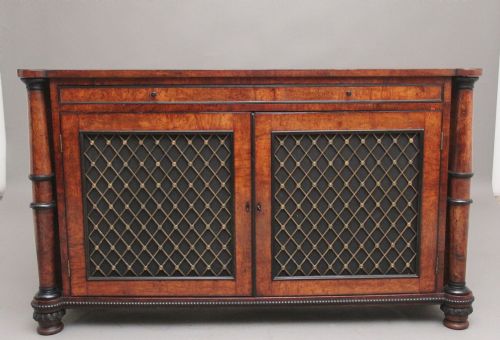
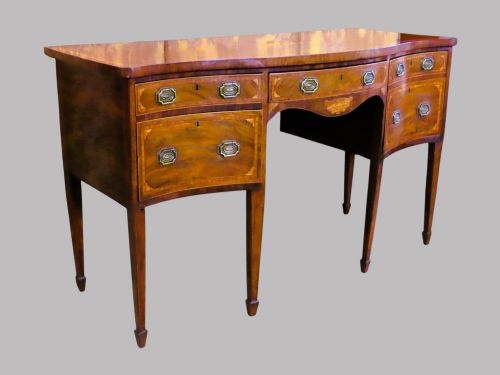
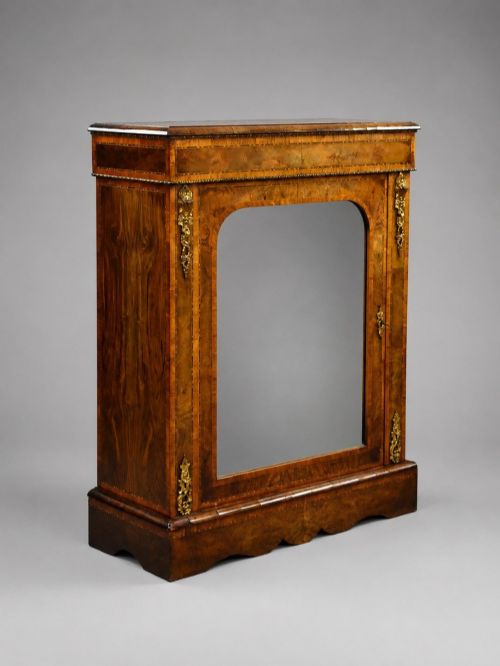
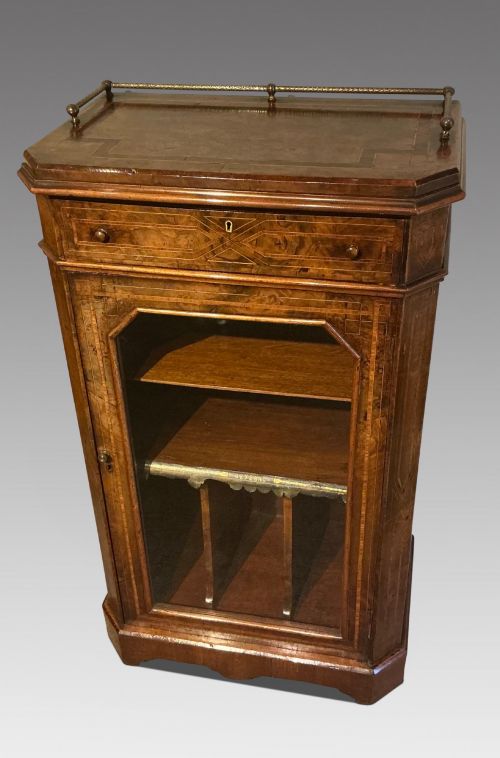
An antique brass inlay credenza encompasses low storage cabinets, chiffoniers, and sideboards designed to display and contain household possessions. The pieces seen here typically emerge from Regency, Victorian, and Georgian periods, spanning the nineteenth century.
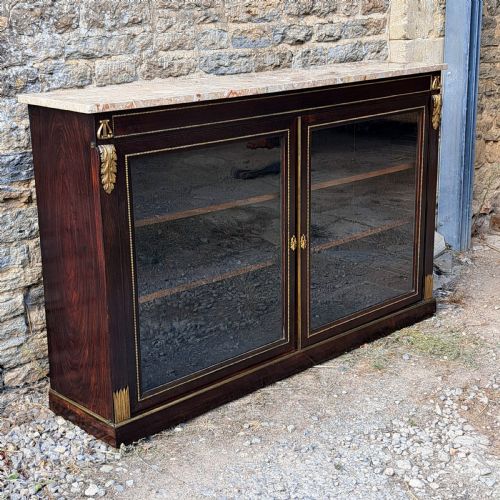
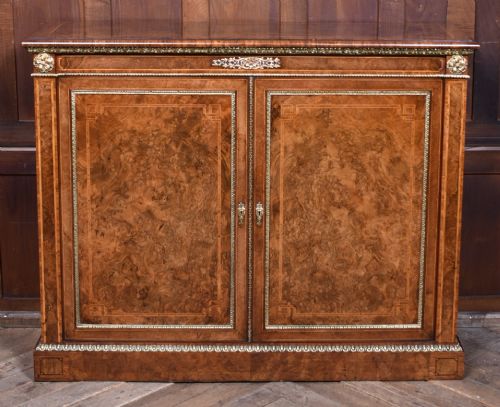
Makers and workshops of the era fashioned these items primarily from dark timbers, mounting them with glass doors, marble tops, or open shelving. The configuration frequently takes the form of breakfront or serpentine formats intended for principal reception rooms.
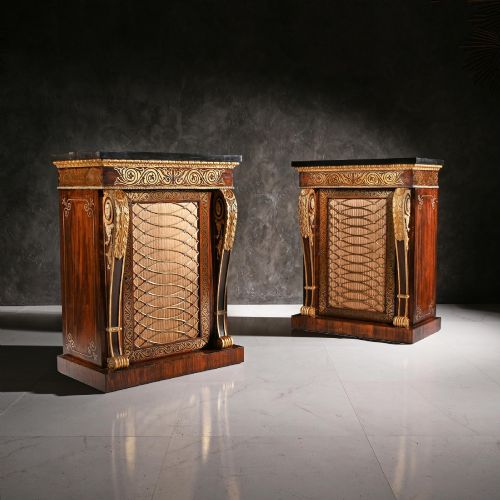
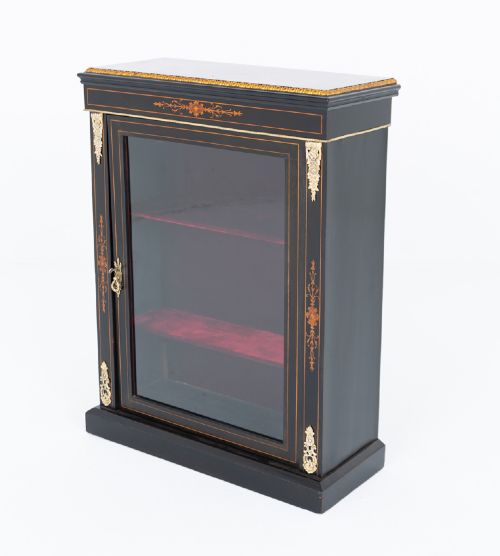
The brass inlay work defines the surface decoration, running through rosewood, mahogany, and ebonised wood grounds. Buyers encounter these formats under various historical designations including side cabinets and pier cabinets.
How they were made
Cabinet makers constructed carcass frames using solid and veneered timbers such as rosewood, mahogany, burr walnut, and ebonised wood. Brass strips and marquetry were hand-sawn and fitted directly into channels cut into the wood grain.
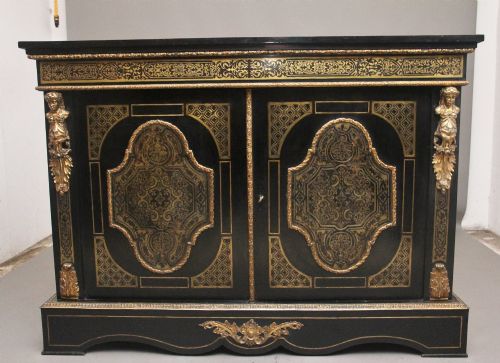
Ormolu mounts, tortoiseshell, and glass panels were integrated into French Napoleon III and Victorian examples to enhance the decorative scheme. Surface finishing relied on hand-applied polish that brought out the contrast between the dark timber ground and the bright metal inlay.
Listings feature credenzas, sideboards, and pier cabinets spanning the Georgian, Regency, and Victorian periods.
What varies in quality
The precision of the brass inlay work separates standard production from exceptional examples, requiring tight joints where metal meets timber without excessive filler. The choice of primary timber, such as figured rosewood or dense mahogany, dictates the baseline dignity of the carcass.
Secondary detailing, including the quality of ormolu mounts, marble slab tops, and original glass panes, elevates certain pieces above standard utility cabinets. The integration of structural elements like breakfront shapes and balanced proportions determines the visual harmony of the finished item.
Hewetsons London·Louis Constantin Le Gaigneur
The Antique Brass Inlay Credenza Glossary
- Ormolu
- Gilt-bronze mounts applied to furniture edges and corners for decorative effect. This technique was favoured by French and English cabinet makers during the nineteenth century.
- Boulle
- A style of marquetry utilising brass and tortoiseshell set into an ebonised wood ground. It draws its name from the master craftsman André-Charles Boulle.
- Chiffonier
- A compact sideboard or cabinet equipped with drawers and shelves. Regency examples often incorporate brass grilles behind glass doors.
- Pier cabinet
- A narrow display cabinet built to stand against the wall space between windows. These frequently feature burr walnut or ebonised finishes with glass fronts.
Antique Brass Inlay Credenza: Frequently Asked Questions
What is an antique brass inlay credenza?
An antique brass inlay credenza is a low nineteenth-century cabinet combining timbers like rosewood or mahogany with precision metal work. These pieces served as formal storage furniture in Victorian and Regency interiors.
They provide surface display space alongside enclosed cupboard storage. The brass detailing creates linear patterns across the dark timber doors and friezes.
How do I date an antique credenza?
Dating relies on timber selection, structural proportions, and the specific style of brass inlay work. Regency pieces often employ rosewood and bold brass stringing, while Victorian iterations favour ebonised finishes and boullework.
Secondary woods inside drawers and the method of carcass construction offer further clues to the manufacturing era. Comparing the hardware and mount styles against known period pieces confirms the timeline.
Where were these cabinets placed originally?
Original placement was typically against the main walls of nineteenth-century drawing rooms, dining rooms, and libraries. They acted as focal points for displaying decorative objects, porcelain, and candelabra.
Low profiles ensured the top surface remained accessible without obscuring wall art or windows. Chiffoniers and pier cabinets occupied similar reception room locations depending on room dimensions.
How should I care for brass inlay timber?
Maintain stable indoor humidity levels to prevent the timber ground from expanding or contracting around the metal inlay. Regular dusting with a soft, dry cloth preserves the polished finish.
Avoid placing the furniture in direct sunlight or near heat sources which can dry out rosewood and mahogany. Gentle wax application suitable for antique wood helps nourish the grain without tarnishing the brass.