
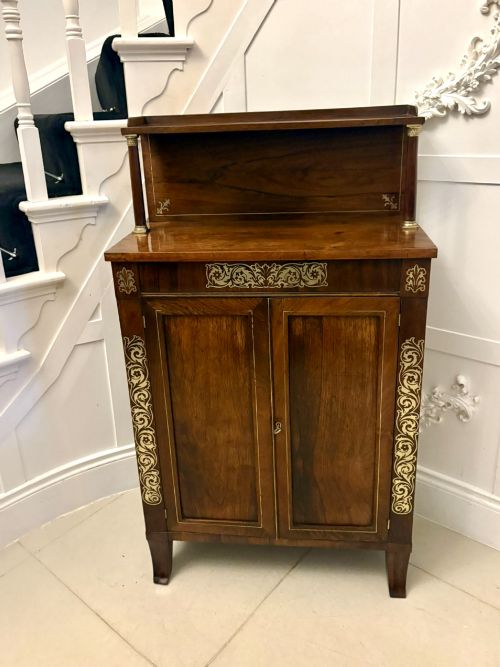
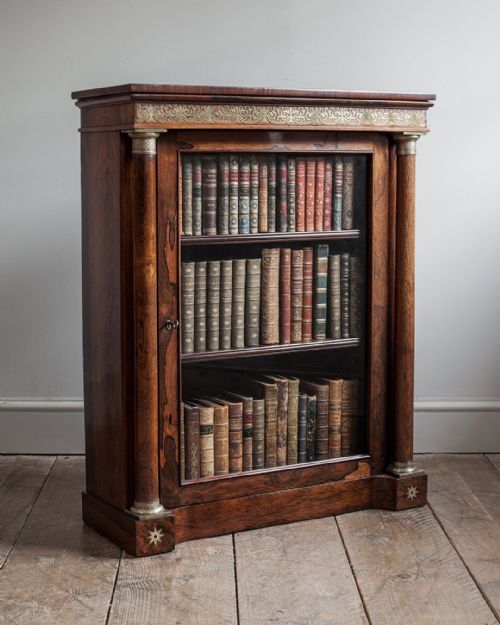
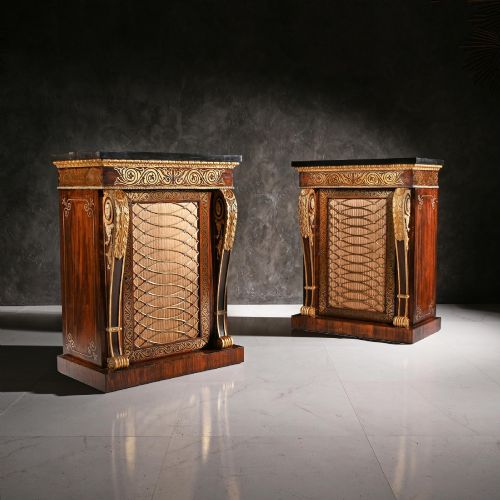

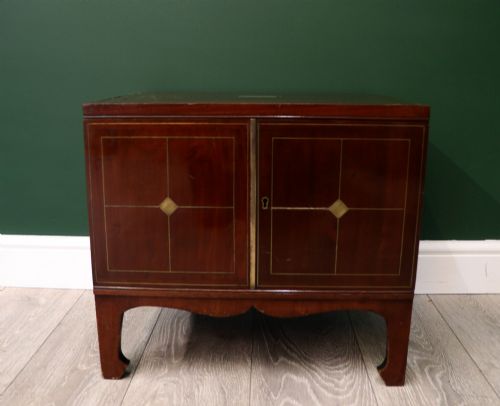


Regency Brass Inlay Cupboard
A regency brass inlay cupboard brings classical refinement to a room, combining rich timber with delicate metallic detail.
Regency Brass Inlay Cupboard
When you search for a regency brass inlay cupboard, you find sophisticated storage pieces designed for formal rooms. These items take forms such as side cabinets, chiffoniers, pier cabinets, and bedside cabinets.
The pieces appearing here span the Regency period, nineteenth century, and campaigns, alongside later echoes up to nineteen twenty. You will most frequently encounter rosewood and mahogany structures enhanced with fine brass work.
Makers and retailers represented across these items include Louis Constantin Le Gaigneur and Harrods, showing both classical cabinet-making and later curated retailing. Styles range through standard Regency, Grand Regency, Victorian, and Campaign aesthetics.
Materials and construction
Makers built these cabinets using dense timbers like rosewood and mahogany, frequently incorporating ebony, amboyna, and simulated rosewood surfaces. Glass, marble, giltwood, and fabric also appear as structural or decorative components.
Brass formed intricate inlaid motifs and handles, set flush into the timber surfaces to create geometric or classical patterns. Joinery relied on traditional cabinet-making techniques suited to housing delicate metalwork alongside heavy hardwoods.
Side cabinets and chiffoniers represent the primary object types found in this selection of nineteenth-century storage.
What separates the finest examples
The refinement of the brass inlay work dictates much of the distinction between pieces, particularly how precisely the metal sits within the timber ground. Subtle execution in the engraving of the brass demonstrates superior workshop skill.
Choice of timber grain and the depth of the rosewood or mahogany figure elevate certain cabinets above standard production. Attribution to notable makers like Louis Constantin Le Gaigneur or specific retailer provenance also marks out exceptional pieces.
Louis Constantin Le Gaigneur·Harrods
The Regency Brass Inlay Cupboard Glossary
- Chiffonier
- A low cabinet featuring shelving or a superstructure on top, commonly used for displaying porcelain or storing books. This form became popular during the Regency period.
- Pier cabinet
- A narrow cabinet designed specifically to fit the wall space between windows. These pieces often feature glass doors and delicate brass mounts.
- Campaign style
- Furniture constructed to be portable for military campaigns, typically featuring brass corners, recessed handles, and robust structural integrity. Such pieces combine utility with refined materials.
- Breakfront
- A cabinet design where the central section projects forward from the flanking wings. This architectural arrangement creates depth and shadow across the facade.
Regency Brass Inlay Cupboard: Frequently Asked Questions
What rooms suit a brass inlaid cabinet?
These cabinets work well in drawing rooms, hallways, or studies where their refined timber and metallic details complement traditional or eclectic interiors. Their low profiles allow them to hold lamps, clocks, or decorative objects without dominating the wall space.
Because they provide enclosed storage alongside surface display area, they function practically for books, tableware, or papers while maintaining an elegant appearance.
How do I care for rosewood and brass?
Keep these pieces away from direct sunlight and strong heat sources to prevent the timber from drying out and the brass inlay from loosening. Regular dusting with a soft, dry cloth maintains the finish without needing harsh polishes.
When treating the wood, use mild, natural waxes sparingly and take care not to snag cloths on the edges of the inlaid brass work.
Are these cabinets purely decorative?
While visually striking, these cabinets served practical domestic purposes for storing linens, books, or writing materials in nineteenth-century homes. Interior shelving and secure doors made them versatile pieces of furniture for everyday use.
Today they continue to offer functional storage while acting as focal points in a room due to their rich materials.
How do I distinguish Regency style from later copies?
Authentic Regency pieces display construction methods, timber selections, and brass inlay techniques consistent with early nineteenth-century workshop practices. Details like hand-cut joints and period-specific brass patination help identify genuine examples from later interpretations.
Comparing the weight of the timber and the integration of the inlay reveals the level of craftsmanship typical of the original period.