
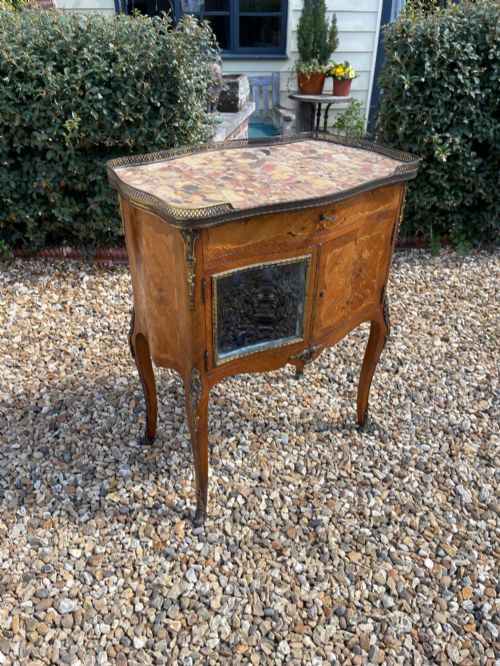


Brass Floral Inlaid Cabinet
A brass floral inlaid cabinet brings warmth and intricate pattern into a room through contrasting timber and shimmering metalwork.
Brass Floral Inlaid Cabinet
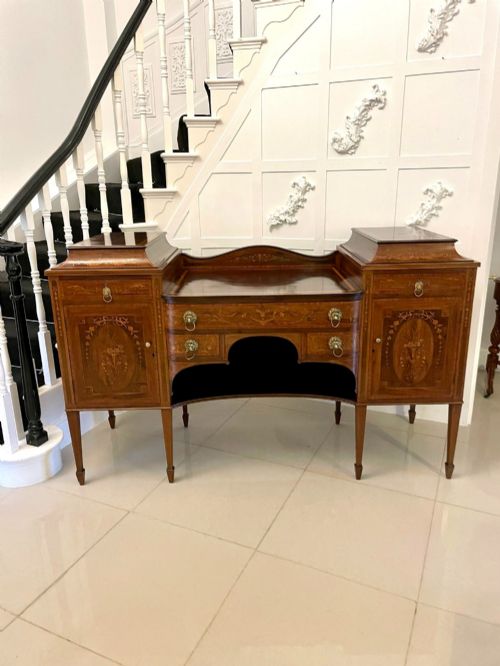
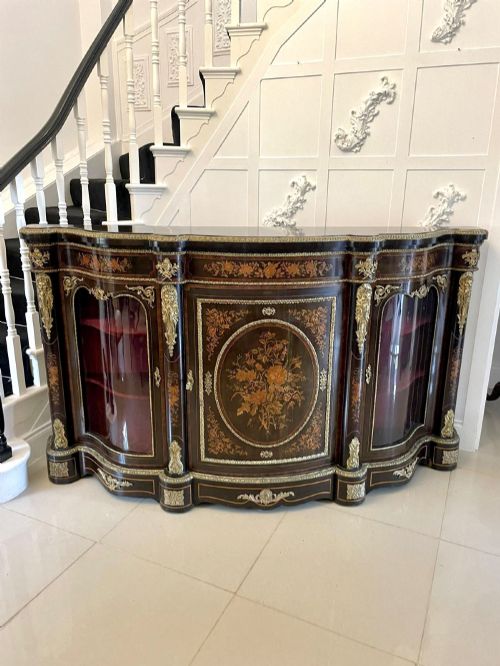
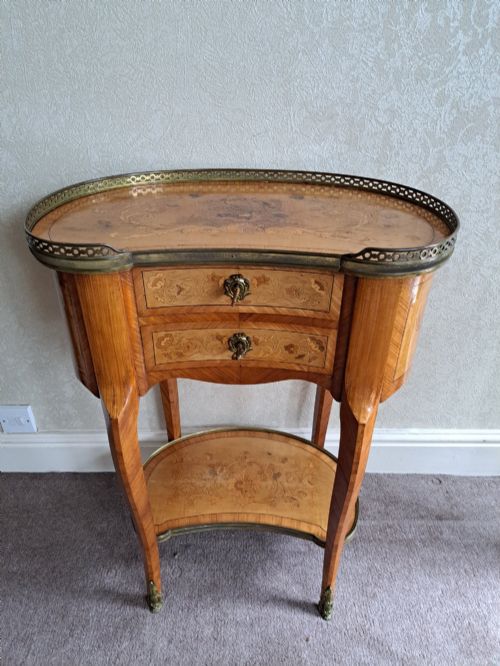
A brass floral inlaid cabinet combines rich cabinet timbers with delicate floral motifs rendered in polished metal and contrasting wood veneers. These pieces range from compact bedside tables and occasional pieces to grand credenzas and display cabinets.
The selections span the nineteenth century into the Edwardian era, encompassing Regency, Victorian, and French revival styles. Walnut, mahogany, kingwood, and rosewood form the primary foundations for these decorative surfaces.
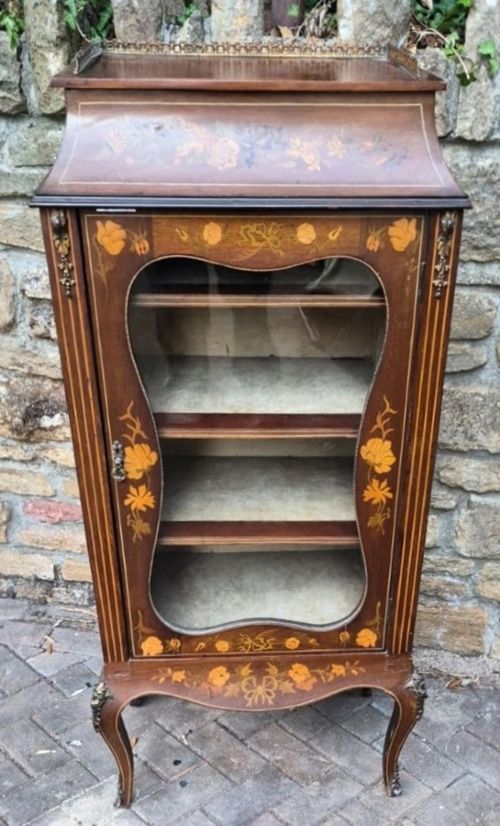
Buyers encounter numerous variations, including side cabinets, vitrines, and chiffoniers. Many feature serpentine fronts, marble tops, and ormolu mounts alongside the characteristic floral brass work.
Materials and construction
Cabinetmakers constructed these pieces using dense hardwoods such as mahogany, walnut, and kingwood as a base for intricate marquetry and metal inlay. Fine brass wire and sheet metal were cut by hand to form floral tendrils, leaves, and blossoms embedded directly into the wood veneer.
Ormolu mounts and marble tops frequently complete the construction of the finer examples, particularly those influenced by French styles. Glass panels appear in display cabinets and vitrines to showcase the interior shelves.
Some tables double as sewing companions, proving that nineteenth-century craftspeople liked their storage to come with hidden drawers.
Assessing quality and execution
Quality rests upon the precision of the marquetry and the crispness of the brass inlay work. Smoother integration of metal and wood without excessive filler denotes superior craftsmanship.
The choice of underlying timber and the weight of the cast ormolu mounts signal the original tier of the piece. Refined proportions and balanced floral symmetry elevate certain cabinets above standard production.
Hewetsons London·Charles Topino
The Brass Floral Inlaid Cabinet Glossary
- Marquetry
- Decorative patterns created by fitting thin pieces of wood veneer and other materials onto a structural surface. This technique allows for complex floral and pictorial designs.
- Ormolu
- Gilt bronze mounts applied to furniture for decorative effect. These cast elements add sculptural detail to the corners and borders of the cabinet.
- Credenza
- A sideboard or cabinet featuring enclosed storage space, frequently elevated on legs or a plinth base. They often incorporate elaborate inlay and marble tops.
- Vitrine
- A glass-fronted display cabinet designed for porcelain and curiosities. The glazed panels protect contents while offering visibility from multiple angles.
- Serpentine front
- A curved furniture front featuring a convex central section flanked by concave curves. This shaping requires advanced woodworking skill.
Brass Floral Inlaid Cabinet: Frequently Asked Questions
What rooms suit a brass floral inlaid cabinet?
These cabinets suit reception rooms, studies, and hallways where their reflective brass work catches the light. They function effectively as display surfaces or accent pieces against neutral walls.
Smaller side tables and bedside cabinets fit comfortably into bedrooms as functional storage. Their decorative nature allows them to stand alone as focal points.
How do I care for brass inlay?
Maintenance requires dry dusting with a soft cloth to prevent accumulation in the recessed floral channels. Avoid harsh chemical polishes that can discolour the surrounding timber veneer.
Natural beeswax applied sparingly nourishes the wood without disturbing the metal elements. Gentle handling preserves the delicate flush fit of the brass.
Are these cabinets purely French in origin?
Many examples reflect French revival tastes such as Louis XV and Louis XVI styles, executed in both continental workshops and English cabinet-makers' studios. British firms also produced substantial numbers under Sheraton and Victorian influences.
Design characteristics frequently blend English structural forms with continental marquetry techniques. Makers across Europe adopted these decorative idioms throughout the nineteenth century.
How do I distinguish Victorian from Edwardian pieces?
Victorian pieces often display heavier proportions and rich ormolu mounts alongside dense floral marquetry. Walnut and rosewood dominate this period's heavier aesthetic.
Edwardian cabinets generally present lighter frames and airier Sheraton revival influences. The timbers lean towards brighter mahoganies with more restrained inlay patterns.