

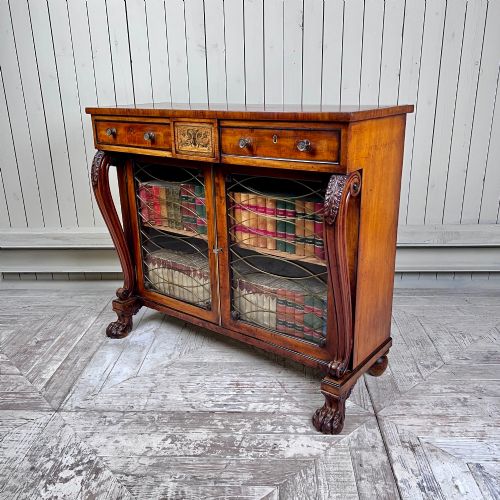


Georgian Brass Inlaid Chiffonier
A georgian brass inlaid chiffonier brings refined storage and display to a room, offering sleek brass details set into dark woods.
Georgian Brass Inlaid Chiffonier
A georgian brass inlaid chiffonier combines a low cabinet base with upper shelves or bookcase sections, originating from the Regency period and early nineteenth century. These items function as compact sideboards or display units for formal rooms.
The pieces appearing on this page include side cabinets, bookcases, and sideboards, predominantly built during the Regency era around eighteen hundred and twenty. Rosewood and mahogany serve as the primary timbers across these listings.
Makers and craftsmen of this period utilised contrasting ebony and silk or fabric elements alongside brass stringing to define the facade of each chiffonier. Buyers will encounter both open bookcase formats and enclosed door configurations.
How they were made
Makers constructed these cabinets using rosewood and mahogany veneers laid over solid wood substrates, frequently incorporating simulated rosewood techniques to achieve a uniform grain appearance. Fine brass inlay or stringing was meticulously embedded into channels cut across the wood surface.
Glazed doors, silk linings, and glass panels appeared on specific chiffonier bookcases to protect and display volumes or decorative objects. Ebony details provided dark linear contrast against the warmer tones of the primary timber.
Georgian Brass Inlaid Chiffonier Retail Price Guide 2026
Typical asking prices for georgian brass inlaid chiffonier among the pieces listed under this phrase on Sellingantiques today, from the lower quarter to the upper quarter. They describe what is for sale here now, not the wider market.
Secret writing drawers occasionally hide behind polished facades, waiting for someone to discover the concealed release catch.
What varies in quality
The precision and complexity of the brass inlay work set superior examples apart from simpler cabinets, as does the choice of richly figured rosewood veneer. Subtle variations in timber selection and the crispness of turned wooden supports dictate the visual weight of the piece.
Interior configuration also defines the hierarchy, ranging from simple open shelving to fitted secretaire drawers with internal compartments. The integration of original glass, silk panels, and supporting side columns indicates higher execution standards.
The Georgian Brass Inlaid Chiffonier Glossary
- Chiffonier
- A low cabinet featuring a combination of shelves and enclosed storage space. This form evolved during the nineteenth century to serve dining and drawing rooms.
- Regency
- A design period spanning the early nineteenth century characterised by classical revival motifs and refined proportions. Pieces from this era often display clean architectural lines.
- Veneer
- A thin layer of decorative timber applied to a secondary wood structure. This technique allowed craftsmen to utilise richly figured rosewood and mahogany efficiently.
- Secretaire
- A desk component integrated into the upper or lower section of a cabinet, featuring a drop-down writing surface. These compartments often conceal small drawers and pigeonholes.
- Stringing
- Narrow inlay bands of contrasting material set flush into the wooden surface. Brass stringing defines geometric borders on these cabinets.
Georgian Brass Inlaid Chiffonier: Frequently Asked Questions
What is a georgian brass inlaid chiffonier?
A georgian brass inlaid chiffonier is a low nineteenth-century cabinet combining enclosed storage with upper shelving or bookcase space. These pieces were designed for drawing rooms and parlours to hold books and decorative items.
Craftsmen built them primarily from rosewood and mahogany, enriching the timber surfaces with delicate brass inlay and contrasting ebony details.
How were these cabinets used originally?
These furnishings served as practical side units in formal reception rooms for storing dining accessories, stationery, or private libraries. The upper shelves allowed owners to display ceramic collections and bound volumes.
Enclosed lower doors kept items dust-free while maintaining a tidy interior space within the household.
Which woods appear on these chiffoniers?
Rosewood and mahogany form the main body of these pieces, often highlighted with contrasting ebony veneers and polished brass stringing. Some examples utilise simulated rosewood graining across the timber surfaces.
Interior compartments frequently feature matching secondary woods alongside fabric or silk linings behind glass doors.
How do I identify the Regency period?
Regency pieces date from the early nineteenth century around eighteen hundred to eighteen thirty, displaying classical restraint and precise geometric ornamentation. The inclusion of brass stringing and classical wood veneers marks this style.
Proportions remain balanced, relying on dark timbers and metal inlay rather than heavy carved decoration.