
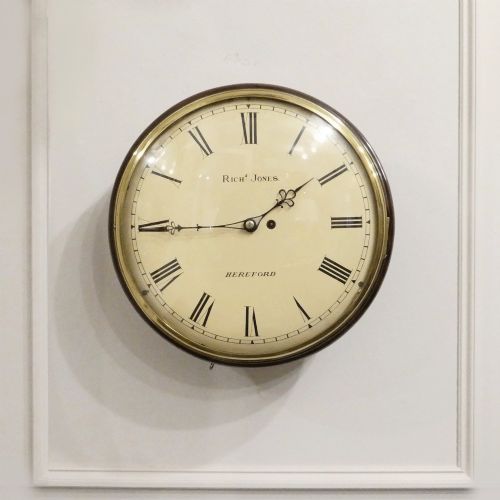
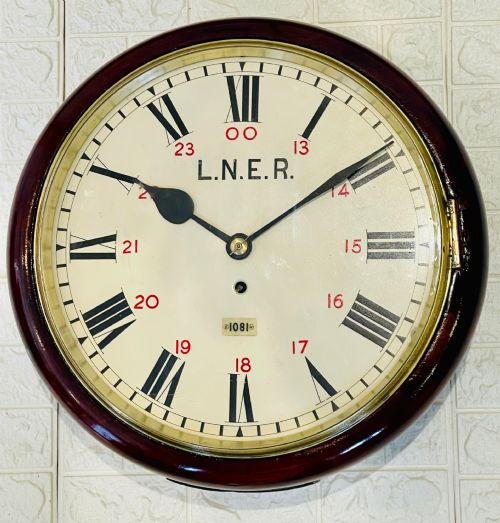
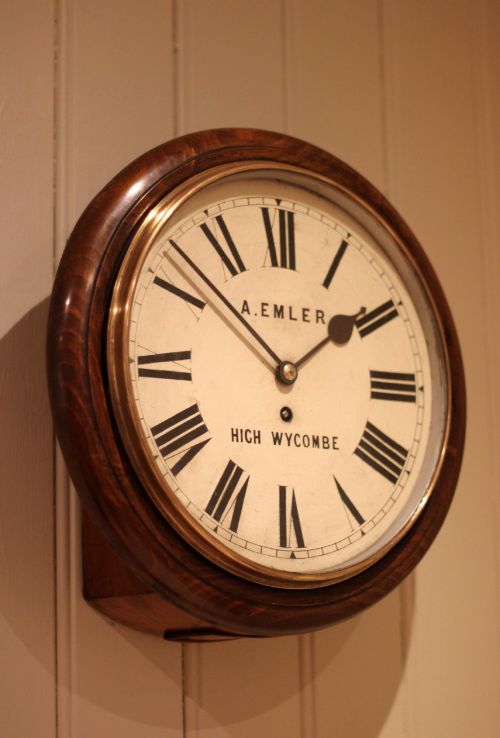
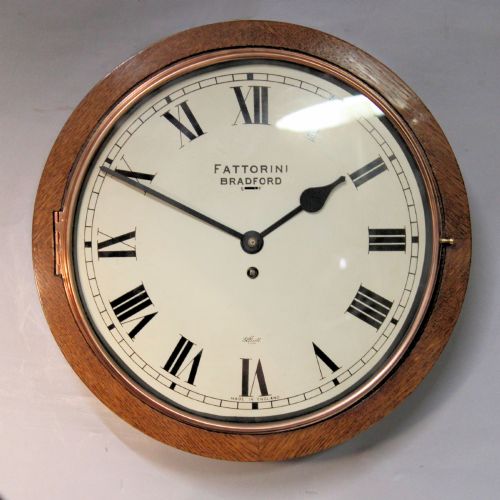
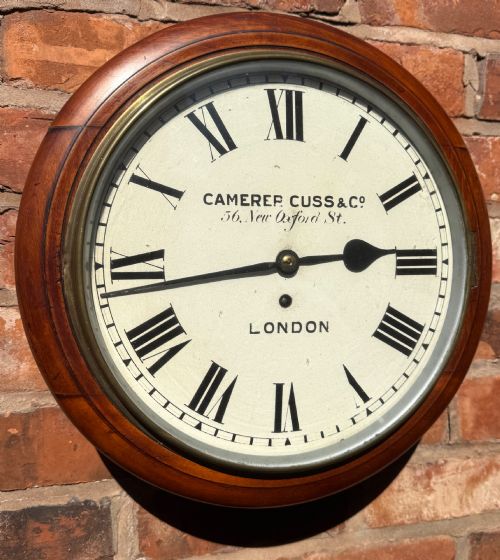
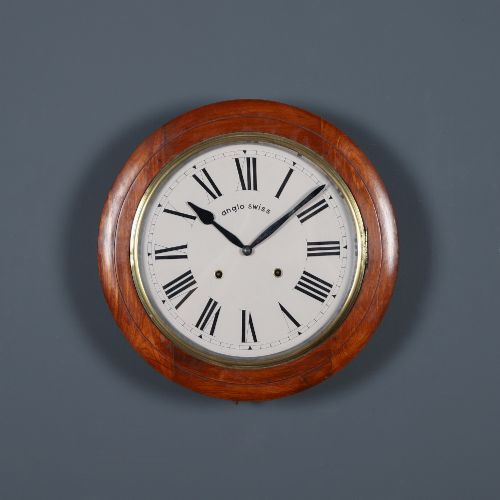
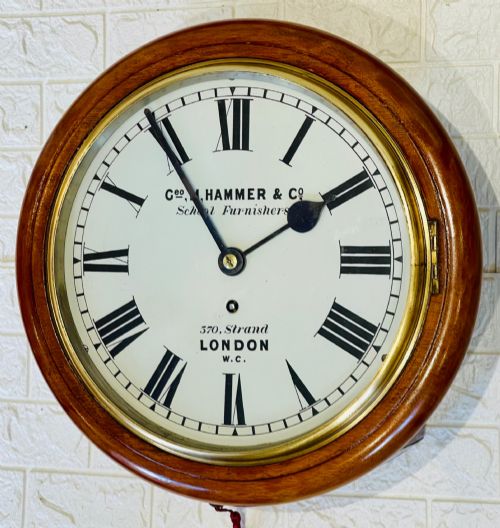
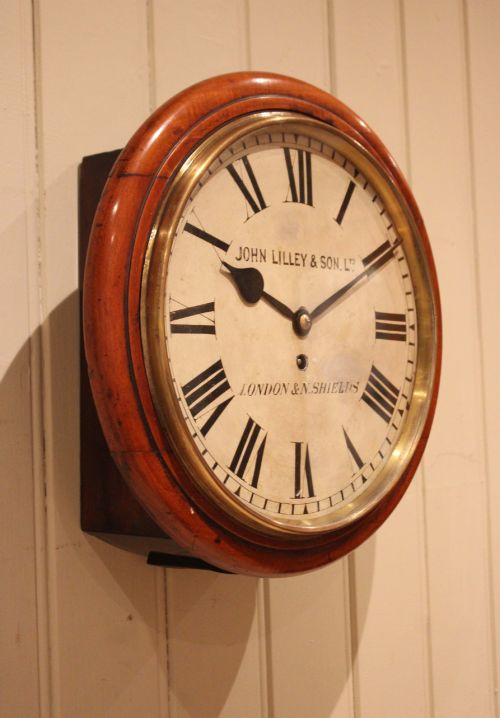
Antique Brass Circular Bezel
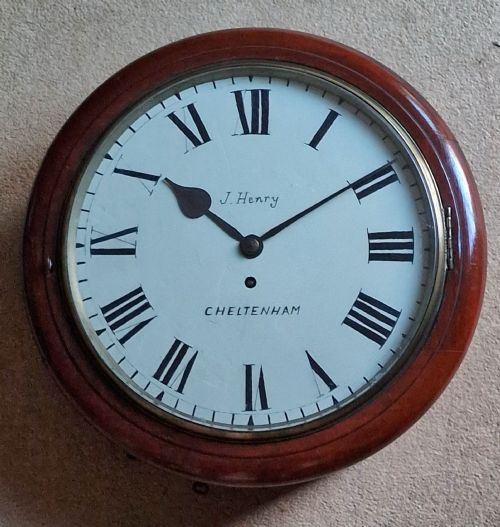
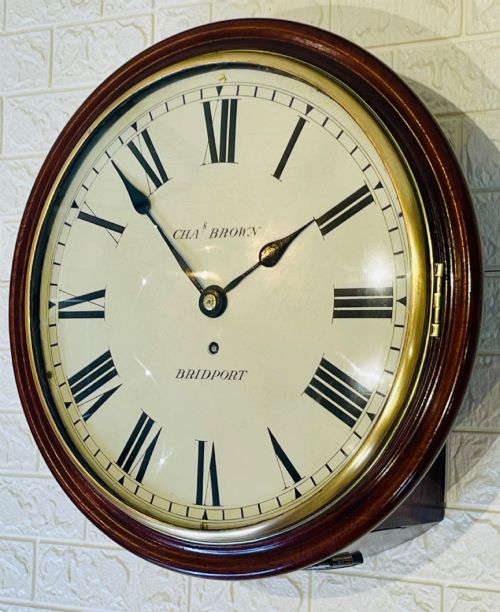
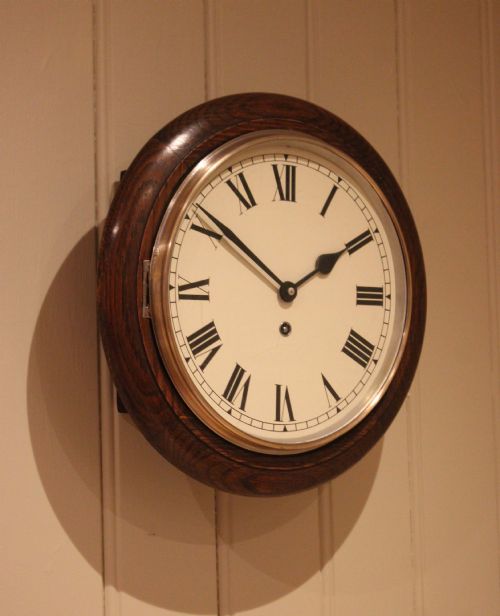
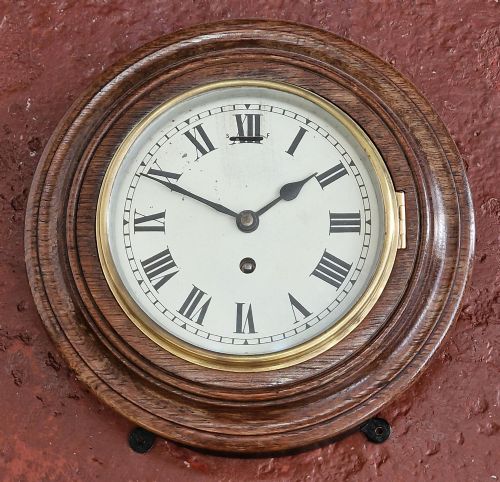
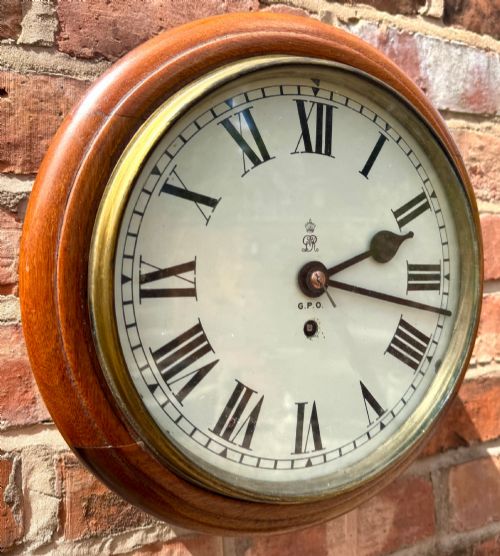
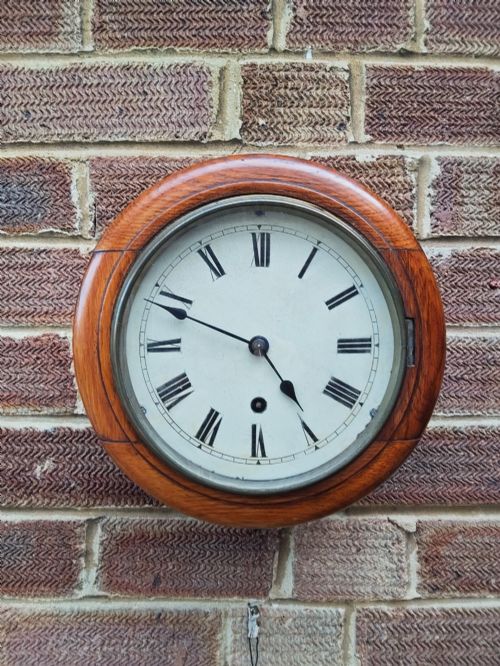
An antique brass circular bezel secures the glass face of a traditional wall clock or dial timepiece.
Antique Brass Circular Bezel
When you search for an antique brass circular bezel, you encounter the metal frames that encircle the dials of wall clocks, barometers, and instruments.
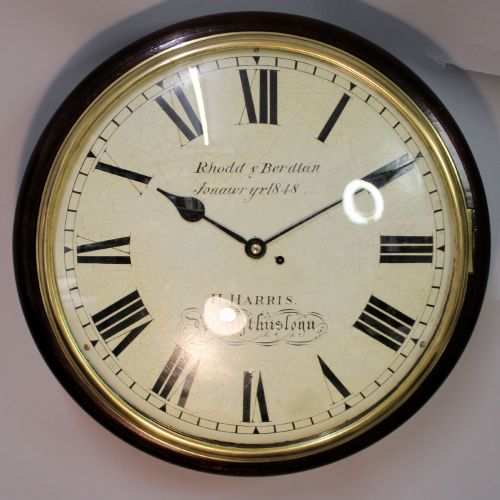
The version you are most likely to meet on this page is the heavy brass rim housing the glass of a fusee dial wall clock or station timepiece.
These metal rims span various diameters, from small six-inch school clocks to large station dials governed by provincial and London makers.
Materials and Construction
The metal framework typically incorporates a hinge and a small latch or clasp to allow access to the paper, painted, or enamel dial beneath the glass.
Some railway station clocks retain the bumps and knocks of decades spent managing steam train timetables.
Markers of Quality
The weight and gauge of the brass distinguish the sturdier housings from thinner, later replacements.
Integration with the wooden surround - such as a flush fit against mahogany or oak cases - shows the precision of the original cabinetmaker.
Richard Jones of Hereford·Elliott·Camerer Cuss and Co London·Henry Harris of Monythusloyn·Thomas Hedge of Colchester·John Walker·Dent of London·Francis Perigal London
The Antique Brass Circular Bezel Glossary
- Bezel
- The metal ring, in this case brass, that holds the glass face in position over the dial. It usually opens on a hinge to permit hand-setting or winding.
- Fusee
- A conical pulley used in older clock movements to ensure even power delivery as the mainspring unwinds. Many pieces featuring a brass bezel rely on this mechanism.
- Dial clock
- A wall-mounted timepiece with a prominent circular face. These typically feature the brass bezels found in transport and office environments.
- Verge
- An early type of escapement controlling the release of power in a clock. It is frequently associated with Georgian examples.
Antique Brass Circular Bezel: Frequently Asked Questions
What is a brass circular bezel?
It is the metal rim that holds the glass protecting the dial of a wall clock or instrument.
These brass rings are hinged to allow access to the clock face for winding and setting.
How were these clocks used?
They served as reliable timekeepers in railway stations, schools, offices, and homes.
Their clear circular dials allowed staff or residents to read the time from a distance.
How do I care for the brass bezel?
Dust the brass gently with a dry cloth and avoid harsh metal polishes that remove the patina.
Keep the glass clean and ensure the hinge and latch remain properly aligned.
How can I tell the period?
The construction of the case, the style of the dial lettering, and the movement type help date the piece.
Georgian and Victorian examples often display distinct timber choices and maker signatures.