
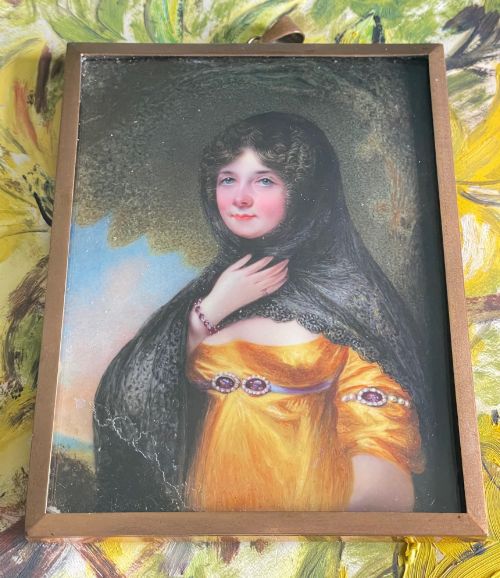
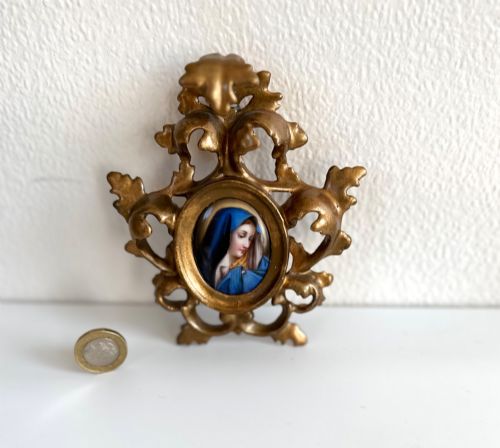


Framed Enamel Portrait Miniature
A framed enamel portrait miniature offers a glimpse into historical likenesses rendered in vitreous colour on copper or porcelain.
Framed Enamel Portrait Miniature
A framed enamel portrait miniature captures the likeness of a subject using vitreous enamel fused to a metal base, typically copper, and mounted for display. These pieces range from small pendants to wall plaques and table mirrors set in gilt metal, brass, or ormolu frames.
Buyers browsing this selection frequently encounter examples from the eighteenth and nineteenth centuries, including works styled in the Georgian, Regency, and Victorian periods. Forms span individual wall art and oval plaques, as well as specialised decorative items incorporating pearls and gold.
Materials and construction
The foundation of these works relies on metal bases such as copper or brass, onto which powdered glass enamels are applied and fired at high temperatures to achieve a permanent vitreous surface. Artisans also utilised porcelain alongside enamel, painting detailed portraits that required immense precision at such a small scale.
Mounting and framing involved cast metals like ormolu and gilt metal, occasionally accented with wood, glass, and precious materials such as eighteen-carat gold and pearls. These frames were designed specifically to complement the delicate nature of the miniature paintings within.
Listings feature works from the eighteenth and nineteenth centuries, spanning Georgian, Regency, and Victorian stylistic revivals.
Distinctions in quality
The craftsmanship of the surrounding frame, whether cast ormolu, gilt metal, or gold, plays a significant role in the overall integrity of the object. Higher-grade items feature well-preserved metalwork and secure mountings that match the period of the portrait.
Horace Hone·Christian Friedrich Zincke·Henry Pierce Bone·F.Bienvue
The Framed Enamel Portrait Miniature Glossary
- Enamel
- A glassy substance fused to a metal or porcelain substrate through high-temperature firing. This technique provides a durable and glossy surface for detailed miniature painting.
- Ormolu
- Gilded bronze or brass used extensively for decorative furniture mounts and picture frames during the eighteenth and nineteenth centuries. The finish mimics the appearance of solid gold.
- Portrait Miniature
- A small-scale painting depicting a specific person, popular before the advent of photography. These works were often housed in protective cases, pendants, or frames.
- Pendant
- A piece of jewellery designed to hang from a neck chain or ribbon. In this context, it often houses a small portrait miniature behind glass.
- Vitreous
- Pertaining to or resembling glass. Enamel is a vitreous medium created by fusing powdered glass to a solid base.
Framed Enamel Portrait Miniature: Frequently Asked Questions
How do I display them?
Many framed enamel portrait miniatures are equipped for wall hanging as plaques or small works of art. Others are designed as table mirrors or pendants for versatile placement.
Keep them away from direct sunlight and excessive moisture to protect both the painted surface and the surrounding metal frame.
What materials are used?
The core of these pieces typically consists of enamel fused to copper or porcelain. Frames are commonly made from ormolu, gilt metal, brass, or wood.
Some exceptional examples incorporate precious elements like eighteen-carat gold and pearls into the design.
How do I date them?
Dating relies on stylistic markers from periods such as the Georgian, Regency, and Victorian eras. The craftsmanship of the frame and the mounting techniques also offer strong chronological clues.
Attributions to specific makers or dated inscriptions provide further confirmation of the period.
Were they worn?
Certain pieces, particularly those configured as pendants, were designed to be worn close to the body as personal jewellery. Other formats, such as wall plaques and table mirrors, were intended strictly for interior display.
Portable miniatures allowed owners to carry likenesses of family members or nobility during travel.