


Neoclassical Portrait Miniature
A neoclassical portrait miniature captures the refined spirit of antiquity in a remarkably intimate scale, offering a tangible link to historical portraiture.
Neoclassical Portrait Miniature
A neoclassical portrait miniature draws on classical motifs and styles from periods such as the 18th century, 19th century, Georgian, and Victorian eras. These items manifest across various forms including portrait paintings, framed wall art, brooches, and carved plaques.
The aesthetic frequently aligns with the French School or Grand Tour traditions, often depicting subjects in classical attire or profile. Pieces range from early 19th century works to Victorian interpretations of earlier artistic movements.
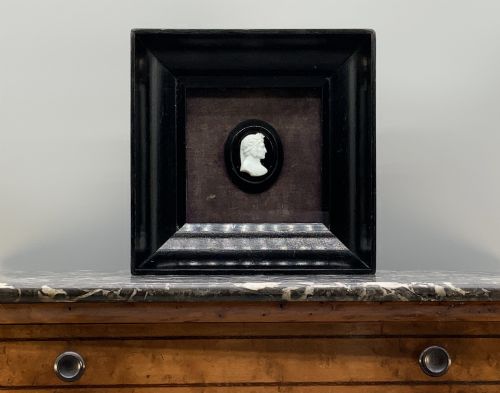
Buyers encounter subjects rendered on media such as ivory, paper, and silk, or shaped as pressed white glass paste cameos and bronze busts. Each object reflects the enduring fascination with classical antiquity during the Georgian and Victorian periods.
Materials and technique
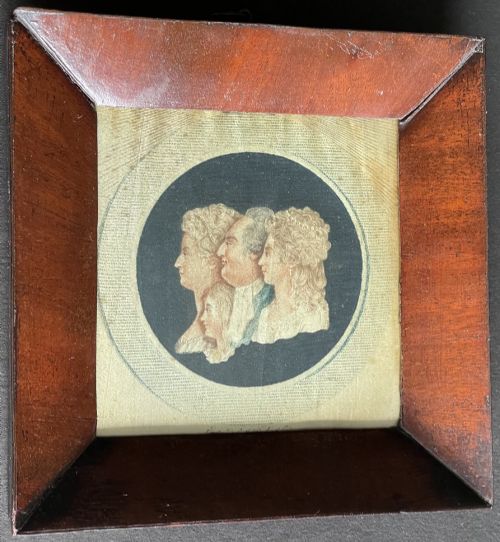
Artisans employed watercolour, oil painting on board, and print on silk to capture fine facial details and classical drapery. Ivory and wood provided durable substrates for delicate hand-painted compositions.
Framing and mounting materials such as brass, glass, and bronze completed the presentation of these small works. Carving techniques shaped ivory and stone into classical plaques and busts reminiscent of grand tour souvenirs.
Judging quality and execution
Quality rests in the precision of the brushwork and the depth achieved within a restricted surface area. Finer examples display meticulous attention to facial expression, costume detail, and classical proportions.
The integrity of the mounting materials, whether brass surrounds or carved wooden frames, indicates the original tier of production. Superior pieces maintain crispness in carved ivory and clarity in painted watercolours or prints.
James Tassie·Louis Leopold Boilly·Del Buono·John Barry·Elisabeth Vigee Le Brun
The Neoclassical Portrait Miniature Glossary
- Neoclassical
- A style reviving the art and culture of ancient Greece and Rome. It emphasises restrained ornamentation, classical profiles, and dignified subjects.
- Grand Tour
- A traditional trip through Europe undertaken by upper-class young men to absorb classical art and culture. It generated a demand for portable plaques, busts, and miniatures.
- Cameo
- A method of carving an object such as glass paste or stone to create a raised figure in relief against a contrasting background. Pressed white glass paste examples emulate classical carved gems.
- Glass
- A transparent or translucent material utilised for glazing portrait miniatures to protect the delicate painted surface underneath. It forms an essential component of framed wall art and brooches.
- Ivory
- A hard, creamy-white material sourced from animal tusks, carved into classical portrait plaques during the 19th century. Its smooth surface accepted fine ink and paint applications.
Neoclassical Portrait Miniature: Frequently Asked Questions
What is a neoclassical portrait miniature?
A neoclassical portrait miniature is a small-scale artwork or carved plaque created during periods like the 18th and 19th centuries that draws inspiration from classical antiquity.
These pieces include painted watercolours, prints on silk, and glass paste cameos depicting figures in classical settings or historic dress.
What materials are common in these pieces?
Makers utilised watercolour, oil on board, ivory, paper, and silk to construct the central portrait.
Support structures and frames frequently incorporate brass, bronze, wood, and glass.
How do I distinguish between periods?
Georgian pieces often reflect 18th-century sensibilities and sentimental love tokens, while 19th-century examples frequently stem from Grand Tour travels.
Victorian items continue these classical motifs alongside later interpretations of earlier French School paintings.
Are these works hand painted?
Many examples are original hand-painted watercolours or oils executed on board, ivory, or paper by skilled artists.
Other items consist of period prints on silk or pressed glass paste cameos replicating classical subjects.