





Georgian Portrait Pendant
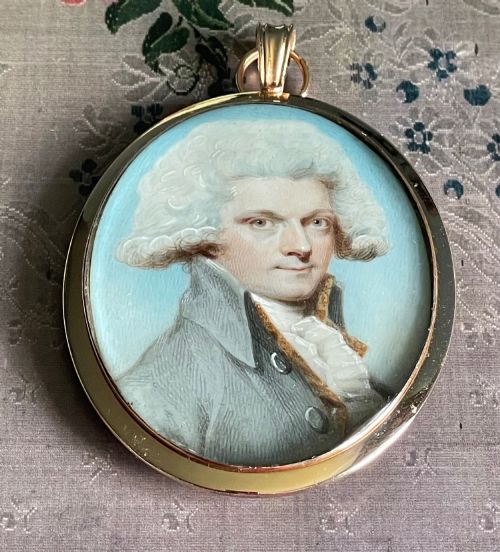
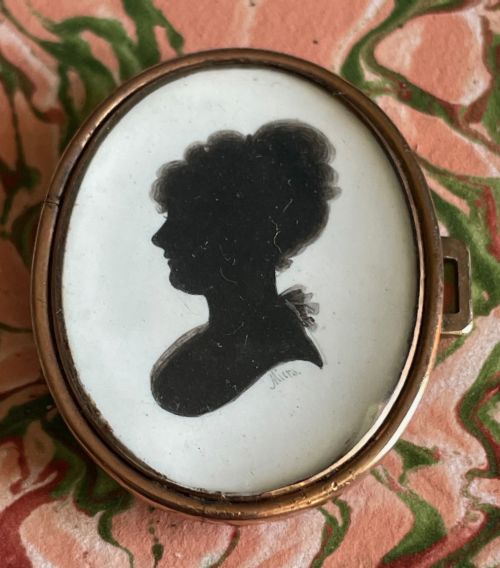
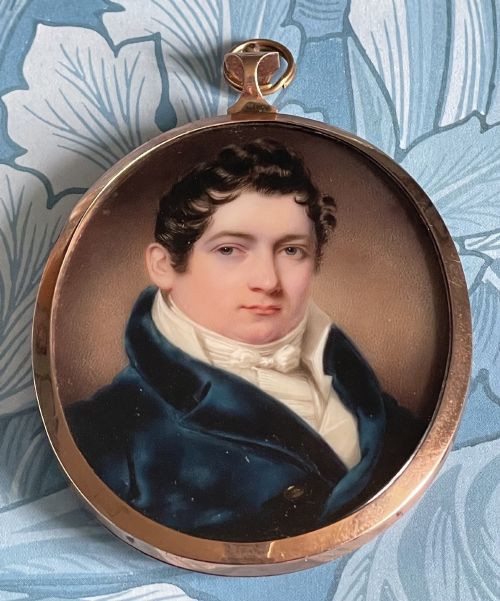
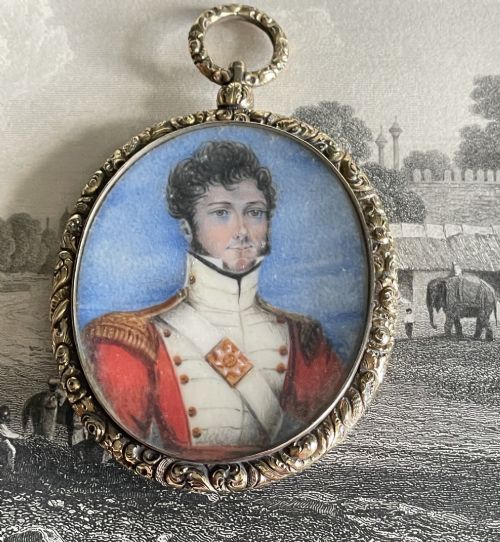
A georgian portrait pendant is a miniature painted face set in gold, offering collectors an intimate glimpse of eighteenth-century society.
What these pieces are
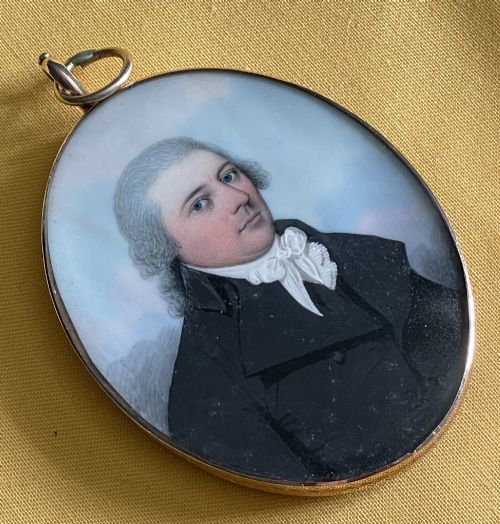
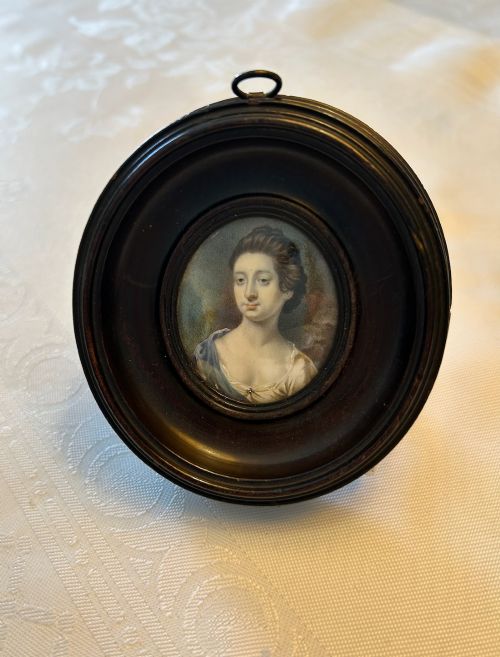
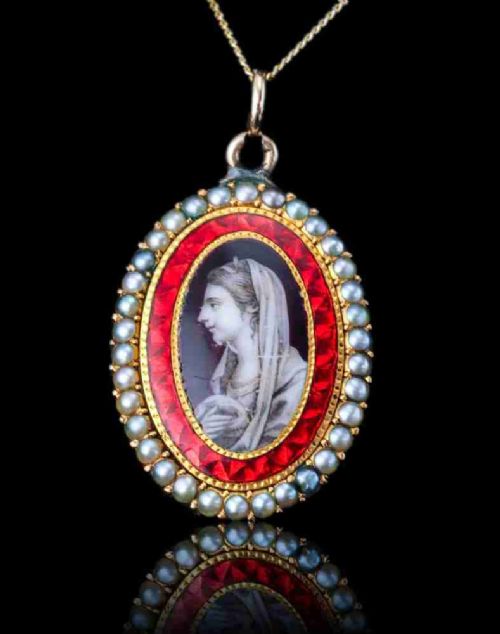
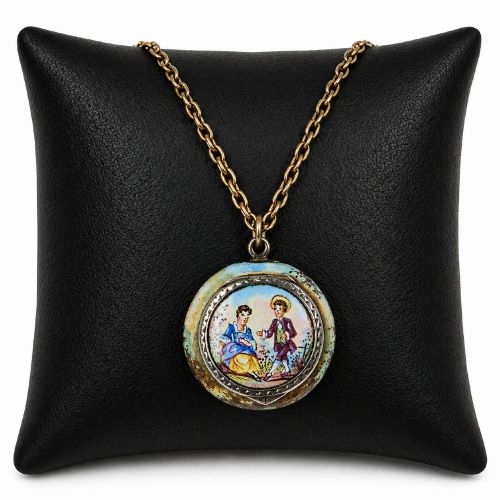
The selection here encompasses several distinct forms, ranging from direct miniature paintings behind glass to reversible memorial pieces with hair backs. Gold frames dominate the available material, sometimes accented with pearls or formed into rotating carnelian intaglio fobs.
Most examples date firmly to the Georgian era, spanning the seventeen-hundreds through the early nineteenth century. Buyers will frequently encounter both watercolour on ivory and enamel techniques within these historical parameters.
How they were made
Craftsmen executed these miniature portraits using fine watercolours and pigments applied directly to thin sheets of ivory or prepared paper. Many pieces feature protective glass coverings held securely within handcrafted gold or nine-carat gold settings.
Enamel surfaces provided an alternative medium, fusing powdered glass to a metal base under high heat to create lasting colour. Jewelers then constructed bespoke frames, frequently incorporating pearls or reversing to woven human hair compartments for remembrance.
Retail Price Guide 2026
Typical UK retail prices for georgian portrait pendant, calculated from the Sellingantiques database of over a million retail prices indexed since 2003. This retail price guide relies exclusively on Sellingantiques data; no external sources or auction records are used, so the figures do not describe the wider market.
Some pendants turn around completely on a swivel, letting the owner switch between a painted face and a hidden lock of hair.
What varies in quality
Quality rests primarily on the precision of the brushwork and the anatomical accuracy achieved by the artist. Master painters capture subtle psychological depth and lifelike skin tones, whereas lesser examples rely on stiff lines and flat planes of colour.
The sophistication of the gold setting further distinguishes standard production from finer work. Heavier gold gauges, integrated pearls, and robust backing plates signal superior construction that has survived centuries intact.
William Naish·George Engleheart·John Inigo Wright·Samuel Cotes·John Barry
The Georgian Portrait Pendant Glossary
- Portrait Miniature
- A small, highly detailed painting of a person, typically executed in watercolour on ivory during the eighteenth century.
- Enamel
- A durable substance made by fusing powdered glass to a metal substrate at high temperatures, seen on portrait surfaces.
- Intaglio
- A gemstone or metal surface carved with a sunken design, allowing it to produce a relief impression when pressed into wax.
- Remembrance Pendant
- A mourning or commemorative piece of jewellery designed to hold human hair or a painted likeness of a deceased loved one.
- Fob
- A small medallion or seal attached to a ribbon or chain, which in these pieces incorporates a rotating portrait or intaglio stone.
Frequently Asked Questions
What is a georgian portrait pendant?
A georgian portrait pendant is a piece of eighteenth-century jewellery featuring a hand-painted likeness set within a gold frame. These items combine portraiture with personal adornment.
They were designed to be worn close to the heart, preserving the memory of family members, spouses, or notable figures.
How were portrait pendants worn?
Original owners typically wore these pendants suspended from ribbons or chains around the neck. Some designs incorporated rotating fobs or were integrated into broader jewellery ensembles.
They served as portable tokens of affection or remembrance during the Georgian era.
What materials make up these pendants?
The primary components include gold frames enclosing delicate watercolours painted on thin ivory sheets. Enamel work and glass also frequently feature across the surviving examples.
Many incorporate pearls along the bezel or hide compartments for woven human hair at the reverse.
How do I identify a Georgian piece?
Identification relies on observing specific stylistic markers, such as eighteenth-century costume, powdered hair styles, and traditional watercolour techniques on ivory. The construction methods of the gold settings also align with period standards.
Named sitters and recorded artists further anchor specific examples within the correct historical window.