


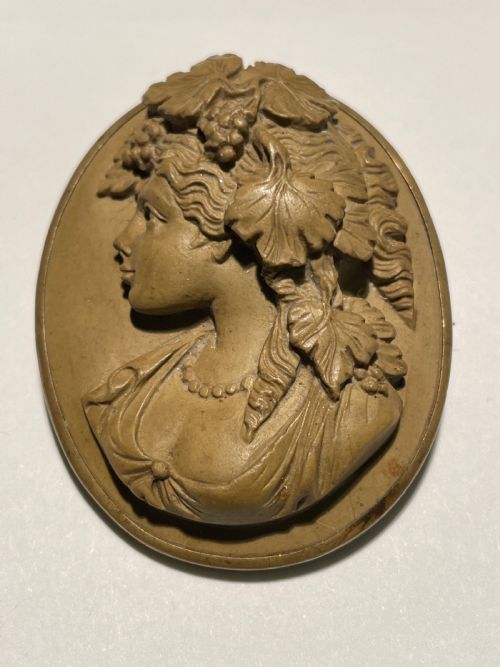

Classical Portrait Brooch
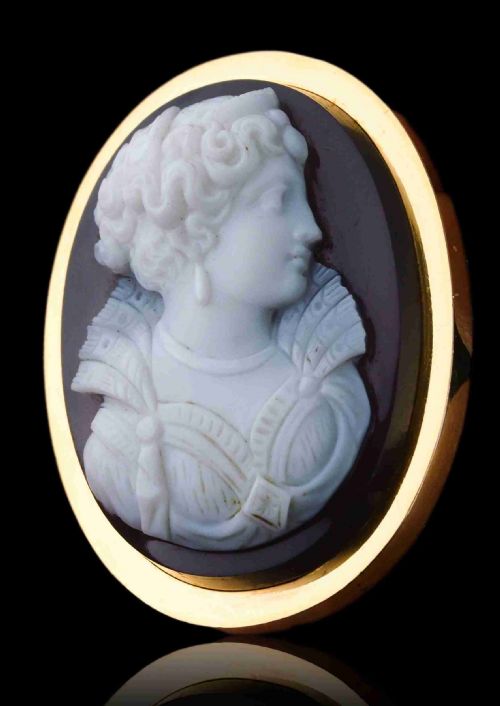
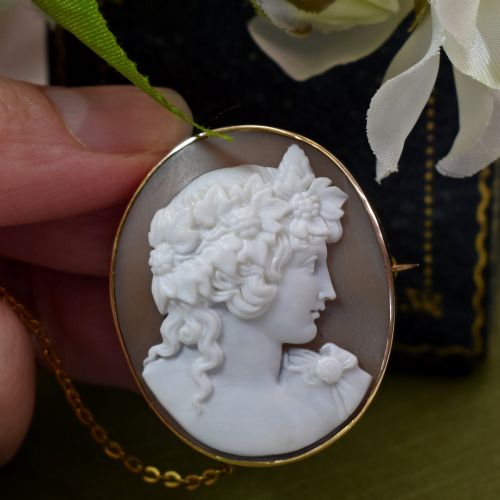
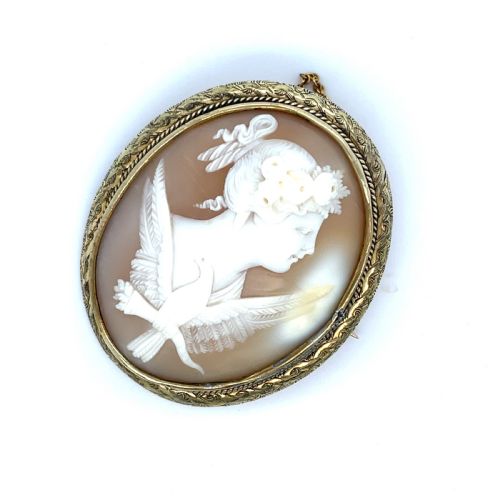
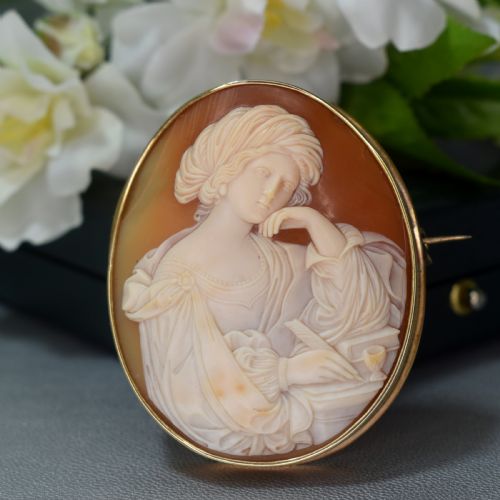
A classical portrait brooch brings centuries of carved myth and history to a lapel, offering wearable art carved in shell, hardstone, and lava.
Classical Portrait Brooch
A classical portrait brooch is a wearable piece of jewellery depicting classical figures, deities, and mythological subjects in profile or relief. The pieces found on this page span the Victorian and Edwardian eras, with many drawing on the aesthetic of the Grand Tour.
The most common forms are cameo brooches carved from shell or hardstone, alongside silver and gold pendant brooches. Subjects range from named figures such as Aphrodite, Flora, and the Persian Sibyl to anonymous classical profiles.
Originating largely from British, French, and Italian workshops, these items function as both fasteners and miniature portraits. Buyers encounter them mounted in metals ranging from silver and pinchbeck to 9ct, 15ct, and 18ct gold.
How they were made
Goldsmiths housed these carvings in secure metal mounts, utilising 9ct, 15ct, and 18ct gold, as well as silver and pinchbeck. Some mounts double as pendant settings, allowing the brooch to be worn on a chain as a locket or pendant.
What varies in quality
Mount construction and framing mark the distinction between standard production and substantial work. Solid gold frames and integrated pendant loops show a higher standard of craftsmanship than lightweight or base-metal settings.
The Classical Portrait Brooch Glossary
- Cameo
- A method of carving an object such as a engraved gem, item of shell, or piece of stone where a relief image stands out from a background of a different colour. This technique defines the majority of portrait brooches from the Victorian period.
- Hardstone
- A collective term for semi-precious stones such as agate used for carving intricate details. Hardstone carvings typically survive with sharper edges than softer materials.
- Grand Tour
- A cultural trip of Europe undertaken by wealthy young men in the 18th and 19th centuries, which popularised the acquisition of Italian lava and shell carvings. These souvenirs formed the basis of many Victorian collections.
- Pinchbeck
- An alloy of copper and zinc invented in the 18th century to imitate gold. It appears in affordable antique jewellery frames.
- Pendant Brooch
- A dual-purpose jewel fitted with both a pin and a loop for suspension on a chain. This format allows the wearer to alternate between pinning the piece to a garment and hanging it from the neck.
Classical Portrait Brooch: Frequently Asked Questions
How should I wear a classical portrait brooch?
Pin the brooch securely to heavy fabrics such as wool jackets, stoles, or coat lapels to support the weight of the gold frame and carved stone or shell. Ensure the safety catch is fully engaged before wearing.
Alternatively, choose a piece fitted with a pendant loop and hang it from a chain. This protects delicate clothing from pinholes while displaying the portrait at the chest.
What materials are used in these brooches?
Carvings are fashioned primarily from shell, agate, hardstone, and lava. These materials provide the contrasting layers necessary to create a distinct relief portrait.
Frames incorporate silver, pinchbeck, and gold in various purities including 9ct, 15ct, and 18ct. Some pieces also integrate pearls, diamonds, and enamel.
How do I date a Victorian cameo brooch?
Examine the metal mount, the hinge, and the pin mechanism, as Victorian hardware shifted from wide C-clasps to tubular hinges and safety pins toward the end of the 19th century. Hallmarks on gold or silver frames can also provide specific assay office years.
Consider the style of the carving and the subject matter, which often reflected contemporary interest in classical revivals and Grand Tour souvenirs during the mid to late 19th century.
How do I clean shell and hardstone carvings?
Dust the carved surface gently with a soft, dry brush to remove particles settled in the recesses of the relief. Avoid harsh chemical cleaners and ultrasonic baths, which damage fragile shell and porous stones.
Consult a specialist jeweller if the stone or shell requires deeper cleaning or if the gold mount needs attention. Keep the piece stored away from direct sunlight and hard objects.