


Victorian Shell Cameo Brooch
A victorian shell cameo brooch brings classical mythology and portraiture to life, carved directly from layered shell and set in gold.
Victorian Shell Cameo Brooch
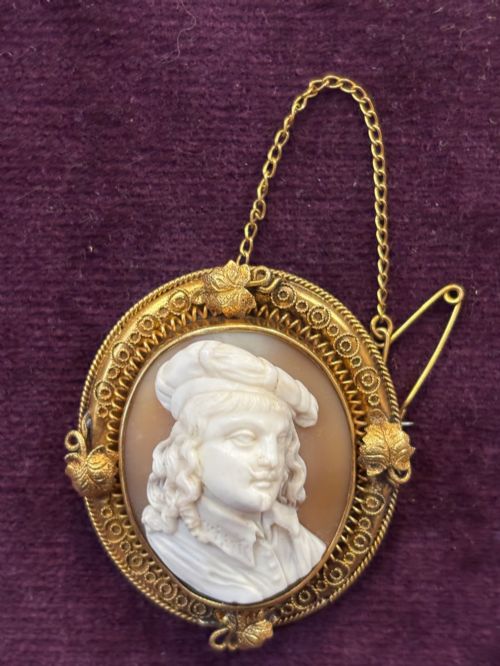
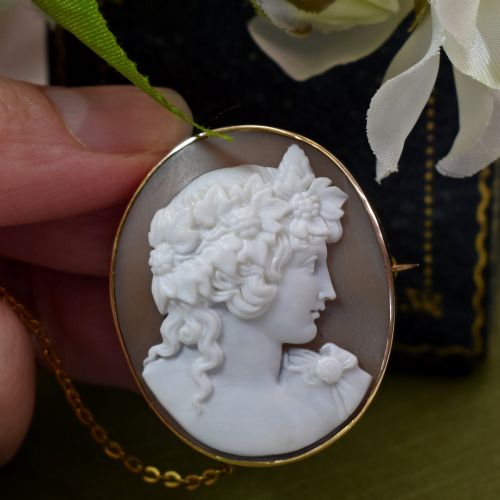
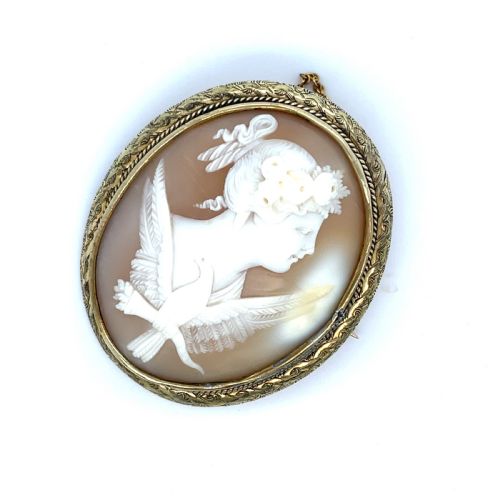
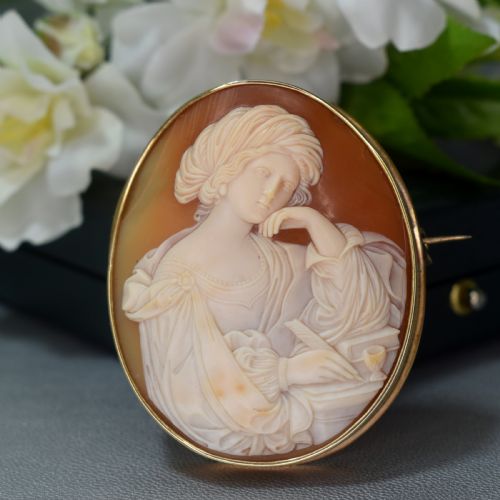
A victorian shell cameo brooch combines hand-carved portraiture or mythological scenes with precious metal settings. These pieces draw heavily on classical subjects, depicting figures such as Nike, Flora, Venus, and various sibyls.
The pieces on this page mostly span the nineteenth century, reflecting the Victorian taste for Grand Tour souvenirs and classical revival motifs. You will encounter both modest portrait brooches and substantial large-format carvings suitable for pendants or tabletop display.
Materials and construction
Carvers work directly into the natural layered strata of marine shells, cutting away the opaque white outer layer to reveal a darker background. This technique demands immense precision to maintain consistent depth and contrast across the entire relief.
Frames utilise yellow gold in various purities, alongside silver, pinchbeck, and pearls, often decorated with twisted wire filigree or scroll detail. Many mounts allow the brooch to convert easily into a pendant necklace.
Victorian Shell Cameo Brooch Retail Price Guide 2026
Typical asking prices for victorian shell cameo brooch among the pieces listed under this phrase on Sellingantiques today, from the lower quarter to the upper quarter. They describe what is for sale here now, not the wider market.
Listings feature yellow gold ranging from nine to eighteen carats, alongside silver, pinchbeck, and pearl accents.
Factors of quality
Depth of relief and sharpness of anatomical detail separate standard portrait brooches from masterworks depicting complex mythological figures. The subtle gradation between the opaque white carving and the translucent ground determines the visual clarity of the scene.
R. Pernice
The Victorian Shell Cameo Brooch Glossary
- Cameo
- A method of carving an object such as a gemstone, coral, or shell where a relief is created from an upper layer contrasted against a different coloured background.
- Pinchbeck
- An alloy of copper and zinc developed to imitate gold, frequently utilised for nineteenth-century jewellery mounts.
- Filigree
- Ornamental work consisting of fine wire, usually of gold or silver, soldered together in delicate openwork patterns.
- Grand Tour
- A traditional trip through Europe undertaken by upper-class young men and women during the nineteenth century, resulting in the collection of classical art and carved shells.
Victorian Shell Cameo Brooch: Frequently Asked Questions
How do I wear a cameo brooch?
Pin these pieces securely to heavy fabrics like wool or velvet to support the weight of the gold mount and shell. Many examples also include a loop to suspend the piece from a chain as a pendant.
Ensure the safety chain is fastened if the mount includes one, as nineteenth-century clasps operate differently from modern fasteners.
What subjects appear on these brooches?
Carvings frequently portray figures from classical mythology and ancient history, including Greek and Roman goddesses, sibyls, and fictional portraits. Common identifications feature Nike, Flora, Venus, and Bacchus.
Other examples present profile portraits of anonymous ladies carved in high relief against a warm shell ground.
How do I clean a shell cameo?
Wipe the carved shell gently with a soft, damp cloth to remove dust from the recesses of the relief. Avoid harsh chemical dips or ultrasonic cleaners, which damage both the organic shell and delicate metal settings.
Store the piece flat in a lined box away from direct sunlight and excessive humidity.
How do I date a Victorian brooch?
Examine the style of the frame, the depth of the carving, and the pin mechanism on the reverse. Mid-century examples often feature ornate yellow gold mounts and deep classical subjects.
Later Victorian pieces from the 1880s and 1890s frequently incorporate elaborate scrollwork and heavier gold frames.