


Vintage Cameo Pin
A vintage cameo pin is a carved relief portrait set for wear, offering classical style and intricate handwork that collectors prize.
Vintage Cameo Pin
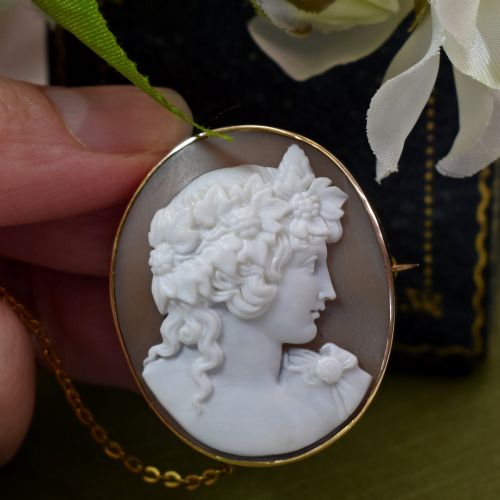
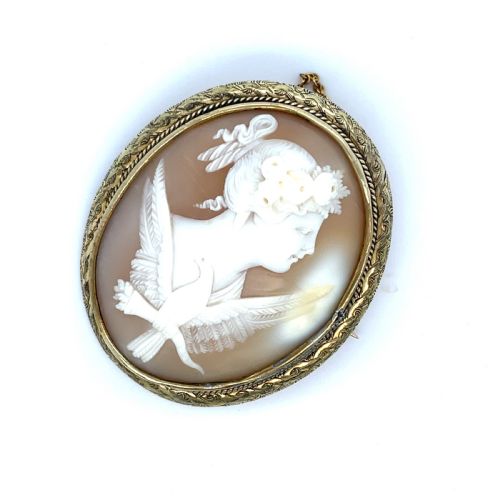
A vintage cameo pin combines miniature sculpture with wearable ornament, taking the form of brooches carved from shell or moulded in ceramic jasperware. These pieces draw on classical motifs, presenting profile portraits inspired by antiquity.
The pieces on this page span the nineteenth century into the twentieth, with Victorian examples appearing frequently alongside Edwardian mountings. Makers in Italy and Britain produced these works, utilising precious metals alongside base alloys like pinchbeck.
Buyers encounter brooches framed in yellow gold, solid gold standards including fifteen carat, and silver mountings bearing hallmarks. The subjects range from mythological figures like Aphrodite to classical youths such as Antinous.
Materials and construction
Carvers cut shell by hand to expose contrasting colour layers, creating distinct relief profiles against a darker background. Ceramic alternatives like jasperware provide uniform matte surfaces moulded with neoclassical scenes.
Mountings employ yellow gold, silver, and pinchbeck, securing the central carving with bezels and prongs. Metal frames often feature detailed wirework or simple polished bands suited to nineteenth century jewellery conventions.
Listings feature items spanning the Victorian era through the Edwardian period, utilising shell, jasperware, gold, silver, and pinchbeck.
Judging quality and execution
The harmony between the carved subject and its metal surround dictates the overall success of the brooch. Master carvers achieve smooth transitions across the strata of the shell, whilst lesser work appears flat and mechanical.
R Pernice·Wedgwood
The Vintage Cameo Pin Glossary
- Cameo
- A method of carving where a raised relief image stands out from a contrasting background. This technique utilises layered materials such as shell or stone.
- Jasperware
- A fine-grained stoneware developed with a matte surface, typically featuring white neoclassical figures applied against a coloured ground. Wedgwood produced notable examples of this ceramic medium.
- Pinchbeck
- An alloy of copper and zinc resembling gold, invented in the eighteenth century. Makers utilised this metal for affordable yet durable jewellery mounts.
- Neoclassical
- An artistic movement reviving the styles of classical Greece and Rome. This aesthetic heavily influenced nineteenth-century subject matter in carved ornaments.
Vintage Cameo Pin: Frequently Asked Questions
How do I wear a vintage cameo pin safely?
Pin the brooch securely to heavier fabrics like wool or structured linen rather than delicate silks that might pull. Ensure the clasp mechanism fastens fully before wearing the piece out.
Store the pin flat in a lined box away from other jewellery to prevent scratches to the soft shell or ceramic surface.
What materials make up these brooches?
Carvers typically used conch or helmet shells to achieve the characteristic layered colour effect in traditional pieces. Ceramic alternatives such as jasperware appear alongside shell carvings.
Frames incorporate yellow gold, fifteen carat gold, silver, and pinchbeck metal. Each metal indicates the period and intended value of the mounting.
How can I tell the period of a cameo?
Examine the style of the carving and the construction of the metal frame on the reverse. Victorian pieces often feature heavy gold mounts and classical profiles, while Edwardian examples show lighter silver or gold work.
Hallmarks stamped on metal components provide precise dates and assay office origins. Stylistic cues like the shape of the pin stem also help establish age.
What subjects appear on these carvings?
Portraits of classical figures and mythological characters dominate the designs found on these pieces. Subjects include classical youths, deities like Aphrodite, and idealized profile busts.
These motifs reflect the nineteenth-century interest in antique sculpture and Grand Tour travels. Artisans drew directly from classical statues and coins for their compositions.