


Shell Cameo Pendant
These shell cameo pendant pieces are hand-carved miniature reliefs set in precious metal, offering classical portraits and mythological scenes that bring historic wearable art to modern collections.
Shell Cameo Pendant
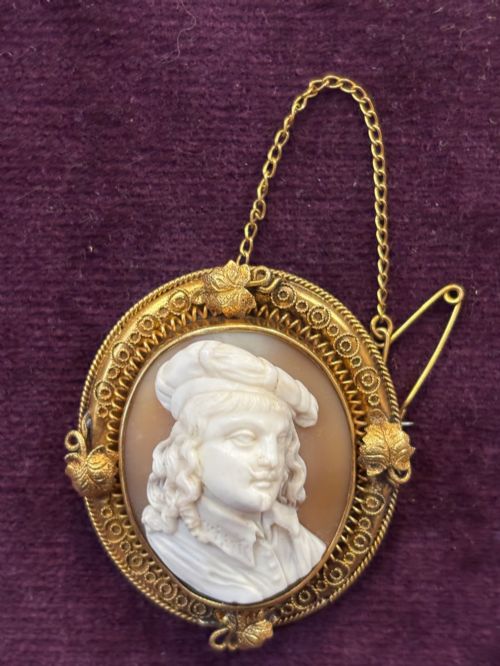
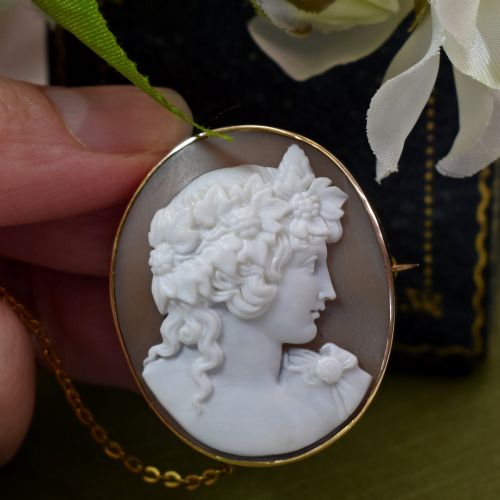
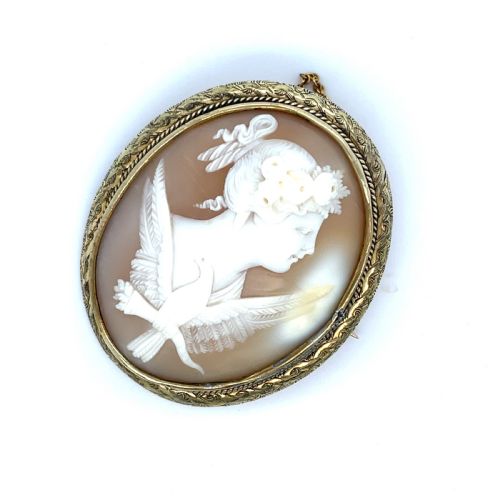
A shell cameo pendant combines layered natural shell with metalwork mounts to create a wearable relief carving, predominantly originating from Victorian and Edwardian workshops. The pieces on this page span the mid nineteenth century through to the mid twentieth century, capturing classical subjects such as mythological deities and historic profiles.
The format frequently overlaps with brooches, featuring integrated loops or bails that allow a traditional brooch to function as a pendant necklace. Collectors encounter these carvings set into frames ranging from simple silver mounts to substantial gold settings, sometimes accompanied by pearls or arranged as matching earring sets.
Materials and construction
Carvers utilise specific layers of marine shells, exploiting the natural colour contrast between the opaque white upper stratum and the deeper amber or brown inner body to create distinct relief imagery. The resulting carving is then secured within a metal frame, utilising gold, silver, pinchbeck, or specialist alloys tailored to the period.
Mounts reflect the metalworking standards of their respective eras, incorporating detailed bezels, rope twist borders, and integrated suspension loops for chains. Many surviving examples integrate dual fittings, allowing the carved shell to be worn interchangeably as a pendant or pinned as a brooch.
Listings feature shell cameo pendant items spanning the Victorian, Edwardian, and mid-twentieth-century periods, mounted in gold, silver, and pinchbeck.
Distinctions in quality
The integrity and substance of the metal frame also distinguish the tier of the piece, with heavier gold settings, fine granulation, and secure bezel construction representing higher craftsmanship. The harmony between the delicacy of the miniature sculpture and the robustness of its mount determines the overall success of the object.
The Shell Cameo Pendant Glossary
- Cameo
- A method of carving an object such as a engraved gem, item of jewellery, or vessel. In these listings, it refers specifically to a relief carved from layered shell.
- Pinchbeck
- An alloy of copper and zinc invented in the eighteenth century to imitate gold. It provides a warm yellow tone seen on historical jewellery mounts.
- Bezel
- A ring of metal that holds a stone or shell in place by overlapping its edges. It forms the primary structural enclosure for the carved relief.
- Grand Tour
- A cultural trip of Europe undertaken by wealthy young men in the eighteenth and nineteenth centuries. This practice generated a strong demand for Italian carved shell souvenirs.
Shell Cameo Pendant: Frequently Asked Questions
How do I wear a convertible cameo?
Many historical pieces feature a hinged pin alongside a hidden loop, allowing the mount to function equally as a brooch pinned to garments or suspended from a chain as a pendant.
Ensuring the safety catch is secure when worn as a brooch, or that the bail is stable when suspended as a pendant, protects the piece during regular use.
What shell is used for these carvings?
Carvers typically selected marine shells with distinct colour strata, such as conch shell or helmet shell, which provide the necessary contrast between the white surface figure and the dark background.
This natural variation in the shell material means no two carved scenes share identical tone or depth.
How do I date a shell cameo?
Stylistic cues in the subject matter, the cut of the subject's hair, and the construction techniques of the metal mount help establish the period of production. Victorian and Edwardian examples often display distinct metal purity marks, frame designs, and fastening styles.
Comparing the style of the relief against known nineteenth and early twentieth century portrait conventions narrows down the era.
Are these pieces fragile?
Shell is an organic material that requires careful handling to avoid impact fractures, chemical exposure, and moisture damage. Storing the pendant separately from harder gemstones prevents surface scratching on the delicate carved layers.
Gentle cleaning with a soft, dry cloth preserves the detail without wearing away the fine relief work.